Gold and silver futures crashed 9% and 10% respectively
ETFs linked to these commodities also saw significant losses
Gold prices also weakened in Global Markets
Gold, Silver Crash: Yellow Metal Down 9%, Grey Nearly 10% Amid West Asia Tensions
Gold and silver prices witness a sharp decline on March 23, 2026, why precious metals crashed despite West Asia tensions and the impact on MCX futures

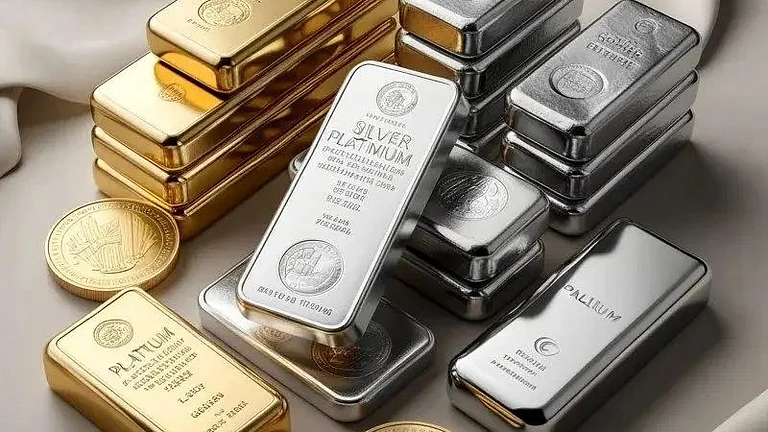
Gold and Silver Bars
Summary
Advertisement
Gold and silver prices witnessed a sharp decline on Monday, with the yellow metal and the grey metal falling by nearly 9% and 10%, respectively.
Around 12:20 pm, gold futures on the Multi Commodity Exchange of India were trading at ₹1,31,659, marking a drop of 8.88%. Similarly, silver futures fell to ₹2,03,917, down around 10%.
The decline comes despite elevated global tensions due to the ongoing conflict in West Asia, a scenario in which precious metals typically act as safe-haven assets. The correction follows a strong rally in recent months, during which both gold and silver surged as investors sought safety amid geopolitical uncertainty and rising crude oil prices.
"Gold prices fell sharply as rising inflation concerns and expectations of higher interest rates continued to weigh on bullion, even as the US-Israel conflict with Iran showed no signs of easing.... these developments have significantly increased concerns over energy-driven inflation, which has been a major factor dragging gold lower in recent weeks," Manav Modi Commodities Analyst, Motilal Oswal Financial Services said.
Advertisement

ETFs and Global Markets
The downturn was also reflected in exchange-traded funds (ETFs) linked to these commodities, which saw significant losses.
Among silver ETFs, Kotak Silver ETF fell the most, declining nearly 20% to a day’s low of ₹17.77 from its previous close of ₹22.31. Axis Silver ETF and Bandhan Silver ETF slipped around 11% each, while Edelweiss Silver ETF dropped about 10% to ₹209.43. Other ETFs in the category also recorded losses of roughly 9%.
In global markets, gold prices also weakened significantly. According to Bloomberg data, spot gold fell 3.3% to around $4,343.4 per ounce, while silver declined 3.4% to approximately $65.61. Gold futures dropped about 3.8% to near $4,320.3 per ounce, indicating a broad-based correction across international markets.
On thisxyz Jateen Trivedi, VP Research Analyst - Commodity and Currency, LKP Securities, "The decline is largely driven by rising inflation risks, which are altering expectations around the rate cut cycle, with markets now pricing in a more prolonged higher interest rate environment."
Advertisement
He added that Despite gold’s traditional safe-haven appeal, the current macro setup—strong dollar and higher yields is exerting downward pressure on prices.
"From a technical and macro perspective, downside levels of $4000 and $3600 remain open in the short term. However, if there is any meaningful de-escalation in geopolitical tensions and clarity on rate cuts, gold could witness a sharp recovery, with $5000 not ruled out on the upside," Trivedi said.
Disruption Due to West Asia Conflict
The broader backdrop remains volatile, with the escalating conflict in West Asia, now entering its fourth week, disrupting global markets.
Brent crude prices have surged sharply, raising concerns about inflation and potentially delaying interest rate cuts by central banks. At the same time, global equity markets have come under pressure, with major Asian indices such as the Kospi witnessing notable declines and foreign investors pulling capital out of emerging markets like India.
Advertisement
The conflict has also disrupted logistics and supply chains, particularly shipping routes in the region, leading to delays in raw material deliveries.
The aviation sector has been impacted as well, with airlines facing higher operating costs and revenue pressures; some carriers, including Air India, have even suspended flights to affected regions. Overall, the developments underscore the far-reaching economic consequences of geopolitical instability.