Tucked away in Raipur’s Urla Industrial Area is a 3-acre manufacturing facility churning out spices It sits in the middle of mini steel plants, cement factories, agro industries and assorted MSMEs.
ZOFF Foods Bets on Clean Processing and Packaging to Disrupt India’s Spice Market
With focus on clean processing, innovative packaging and honest sourcing, ZOFF Foods aims to reshape India’s spice market while scaling its revenue and reach

ZOFF Foods is betting on better packaging and cleaner processing
Advertisement
ZOFF Foods location isn’t the only factor that makes the company stand out. It has introduced tech-driven manufacturing doing away with human hands touching the spices.
“Despite the rich heritage of Indian spice, the industry was largely unorganised,” says Akash Agrawalla, co-founder of ZOFF Foods. Packaging was flimsy, grinding was inconsistent and hygiene was questionable. So, he set out to bring trust back to the kitchen shelf.
Akash’s family was in the steel business, which was doing well. So, venturing into an unchartered territory was not an issue. In 2018 he launched ZOFF Foods with a simple promise: purity and good packaging.
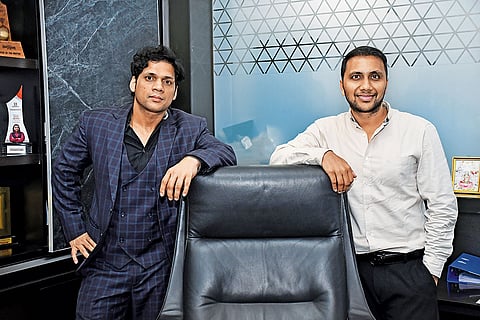
Akash Agrawalla (right) and Ashish Agrawal
Grinding it Out
The early years were tough, Akash says. The first test was procurement. Sourcing quality raw materials involved managing inconsistent standards as well as fluctuating prices due to farmers in various states.
Competition was relentless with thousands of local players who had low compliance costs. Most manufactured spices in single-room units with no labs or organised cleaning procedures. They paid huge margins to retailers since they had low overheads. ZOFF Foods could not indulge in that. Its retail prices, though competitive, were still higher.
Advertisement
That’s where Ashish, Akash’s brother, brought a complementary perspective. Ashish had a business management degree from La Trobe University, Australia. There he learnt how food standards were strictly enforced in Western countries.
The brothers realised that packaging was essential for the credibility. ZOFF Foods came up with zip-lock packaging that offers freshness and convenience, and a six-stage process of cleaning whole spices. It has also invested in a cool grinding technology, referring to as cloud packaging innovations, a system that preserves aroma and purity.
Akash says, “The Covid-19 pandemic accelerated the shift of consumers toward online grocery purchases, which aligned well with our strong e-commerce presence.” During this period, demand for packaged, hygienic and high-quality spices rose significantly as more people cooked at home. ZOFF Foods also introduced products such as immunity-focused spice blends to cater to evolving consumer needs.
The bet paid off. Online sales became a turning point. Contrary to actual retailing, where the shopkeeper is the gatekeeper, e-commerce enabled buyers to determine the quality. Repeat orders increased.
Advertisement
ZOFF Foods manufactures spices and mixes, ready-to-cook gravies and marinades, whole spices and dry fruits. Available nationally, it now has 50–70 lakh monthly customers.
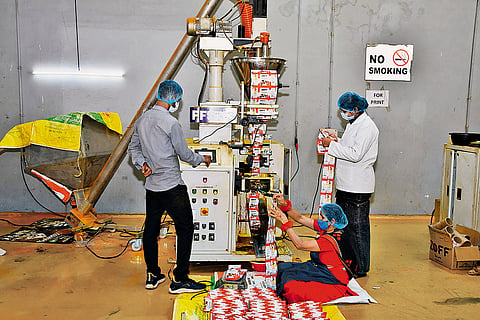
Workers at the Raipur factory
Strength to Strength
ZOFF Foods has been growing at an annual rate of more than 150%, from its revenue of ₹103cr in the previous financial year to an estimated ₹155cr this year and a target of ₹250cr next year. Investors took note and acquired about 20% equity.
Recently, the start-up raised $2mn in fresh funding from JM Financial Private Equity. “ZOFF Foods stands out as a compelling investment opportunity in the Indian spice category. The founders have created a brand that resonates with consumers,” says Vinit Rai, managing director, JM Financial Private Equity.
Co-founder Ashish sees this growth not as scale alone but an expression of consumer confidence. He says they are a small player in a very big spice market. “The opportunity is massive.” International expansion is already planned aggressively in the next three to four years, with exports to Nepal, Dubai and the UK.
Advertisement
Yet perhaps the most compelling shift is happening within the factory walls. Raipur, known for its steel mills, traditionally offered limited employment opportunities for women. Zoff Foods changed that equation. Today, 50–60% of its 300-plus workforce comprises women. Some are wives of steel mill workers. With this, households that once relied on a single income now have two, Ashish says.
A small percentage of differently abled individuals are also part of the workforce. Ashish and Akash say that the industry’s processes allow for inclusive employment.
For the company, Raipur remains the manufacturing hub, which strategically is central, cost-effective and policy-friendly. However, the brothers admit there is a need for broader talent when it comes to things other than production.
Focused on Spices
For ZOFF Foods the mission is clear. “We want to enter every customer’s kitchen with quality spice products they trust,” Akash says.
Ashish adds, “By maintaining high hygiene standards and following the right processes, we aim to expand both the customer base and the market.”
Advertisement
The Agrawalla story is about the realisation that India has space to innovate even in its most traditional sectors. It is about bets on standards ahead of market requirements. And it is about creating a brand, one order at a time.