From the break-up was born a new brand. As the Mehra brothers—Rajesh, Ajay and Kishan—were getting ready to join the family business, they came face to face with an existential crisis. The company that their father—NL Mehra—had built so lovingly over 25 years with his business partner was about to split.
Behind Jaquar: How the Mehra Brothers Turned a Split Legacy into a Bathroom Biggie
From a small unit in Delhi to a global presence, Jaquar has grown into a dominant player in India’s organised faucets market, driven by rising consumer demand and a strong family-led vision

Jaquar group director Rajesh Mehra (seated) with his nephew Ranbir at their showroom in Manesar | Photo: Tribhuvan Tiwari/Outlook
Advertisement
Both founders of the bathroom-faucet business (under the Essco brand) had different ideas on how to take the business forward. Mehra wanted to scale the business fast, while his business partner was more conservative in his approach.
The difference of opinion led to splitting the rights of the Essco brand into two.
However, the Mehra family faced a dilemma: What if dealers got confused with the similar name? Wouldn’t it lead to a loss of business?
New Beginnings
Thus, in 1986, was born Jaquar, a play on the words 'Jai Kaur', the name of NL Mehra’s mother.
The Mehra brothers kept Essco as a sub-brand but poured all their efforts into building Jaquar as their main portfolio.
But the trials and tribulations of running a rebranded business was just beginning. As the brand name changed, so did the opinion of their distributors. No dealer wanted to keep an unknown brand in their store. They were used to Essco.
Advertisement
"Whenever you introduce something new, there is always resistance. We had a long-term vision and knew it would make a difference," Rajesh says.
So, they changed their marketing approach. Earlier manufacturers did not pay too much attention to marketing, leaving it to the distributors. The company started investing in advertising, publicity and promotional campaigns hoping to pull in customers.
Further, the company also doubled down on customer service. Essco was already known for offering a seven-year warranty for its faucets. With Jaquar, they extended it to 10 years. The company simultaneously appointed service technicians along with salespersons.
"This focus on customer care made a difference. It gave customers confidence that the company would stand by them and support them," Rajesh recalls.
The strategy worked for the Mehra brothers. Dealers, builders and architects themselves started asking for Jaquar products instead of vice-versa.
Rajesh says that in just 5–6 years after launching the new brand, they had created a foothold in the market, which his father, with Essco, took about 15 years to achieve.
Advertisement
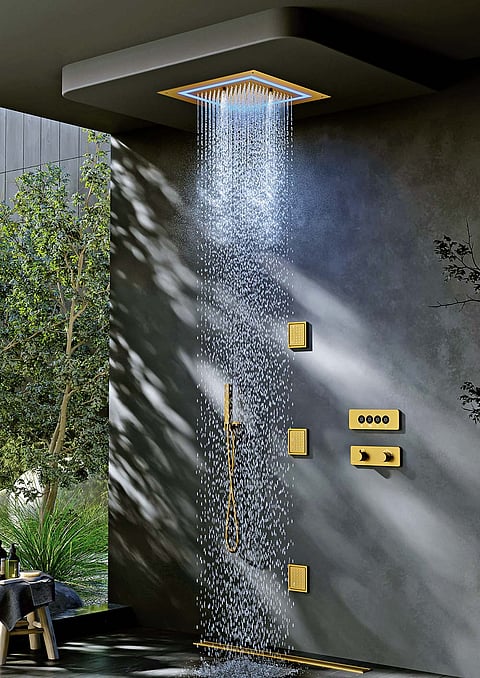
Jaquar is present in over 50-plus countries
Back Story
NL Mehra, a small textile trader, had come into the sanitaryware business with no prior experience, only with an eye on India's growing housing demand. There were no technical institutes to train them, no established supply chains and little access to expertise. Every lesson was learned the hard way by interacting with distributors, retailers and customers.
India’s bath-fittings industry itself was nascent. While imported European brands like Armitage and Shanks dominated luxury spaces, domestic manufacturing had only just begun taking root in the mid-1950s. That too happened thanks to the Central government's Second Five-Year Plan, introduced in 1956 to support local industries, banned or licensed imports of a lot of general-use products.
NL Mehra was able to capitalise on this ban and launched Essco out of his 60sq m unit in Delhi's Walled City. The goal was to make a name in a largely unorganised market. According to his son Rajesh, the first five years, by Mehra’s own admission, were “very, very tough”.
Advertisement
By the early 1970s, demand was growing, and more importantly, the brand had begun to find acceptance. In 1972, Essco set up its first organised manufacturing unit, marking its transition from a cottage-scale setup to a serious industrial operation. By the 1980s, they had an 80% market share in eastern and northern India, according to Rajesh.
Today, Jaquar's topline has crossed ₹8,700cr in topline. It has three key brands—Essco, Jaquar and Artize—and a whole range of bath-fitting products, which not only includes faucets but also ceramics, flushing systems, showers, bathtubs, built-in saunas, fully built bathroom systems, as well as water heaters.
The company has seven manufacturing units in India and one it acquired in South Korea in 2016.
Jaquar products are available in over 50-plus countries. The company plans to add 2–3 more manufacturing units over the next few years. It now commands a 60% market share in the organised faucets market, as per an India Ratings report in 2025.
Advertisement
Diverse Portfolio
In the early 2010s the company started expanding into another segment which it wants to become a part of the core business: lighting. "We had started working with an Austrian company, Swarovski, for our bathroom segment...They visited India, saw our production facilities and were quite impressed. They told us, 'You are already working with metal and have some of the best finishing techniques—why don’t you enter the lighting segment as well?'," Rajesh recalls.
For the first 10 years or so, Jaquar only focused on crystal chandeliers, outsourcing the manufacturing. But by the second half of the decade, they realised people don’t need just chandeliers. "We realised every home needs both lighting and bathroom solutions. The customer base—architects, interior designers and builders—remains the same, even if the distribution channels differ," says Ranbir Mehra, the son of Rajesh’s younger brother Ajay, and head of the lighting vertical of the group.
Jaquar is present in over 50-plus countries. The company now commands a 60% market share in the organised faucets market
But scale required a robust manufacturing backbone, and within a few years, the group realised they couldn't rely on external vendors. So, in 2016, they set up a small manufacturing facility of their own.
This facility was upgraded at the onset of the Covid-19 pandemic to a 6 lakh sq ft plant in Bhiwadi. It helped them expand to pendant lights, wall lamps, downlights, panel lights, strip lights and outdoor fixtures from just chandeliers.
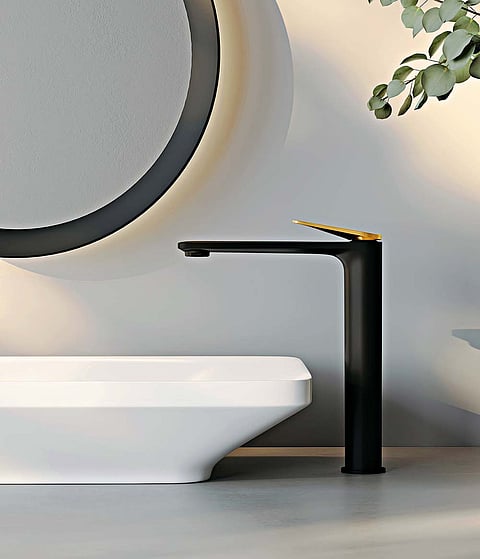
Jaquar dominates the faucets market
Post-Pandemic Boom
Rajesh recalls that after the initial 3–4 months of Covid disruption, the company saw a "strong surge in demand". "People were spending more time at home and began investing in renovations and improvements," he says. What followed was a boom in India's premium and luxury market, with people "upgrading lifestyles", he adds.
"With higher incomes, increased travel and the growth of the services sector, there is now a strong middle-income segment…Consumers are now more conscious about how they live. They are not just focused on lifestyle, but on overall living standards," he claims.
This shift has benefited the industry, he says, and in particular, Jaquar. Between 2020–21 and 2024–25, Jaquar has logged a 21% compound annual growth rate, as per India Ratings.
Even at this scale, Jaquar remains a family-owned business, and the Mehra family is keen to keep it that way, a lesson drawn from the initial split. “When you work with your own money, you are far more responsible,” Rajesh says, a principle he continues to pass on to the third generation now entering the business.