Odisha will avoid freebies and over-subsidies, focusing instead on commercially viable projects and long-term investors
Coal will remain central to Odisha’s power mix, with coal gasification and fly ash utilisation used to cut environmental damage
The state is pushing solar rooftop installations, targeting 5 GW of renewables, alongside green hydrogen and green ammonia projects at Gopalpur
Incentives Can’t Be Open-Ended; Commercial Sustainability Is Key, Says Odisha Deputy CM | Exclusive Interview
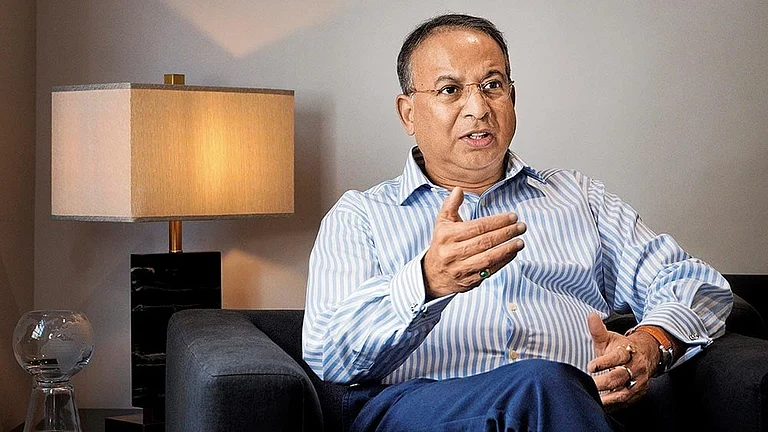
Odisha needs to balance various incentives with long-term commercial viability and look at the sector from the investor’s perspective as well, says Kanak Vardhan Singh Deo, Deputy CM, Odisha

Kanak Vardhan Singh Deo, Deputy CM, Odisha
Summary
Advertisement
As India accelerates its energy transition while grappling with rising power demand, coal dependence, and the push for clean technologies, Odisha finds itself at a critical crossroads. A power-surplus, resource-rich state with strong industrial ambitions, Odisha is trying to balance growth with sustainability without relying on open-ended incentives.
In this interview, the Deputy Chief Minister outlines the state’s long-term power vision, its renewable energy and green hydrogen plans, the continued role of coal, and why commercial viability, not subsidies alone, will define Odisha’s clean energy strategy going forward.
Edited Excerpts:
Odisha’s power demand is growing very fast. What is your long-term vision for ensuring reliable and affordable power for both industry and households?
Odisha is currently a power-surplus state. We have a strong base of generation capacity, including hydropower, thermal power, and solar energy. Under our renewable energy policy, we are expanding solar projects given the state’s high solar potential. We are also exploring new areas such as green ammonia and other clean energy solutions.
The conclave was held in Puri and Konark for a reason. Konark is home to the Sun Temple, which symbolises the region’s long association with solar energy. For centuries, this area has been known for its abundant sunlight. In addition, Odisha has significant potential to harness tidal energy from coastal waves. The state also has reserves of rare earth minerals, which can support future nuclear and atomic power generation. Together, these resources form the backbone of our long-term energy strategy.
Advertisement
Despite high solar potential, Odisha lags behind some states in large-scale renewable deployment. What bottlenecks is the state facing?
There are no major bottlenecks as such. One challenge was the government policy discouraging the use of Chinese solar panels, which initially limited the availability of panels due to a smaller number of domestic manufacturers. As a result, projects under the PM Surya Ghar Yojana saw a slight delay.
However, we are now catching up quickly. As mentioned by the Honourable Minister earlier today, Odisha has been given a target of three lakh installations, of which 1.5 lakh are to be implemented directly by the state. We have already achieved 23,000 installations, and I am confident that we will meet the overall target of three lakh.

Advertisement
Does the state have any specific renewable energy target, similar to India’s national target of 500 gigawatts?
Yes, Odisha aims to be one of the major contributors to the national renewable energy target. In line with this, the state has set a target of 5 gigawatts of renewable energy capacity as of now.

How does Odisha plan to diversify its energy mix while maintaining its position as one of the largest energy-intensive manufacturing states?
Odisha is a coal-bearing state, so thermal power will continue to remain an important part of our energy mix. However, we are conscious of the environmental impact associated with thermal power generation. As the Chief Minister mentioned earlier today, we are focusing on coal gasification as a cleaner alternative to conventional coal-based power, which helps reduce pollution.
Ultimately, we have to move towards a zero-carbon future. The Honourable Prime Minister has spoken about achieving net-zero emissions by 2070. At the state level, we have aligned our milestones with 2036, when Odisha completes 100 years of its formation, and 2047, when India completes 100 years as a nation.
Advertisement
As a coal-producing state, how is Odisha balancing energy transition with its dependence on coal?
The Prime Minister has often spoken about developing industries near pit-heads to reduce the need for coal transportation to other states. At the same time, we are mindful of land degradation and the environmental challenges posed by fly ash.
To address this, we are working on a comprehensive policy, and the Government of India has already introduced guidelines for the utilisation of fly ash in road construction, railway lines, and other infrastructure projects. Ensuring proper fly ash management is a key part of our transition strategy.
Several states have announced green hydrogen policies. Does Odisha have similar plans?
Yes, we do. Odisha has already initiated work on green hydrogen. Two green hydrogen projects are currently being set up at Gopalpur. Alongside hydrogen, green ammonia projects are also coming up in the same region.

Advertisement
Is the state planning incentives to attract electrolyser manufacturing or green energy equipment manufacturing?
We must recognise that not everything can function solely on incentives. If we over-incentivise or offer excessive freebies, companies may participate only for short-term gains rather than as serious, long-term players.
Our approach is to keep an open mind and identify what genuinely encourages credible investors to participate sustainably.

What’s your plan to attract green investment in the state?
Yes, we do plan to attract investment in the renewable energy sector. However, we are cautious about over-incentivising. Investors are not coming for charity—they are coming to do business and earn returns. We have to balance incentives with long-term commercial viability and look at the sector from the investor’s perspective as well.