Around 60 GW renewable projects in Rajasthan await transmission connectivity approvals.
Grid infrastructure lags behind rapid clean energy capacity additions in state.
Delays could impact India’s 500 GW non-fossil capacity target by 2030.
Grid Delays Stall 60 GW Renewables in Rajasthan
Grid delays stall 60 GW renewable projects in Rajasthan, raising capacity concerns

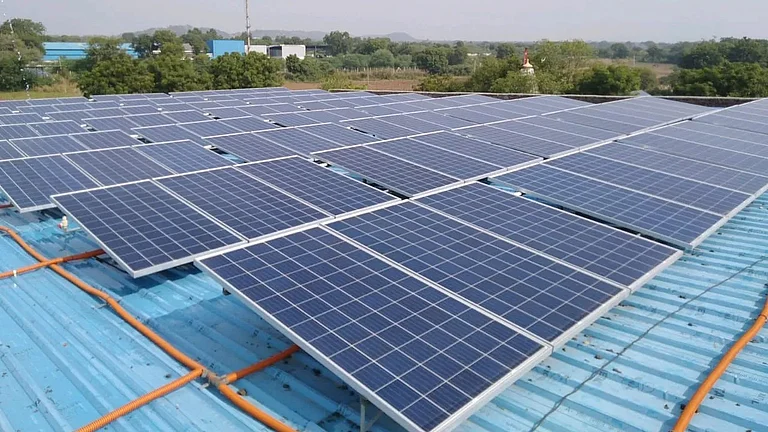
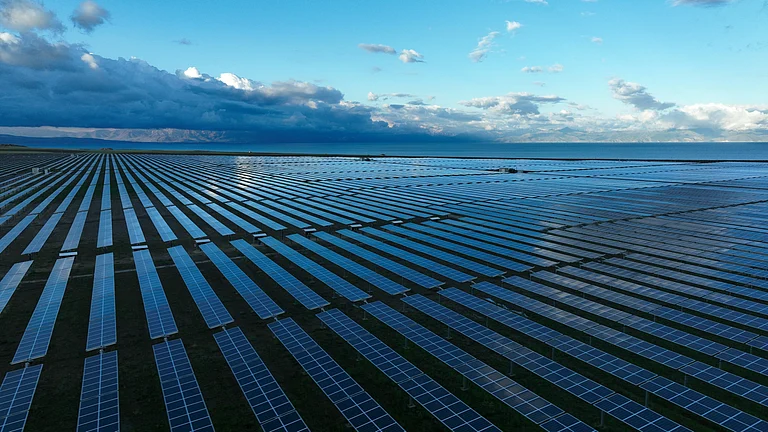
Solar panels spread across a land
Summary
Advertisement
Rajasthan has clean energy projects of capacity amounting to about 60 gigawatt (GW) awaiting transmission links as planners struggle to keep pace with a rapid build-out, according to Reuters.
The problem indicates a critical challenge for India in its effort to nearly double its non-fossil based power generation to 500 GW by 2030 as the systems carry electricity to other states from renewable-rich regions such as Rajasthan.
According to Reuters, the planner, Central Transmission Utility of India Ltd (CTUIL), told the national power regulator it had been unable to provide a transmission system for about 60 GW of projects.
The western desert state has 179 GW of renewable energy potential, with more than 85% of projects clustered in its four districts of Barmer, Bikaner, Jaisalmer and Jodhpur, the April 10 filing showed.
Applications for grid connectivity totalling about 130 GW have been received in Rajasthan, while transmission systems for only about 73 GW have been planned or are being set up, it added.
Advertisement
“CTUIL is facing challenges and difficulties in identification of corresponding transmission system for 60 GW applications,” the planner said.
The issue was highlighted after electricity regulators told Saurya Urja Company of Rajasthan Ltd, which is developing a 400-megawatt solar park in Bikaner, it could withdraw its connectivity application and recover bank guarantees if needed, reported Reuters.
The ruling by the Central Electricity Regulatory Commission (CERC) came in response to challenges in planning transmission the company faced.
The regulator also asked the transmission planner to advise project applicants about the transmission delays, allowing them to withdraw connectivity applications.
Grids Emerging as Bottleneck
According to a 2026 report published by the International Energy Agency (IEA) a lack of grid capacity is emerging as a key bottleneck in many regions, driving higher levels of congestion and slowing the deployment of new electricity generation, storage and demand. Grid connection queues have reached record levels worldwide. In response, this year’s report examines the range of measures that regulators and system operators are adopting to “move fast and connect things”: enabling more capacity to be integrated more quickly through regulatory reforms and deployment of technologies that can deliver rapid grid upgrades.
Advertisement
Greater demand-side participation and the expansion of utility-scale battery storage are additional levers for enhancing system flexibility and managing congestion, which are addressed in detail in the subsequent chapter on flexibility.
Reports highlight that delays in grid expansion can slow project commissioning and increase costs. In India, rapid solar capacity additions, especially in states like Rajasthan, are outpacing transmission planning and execution.