India rejected Russian LNG cargoes linked to US sanctions despite import dependence concerns.
Strait of Hormuz disruptions have intensified worries over India’s fuel and LNG supplies.
Russia redirected discounted energy exports toward Asian markets after Western sanctions tightened restrictions.
Why India Chose Caution over Easily Available Russian LNG
India declines sanctioned Russian LNG cargoes as West Asia tensions intensify global energy security concerns

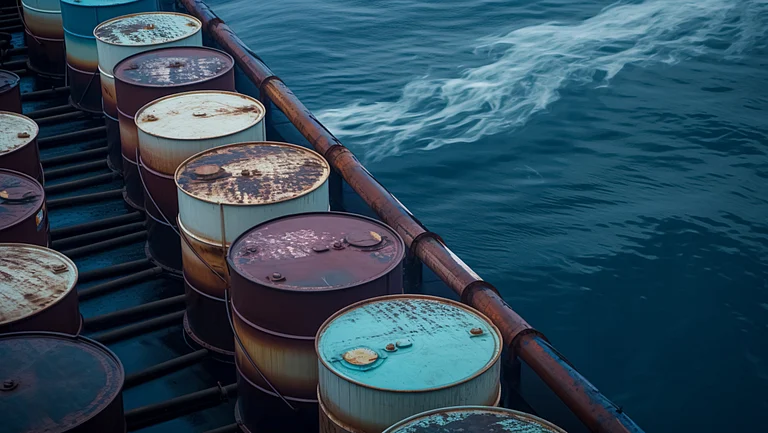
An LNG tanker sails near a major global energy shipping route amid geopolitical tensions
Summary
Advertisement
India has refused an offer from Russia to purchase its liquefied natural gas (LNG) cargoes that are currently under US sanctions, according to Reuters.
The move comes at a time when geopolitical conflict in West Asia is straining energy markets across the globe, particularly for countries dependent on fuel imports.
India’s 1.67mn tonnes of crude oil, 3.2 lakh tonnes of LPG and about 2 lakh tonnes of LNG are stuck on the 22 Indian-flagged ships stranded in the Persian Gulf, waiting to transit through the Strait of Hormuz, Rajesh Kumar Sinha, Special Secretary in the Shipping Ministry had said earlier.
There were 28 Indian-flagged vessels in the Strait of Hormuz when the war in the Middle East broke out following US-Israel attacks on Iran. Of these, 24 were on the west side of the strait and four on the east side. In March 2026, two vessels from each side managed to sail to safety.
Advertisement
The move highlights India’s balancing act between energy security and geopolitical risk.
Reuters further revealed that Russia had offered LNG from the sanctioned Portovaya plant in the Baltic Sea, but the cargo was unable to discharge despite indicating India as its destination in mid-April.
How The Crisis Unfolded
India did not want to purchase LNG (liquefied natural gas) coming from Russia’s Portovaya plant because that project is under US sanctions.
Citing LSEG shipping data, Reuters reported that the 138,200-cubic-metre tanker Kunpeng was heading to the Dahej LNG import terminal in Gujarat. Even though the shipment paperwork reportedly tried to show the gas as “non-Russian”, tracking systems could still identify where it came from.
Since India refused to accept the cargo, the ship could not unload the gas and is now waiting near Singapore without a clear destination. During a meeting with Russian Deputy Energy Minister Pavel Sorokin, Indian officials including Hardeep Singh Puri reportedly informed Russia that India would not buy LNG covered by sanctions. However, India and Russia are still talking about buying Russian LNG that is not under sanctions.
Advertisement
Despite the disruption involving the Russian cargo, India’s overall LNG imports showed signs of recovery in April. According to data from commodity market analytics firm Kpler, LNG imports in April recovered to 1.95mn tonnes, after falling to 1.67mn tonnes in March. The country’s 2025 average monthly LNG imports stood at 2.08mn tonnes, not significantly higher than the volumes imported in April.
India’s LNG imports in April declined 9.3% from 2.15mn tonnes in the same period last year, indicating that the supply shock had not been fully offset and market conditions remained tight, according to Sonal Ranjan, LNG and natural gas analyst at Kpler, as reported by The Indian Express.

India’s LNG Suppliers
India imports about 60% of its LPG consumption and out of these imports about 90% come through the Strait of Hormuz, which has been impacted due to current tensions. India buys around 90% of its crude imports from West Asian nations including UAE, Qatar, Kuwait and Saudi Arabia.
Advertisement
According to reports, the US has been one of the largest suppliers of LNG to India after Qatar. India's imports of LNG from the US stood at $2.46bn in 2024-25, a 74% increase from $1.41bn in 2023-24. It was even higher than the UAE, which stood at $2bn in 2024-25. However, the US may not be the most preferred supplier in the present crisis due to the long period for the delivery of cargo and the high costs involved. According to experts, it may be comparatively economical and require less time to acquire LNG from countries like Australia, Russia, Nigeria and Mozambique.

How Sanctions Hit Russian Exports
Sanctions on Russian energy exports have reduced Moscow’s revenues and complicated global trade, but they have not stopped exports completely. Russia has redirected oil sales to Asian buyers like India and China, often at discounted prices, while relying on “shadow fleet” tankers to bypass restrictions. In its report published on May 11, the Centre for Research on Energy and Clean Air (CREA) said Russia’s fossil fuel revenues remain below pre-war levels, even as export volumes have been stable. Sanctions have also increased the risks of shipping, insurance and finance, and Russia has had to use intermediary firms and alternative logistics networks to keep energy trade flowing.
Advertisement
A November 2025 study published on Science Direct concluded that Russia’s energy trade has become less profitable and more complicated as Western sanctions have forced Moscow to sell discounted crude primarily to Asian buyers like India and China. Export volumes have largely been maintained through alternative shipping and intermediary networks, but rising logistics, insurance and compliance risks have reshaped global energy flows and reduced Russia’s overall revenues.
India is heavily reliant on imported natural gas, with imports, primarily in the form of Liquefied Natural Gas (LNG), making up approximately 50%-55% of its total consumption as of early 2026. With rising demand and low growth in domestic production, India has become a major importer in the world, mainly dependent on West Asia (especially Qatar) for its supply.