WTO's 14th Ministerial Conference in Cameroon will decide the digital tariff moratorium's fate
India opposes the extension, citing revenue losses from imports
The United States is pushing for a permanent ban to ensure trade stability.
Ending the moratorium would allow taxes on software, streaming, and e-books for the first time
What WTO’s E-Transmission Duty Moratorium Means for India | Explained
At WTO MC14 in Yaoundé, India shall challenge the permanent moratorium on digital customs duties

What the Moratorium on Custom Duty on E-Transmission Means for India Image from free pik
Summary
Advertisement
One of the key issues to be discussed at the upcoming WTO 14th Ministerial Conference will be the moratorium on customs duties on electronic transmissions of digital products.
The conference, scheduled to take place from 26 to 29 March 2026 in Yaoundé, Cameroon, will provide an opportunity for ministers to decide whether the moratorium should be extended, as has been the case at previous conferences, or brought to an end this time.
India and the United States are expected to play a key role in the negotiations. On one hand, developing countries have long argued that the duty-free regime leads to significant revenue losses and limits their policy space in the digital economy. On the other hand, the United States, along with several other nations, has advocated for making the moratorium permanent.

India’s Stance and Rationale Behind
India is currently opposed to extending the WTO moratorium on customs duties on e-transmissions, and recent reporting says it is set to resist a US-backed push for a permanent moratorium at MC14. The WTO says the issue is on the MC14 agenda, with members considering either a permanent moratorium, another extension, or a more structured digital-trade framework.
Advertisement
India’s likely reasoning is that the moratorium constrains “policy space” for developing countries. In its joint submission with South Africa, India argues that digitalization affects countries unevenly, that governments need room to regulate the digital economy, that tariffs have historically helped countries build domestic industry, and that the moratorium can hurt industrialization, jobs, and tariff revenue in developing economies. The same submission says tariff losses from digitized goods fall disproportionately on developing countries, and recent reporting quotes Indian officials saying the benefits of the moratorium accrue mainly to a few developed countries, while its costs are borne largely by developing-country importers of digital products.
India’s stance stands against the US, who wants the moratorium made permanent. The USTR’s 2026 Trade Policy Agenda says the United States will seek a “permanent extension” of the moratorium on customs duties on e-transmissions, and its 2025 annual report says the US submitted a draft ministerial decision in November 2025 to extend it permanently.
Advertisement
The US rationale is that a permanent ban would give digital trade stability and predictability, reduce uncertainty for businesses, and support confidence in the WTO’s ability to produce practical outcomes. That is the argument reflected in USTR’s agenda and in WTO’s MC14 briefing note, which says supporters of a longer or open-ended extension see it as improving stability and predictability for digital trade.
What the Moratorium Says?
For over 25 years, members of the WTO have agreed not to impose customs duties on e-transmissions, effectively ensuring that digital trade remains tariff-free.
This arrangement has prevented the imposition of tariffs on cross-border digital flows. The moratorium enables individuals and businesses worldwide to access, share, and deliver digital content and services electronically without incurring additional costs at national borders.
The moratorium covers a wide range of digital goods and services, including cloud-based tools and software platforms; digital services such as remote education, telemedicine, online marketing, and freelance work (such as programming, translation, and graphic design); e-books, scientific research, and training materials essential for learning and professional development; streaming platforms, apps, and other digital content that support creators, entertainers, and consumers (including mobile games and creative design files); as well as software updates and security patches that help keep devices safe and affordable.
Advertisement
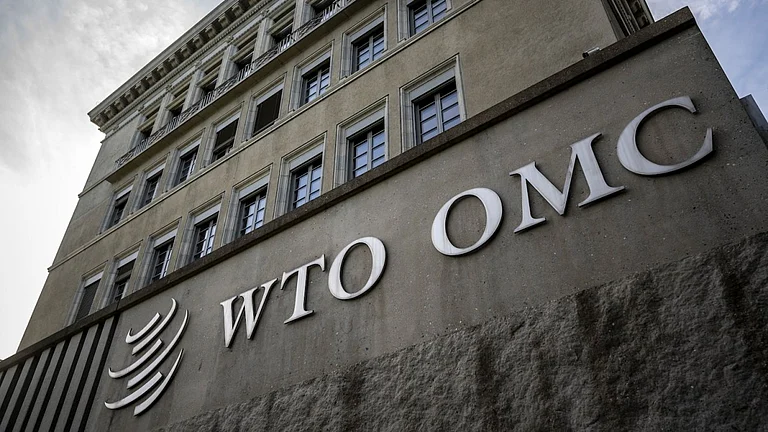
WTO Moratorium’s Economic Impact on India
India is likely to oppose the WTO moratorium on customs duties on e-transmissions due to its rising economic and strategic costs.
A key concern is the sharp increase in imports of digitally delivered services (DDS) which are commonly used as a proxy for digital product imports. As per a NITI Aayog report, such imports surged from $41.4 billion to $116.9 billion by 2024, reflecting growth in digital consumption.
Notably, most of these imports originate from developed economies, particularly the US and EU, while India remains a net importer of high-value digital products.
The moratorium prevents India from imposing customs duties on digital goods such as e-books, software, films and cloud services. While revenue losses were estimated at $500 million in 2017, they are now likely much higher, around $2 billion annually, given the $117 billion import base, according to a Geneva-based think tank.
Advertisement
According to a study by the United Nations Conference on Trade and Development (UNCTAD), total revenue losses for developing countries were estimated at $10 billion in 2017 and have continued to rise as physical goods like books, CDs and DVDs are increasingly replaced by duty-free digital alternatives such as streaming services.
Since exports are largely concentrated among firms in developed countries, the resulting revenue loss is highly asymmetric.
Impact on Domestic Industry
The moratorium also raises concerns for domestic industry. Although India has the capacity to produce digital goods, such as software and entertainment content, tariff-free imports reduce incentives for local production. This could undermine initiatives like Atmanirbhar Bharat and place Indian firms at a disadvantage compared to global competitors.
Lastly, emerging technologies such as 3D printing present long-term challenges. Products like automobile parts and medical devices can increasingly be traded as digital design files rather than physical goods, making them harder to track and tax. As production becomes more decentralised and digital, India risks losing further customs revenue under the current moratorium regime.