Over 330,000 importers eligible after US Supreme Court strikes down Trump’s tariffs under IEEPA.
Businesses can file refund requests through the CBP’s CAPE portal, with payouts expected in 60–90 days.
Trump administration explores Section 301 and other legal routes to reimpose trade duties on partners including India and China.
Trump’s $166 Bn Tariff Refund Plan: Who Cashes In & What Comes Next
Largest tariff refund in US history begins as court overturns Trump’s ‘Liberation Day’ duties, raising fresh questions over future trade policy

Summary
Advertisement
The US government is set to begin processing refunds worth billions of dollars collected under President Donald Trump’s “Liberation Day” tariffs starting Monday. The sweeping tariffs imposed by Washington on several trading partners were struck down by the US Supreme Court in February, which ruled that the President did not have the authority to impose such duties under the International Emergency Economic Powers Act (IEEPA) of 1977 without congressional approval.
The court’s ruling has been viewed as one of the biggest blows to Trump’s tariff and trade policies since he returned to the Oval Office for a second term.
The decision has also raised questions about the future of ongoing trade negotiations, including talks with India, as policymakers and businesses seek clarity before finalising agreements.
How Much Tax Has Been Collected?
According to filings by US Customs and Border Protection (CBP), more than 330,000 importers have paid nearly $166 billion in tariffs across over 53 million shipments since the duties came into effect. However, only around 56,500 importers have completed the mandatory registration required to receive electronic payments, suggesting that a significant number of eligible entities are yet to complete the procedural requirements needed to claim refunds.
Advertisement
The scale of collections highlights the far-reaching impact of the tariffs, which covered a wide range of goods and affected supply chains across multiple industries.
How Can Claims Be Filed?
According to reports, CBP has launched an online portal allowing importers to begin filing refund claims starting Monday morning. This marks the first phase of what is expected to be the largest tariff refund exercise in US history.
Officials have said the digital system is intended to streamline the process and reduce paperwork, although businesses have been advised to ensure that all documentation is accurate and complete to avoid delays.
Who Gets to Claim Refunds?
Importers and authorised customs brokers who paid the reciprocal tariffs since April 2025 will be eligible to file claims through the online portal. According to an Axios report cited by Moneycontrol, eligibility in the initial phase will be limited to certain “unliquidated” entries or shipments that are still within 80 days of final accounting.
Advertisement
Further phases of the refund programme are expected to expand eligibility as the authorities process the initial batch of claims and address administrative bottlenecks.
How Does the Process Work?
Companies will be required to file detailed declarations listing shipments, tariff payments, and supporting documentation through the new Consolidated Administration and Processing of Entries (CAPE) system. If approved, refunds — including applicable interest — are expected to be processed within 60 to 90 days.
However, an Associated Press report noted that even minor documentation errors or discrepancies could lead to delays or rejection of claims. Businesses have been advised to carefully verify shipment details, payment records, and classification codes before submission.
Will Consumers Get Money Back?
Tariffs are primarily paid by importers, but the cost of these duties is often passed on to consumers through higher retail prices. Under the current framework, refunds will be issued to businesses, which are not legally required to pass the benefits on to customers, the Associated Press reported.
Advertisement
However, some companies have indicated that they may choose to transfer at least part of the refund to customers. Delivery service major FedEx, for instance, has stated that it plans to return tariff-related charges to customers after receiving refunds from the government.
Whether other firms follow suit could influence the broader impact of the refunds on consumer prices.
Can the Refunds Be Delayed?
According to the Associated Press, the rollout of refunds is expected to be gradual, with CBP likely prioritising more recent payments first. Technical issues, incomplete filings, or documentation discrepancies could slow down processing timelines.
Businesses have also warned that delays could tighten liquidity conditions, particularly for smaller firms that had absorbed the tariff costs over the past year. A prolonged refund cycle could lead to short-term cash flow pressures for companies awaiting reimbursements.
Are Tariffs Returning in a New Avatar?
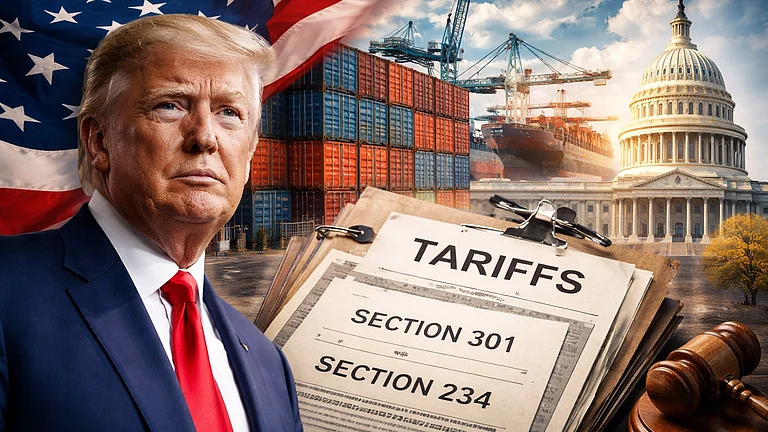
Despite the Supreme Court setback, the White House is exploring alternative legal pathways to impose trade restrictions on key partners. The Trump administration is considering using Section 301 of the US Trade Act to justify fresh tariffs.
Advertisement
Authorities have already initiated probes into 16 major trading partners, including India and China, examining issues such as “structural excess capacity” in manufacturing and trade practices viewed as distorting global markets or harming the US economy.
In addition, investigations have reportedly been launched into 60 other economies over allegations related to forced labour and unfair trade advantages.
While the court ruling has temporarily halted the “Liberation Day” tariffs, trade tensions remain far from resolved, signalling continued uncertainty for global businesses and supply chains.