Over 80% of India's crude oil comes from West Asia and Russia, both under geopolitical stress, leaving barely 30 days of domestic fuel stocks as a buffer.
The US waiver on Russian oil covers only cargoes already at sea, offering little real relief and India needs a long-term energy strategy, not temporary foreign permissions.
The Iran-Israel crisis threatens $98.7 billion in imports and $11.8 billion in agri exports, with ports Mundra and Nhava Sheva warned of cargo congestion within days.
India's Energy Dilemma: Why US Waiver May Fall Short of Real Long-Term Strategy
More than 80% of India's crude oil and petroleum product imports come from just two sources, West Asia, which accounted for roughly 49% of supplies in 2025, and Russia, which contributed around 31.5%. Both regions are currently under significant geopolitical strain

Crude Oil
Summary
Advertisement
India is staring at a potential energy and trade crisis as geopolitical tensions in West Asia and fresh pressure on Russian oil supplies converge to expose deep vulnerabilities in the country's import dependence and supply chains.
More than 80% of India's crude oil and petroleum product imports come from just two sources, West Asia, which accounted for roughly 49% of supplies in 2025, and Russia, which contributed around 31.5%. Both regions are currently under significant geopolitical strain.
With domestic fuel stocks covering barely 30 days of consumption, even a brief disruption at the Strait of Hormuz could quickly push up fuel prices, raise transport and logistics costs, and stoke broader inflation across the economy, trade policy research body GTRI pointed out.
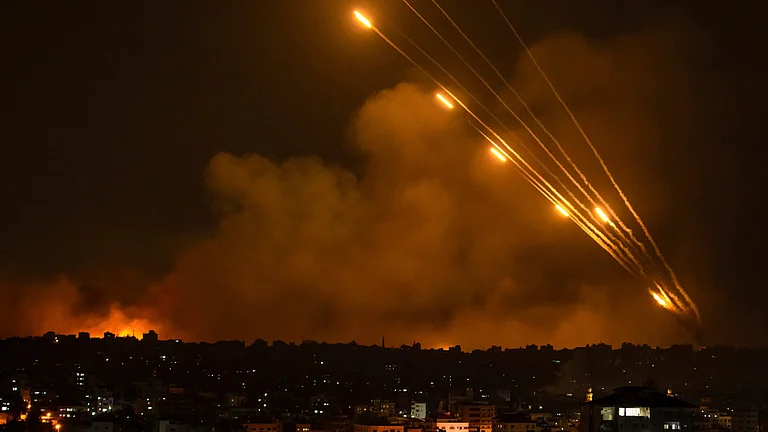
Notably, the US Treasury issued a licence on March 5 allowing the sale, delivery, or offloading in India of Russian crude and petroleum products that were loaded onto vessels on or before that date, with the authorisation running until April 14.
Advertisement
US Treasury Secretary Scott Bessent later clarified that the measure applies only to cargoes already stranded at sea, meaning it covers only a small and temporary volume of shipments that had already left Russian ports before the deadline. The quantity of such oil still afloat is likely limited, offering little real relief to India's refiners or its broader energy security, GTRI's report added.

Given this context, the research body pointed out a deeper issue with India. The country, which imports nearly 90% of its oil needs, cannot manage its energy security through short-term permissions issued by a foreign government.
India and Russia are sovereign states, and their bilateral energy trade does not fall under US jurisdiction, the body noted. Efforts by the US to authorise or restrict such commerce effectively amount to unilateral control over trade between independent countries, raising serious questions about sovereign equality and the freedom of international commerce, according to GTRI.
Advertisement
With supply risks rising and stocks thin, India must consider securing regular Russian oil imports rather than relying on narrow, cargo-specific waivers, the report added.
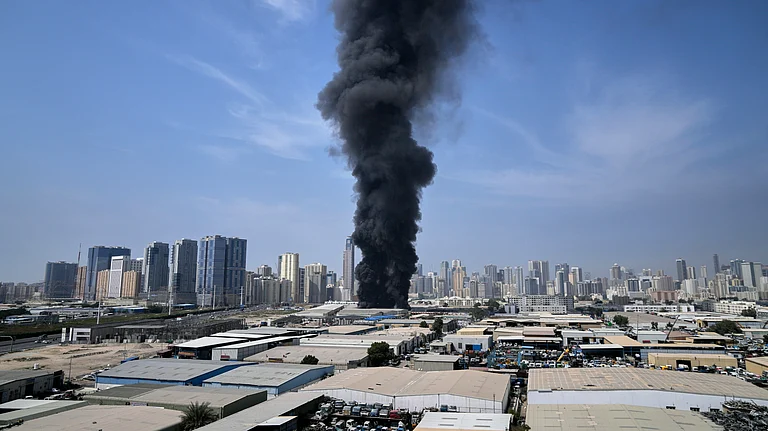
The stakes extend well beyond oil. In 2025, India imported $98.7 billion worth of goods from West Asia, making the region a crucial supplier of energy, fertilisers, and industrial raw materials. At the same time, India exported $11.8 billion in agricultural and food products to West Asia in 2025, accounting for 21.8% of its total agri exports. That two-way trade relationship is now under serious threat.
The disruption is already being felt on the ground. India's two busiest ports, Mundra and Nhava Sheva, could face significant cargo build-up within four to five days, the government has warned, as the West Asia crisis ripples through the country's trade and logistics network.
The warning came out of a high-level inter-ministerial meeting held on March 6, which brought together officials from the Ministry of External Affairs, RBI, the Directorate General of Foreign Trade, the Central Board of Indirect Taxes and Customs, and the Food Safety and Standards Authority of India, along with exporters, according to NDTV Profit.
Advertisement