Wage gap protests in Noida highlight structural labour inequality.
India’s demographic dividend is peaking and may reverse within a decade.
Rising youth unemployment, falling education participation and stagnant wages persist.
India’s Demographic Dividend Is Exploding—Did Noida’s Workers Just Prove It?
The SWI report, drawing on UN World Population Prospects data, projects that the 25–29 age group — the oldest slice of India's youth cohort — is expected to reach its numerical peak in 2026 itself

Representative Image
Advertisement
On the morning of April 10, thousands of garment workers walked off the production lines of the Phase 2 Hosiery Complex in Noida and gathered in B Block, blocking traffic before police ushered them into a nearby park. They came from factories run by Motherson Group, Richa Global Exports, Sahu Exports, and about 300 other units.
They complained that unskilled workers in Noida were earning around ₹435 per day, while workers doing the same work in Haryana, just across the state boundary, were receiving roughly ₹585 per day, following a recent wage revision by that state government.
Haryana had raised its minimum monthly wage from ₹14,000 to ₹19,000 — a jump of nearly 35%. Workers in Noida, employed in similar industries, wanted the same.
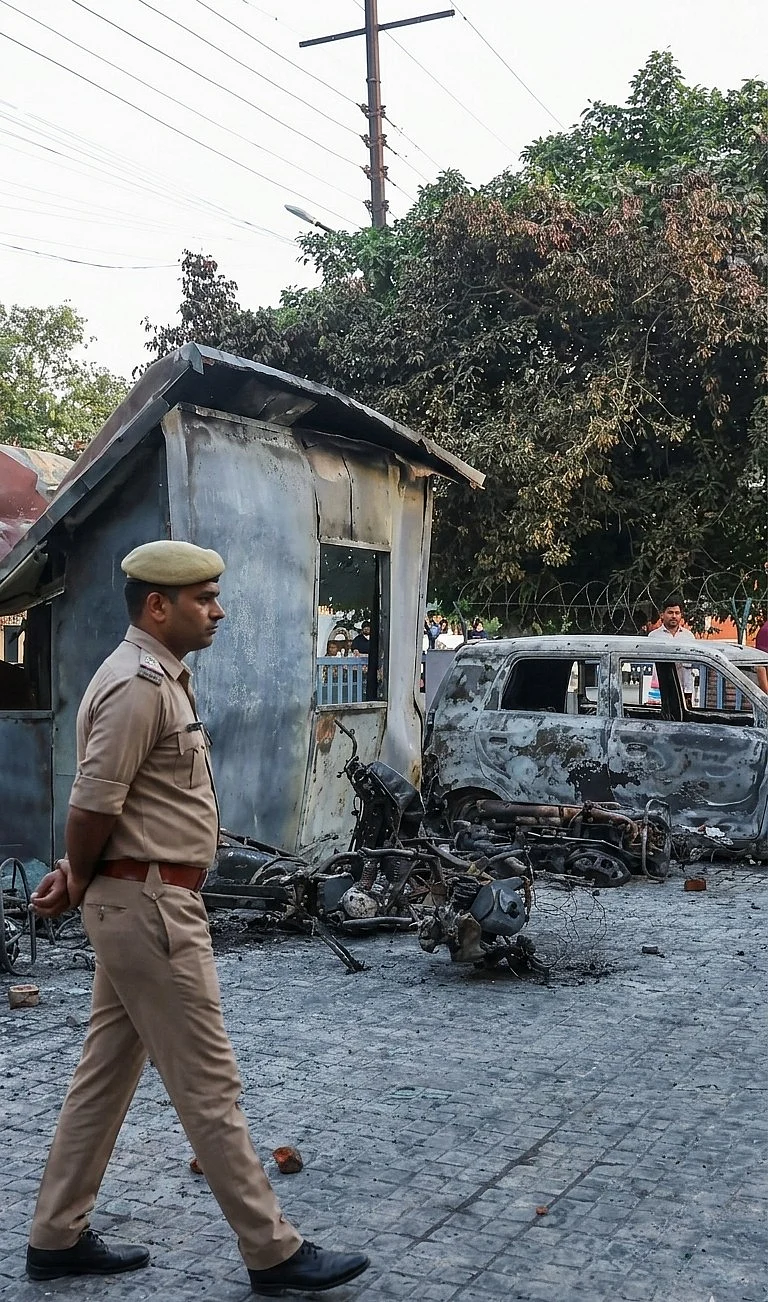
Three days of meetings, assurances, and district magistrate directives followed. None of it held. On 13 April, demonstrations spiralled into widespread violence, arson, and vandalism across multiple sectors.
Advertisement
Police made more than 350 arrests. Seven FIRs were registered. Primelegal The state government eventually announced a 21% increase in minimum wages for Noida and Ghaziabad — unskilled workers to receive ₹13,690 per month, up from ₹11,313 — and formed a high-powered committee to study long-term wage revision.
A crisis managed, then, if not resolved. But the Noida unrest is less a standalone event than it is a signal. A report published last month by Azim Premji University's Centre for Sustainable Employment, the State of Working India 2026, helps in understanding this.
Demographic Dividend Nearing Limit
In 2026, India is home to approximately 367mn people between the ages of 15 and 29. That number, cited in the SWI report, makes India's youth cohort the largest anywhere on the planet. They account for nearly a third of the country's working-age population.
For years, experts have called this the demographic dividend — the idea that a country grows faster and wealthier when a large share of its population is of working age, with relatively few dependents to support. India, the argument goes, has a once-in-a-generation window to ride this wave.
Advertisement
Here is the part that does not make it into the speeches. The window is closing.
The report, drawing on UN World Population Prospects data, projects that the 25–29 age group — the oldest slice of India's youth cohort — is expected to reach its numerical peak in 2026 itself. The 20–24 cohort already peaked in 2021. After 2030, the ratio of working-age adults to dependents will begin to decline. The demographic dividend, as a measurable economic phase, will end within a decade. India risks growing old before it grows rich — and avoiding that fate requires sustaining GDP growth of 8-9% per annum over the next two decades through coordinated policy effort.
The workers protesting in Noida are not macroeconomists. But they are in a very practical sense, the dividend itself.

India's Demographic Dividend
Leaving Education, Entering Uncertainty
To understand what is actually happening to India's youth in the labour market, one figure from the SWI report is worth dwelling on: in 2023, 77% of young men aged 15-24 who had left education cited the need to supplement household income as their reason for doing so. In 2017, that share was 60%. The increase came not from the poorest households alone — it was spread across income quartiles, with the upper-middle segment also pulling young men out of school and college and into whatever work was available.
Advertisement
This reversal matters because India had spent four decades painstakingly building educational participation. Between 1983 and 2017, the country made consistent gains in tertiary enrolment, particularly among women. Then, post-2017, young men began leaving education. The share of young men enrolled fell from 38% in 2017 to 34% by late 2024. The pandemic dampened enrolment temporarily, but the decline continued long after restrictions lifted. As of October–December 2024, the share of young men in education is the lowest it has been since 2017.
The cruel irony is that they are not dropping into good jobs. Graduate unemployment among young Indians in the labour force stands at 40%, a figure that has barely moved in four decades. Real monthly salaries for young graduate men have fallen since 2011. Between 2017 and 2023, earnings for this group effectively stagnated. The young men who stayed in education are now finding their degrees worth less than their fathers' were. The ones who dropped out to earn are finding that the earnings are not enough either.
Advertisement
By 2023, the share of young graduate men engaged in unpaid family work — helping on the family farm, assisting in a family business with no wage — had risen so sharply that it was comparable to non-graduate men. These are degree-holders working for nothing, treading water, waiting for an opportunity that the economy has not yet produced.
The ₹6,000 Divide
Back in Noida, the specific number that galvanised 45,000 workers was not ₹18,000 or ₹20,000. It was the gap of roughly ₹6,000 a month between what a worker earned in Uttar Pradesh and what the same worker earned across the border in Haryana. These are workers spending 10 to 12 hours a day running production lines, taking home between ₹13,000 and ₹15,000 — an amount that no longer sustains basic urban life as food prices rise, rents climb, and gas cylinders become costlier, as the Federation of Indian Trade Unions put it.
The Azim Premji report's own fieldwork found that women workers in Noida's Sector 121 had no knowledge of the government-mandated minimum wage of ₹700 per day — a failure of both employers and the labour administration to enforce, or even communicate, what workers were legally owed.
This is the structural gap that a single wage hike cannot close. India's Code on Wages promises a universal minimum wage framework. In practice, it relies on state-level notifications and enforcement — which is precisely why a Haryana announcement can make Noida feel economically unjust overnight, and why a ₹150-per-day difference can put a highway on fire.
The workers in Noida's industrial area came — as most do — from Bihar, from Uttar Pradesh, from Jharkhand: the states the SWI report identifies as carrying the largest youth populations and the least capacity to absorb them at home. They are the people the demographic dividend was supposed to be about. Educated enough to be aspirational, employed enough to be precarious, and paid just a little enough to finally reach their limit.
The smoke has cleared. The committee is meeting. The 25–29 cohort is at its peak. And maybe somewhere in a garment factory in Noida, a young man who dropped out of college to send money home is waiting to see which promise gets kept first.