Extreme heat and rising warm nights are sharply increasing electricity demand in Indian cities, with air-conditioners now contributing 60–70 GW to peak load.
India is witnessing a structural shift where cooling demand from households is becoming a major driver of both daytime and night-time power consumption.
Simultaneous heatwaves across states are straining grid flexibility, increasing the need for storage, smarter grids and stronger transmission infrastructure.
How Extreme Heat Is Rewiring India’s Power Demand
India’s power sector is entering a future where electricity demand will increasingly be shaped by climate and cooling needs rather than just economic growth

With temperatures soaring across the country, power demand is expected to peak. Photo by Athena Sandrini
Summary
Advertisement
As the lights went out across Gurugram on a sweltering Friday night, panic spread far beyond darkened apartments and stuffy showrooms. Inside a halted rapid metro train, hundreds of commuters sat trapped in suffocating coaches as the temperature outside hovered above 41 degrees Celsius.
Then came the announcement that power restoration could take time. One by one, the passengers stepped out onto the tracks, using mobile phone flashlights to navigate the darkness.
The chaos began after a fire broke out at a 220-KV power station in Sector 72, cutting electricity supply across several parts of Gurugram and turning an ordinary summer evening into a reminder of how dependent modern life is on the uninterrupted supply of electricity.
“Many urban outages are linked to local distribution and substation stress, as heat waves are now creating two separate demand peaks in a single day. This places enormous stress on local substations and distribution infrastructure especially during night hours when solar supply is unavailable,” says energy-market analyst Akkenaguntla Karthik.
Advertisement
Not only Gurgaon, different parts of the country are facing major power outages as India’s peak power demand crossed 270 GW on Friday.
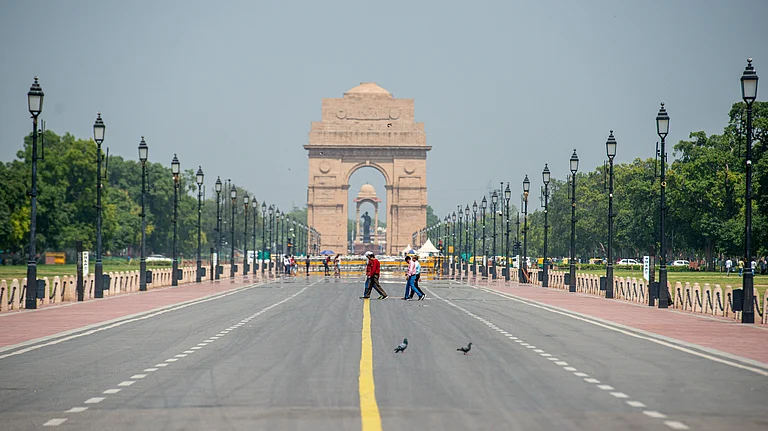
Most of these incidents can be traced to a grid struggling to cater to burgeoning power demand. Key transmission components, such as transformers, were planned and installed nearly a decade ago based on the existing demand projections. At the time, utilities estimated electricity growth using simpler prediction models. However, actual consumption growth has significantly exceeded those expectations.
Data from the India Climate and Energy Dashboard shows domestic electricity consumption rose from around 238 million units in financial year 2015 to nearly 408 million units in financial year 2024 — an increase of about 71%.
Such a sharp rise in electricity consumption requires major upgrades in system planning and infrastructure capacity. But many local distribution companies may still be operating transformers designed for much lower loads.
Advertisement
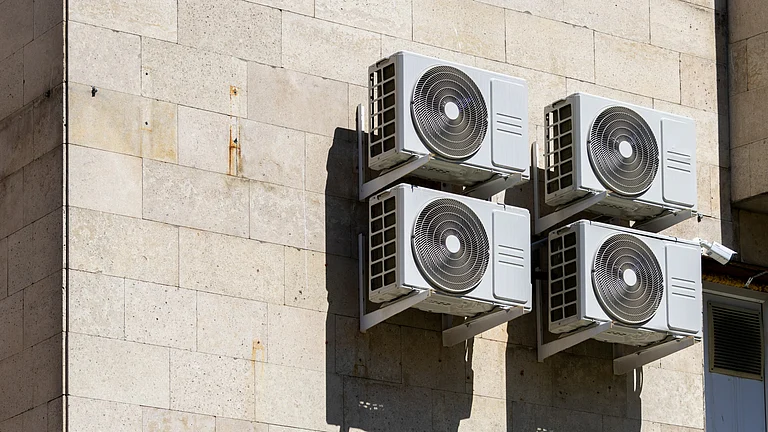
As more households use air conditioners simultaneously during periods of extreme heat, these transformers are being pushed beyond their intended capacity, increasing the risk of failures and local outages.
“Local infrastructure—such as transformers, feeder lines, and substations—is often not built to handle sudden spikes in cooling demand when large numbers of ACs switch on simultaneously. So even if the national grid has enough power overall, cities can still face local outages and transformer failures,” says Karthik.
The Spiking Demand
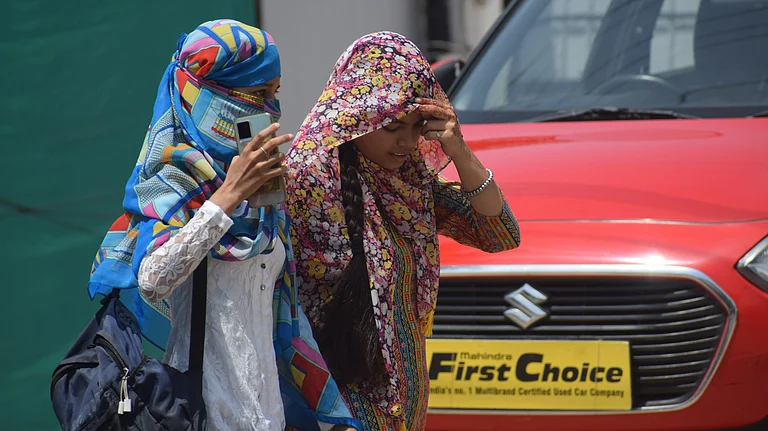
For decades, India’s electricity demand followed a fairly predictable pattern. Industrial activity drove consumption during the day, while household usage peaked for a few hours in the evening when lights, fans and appliances were switched on. Summer demand spikes were seasonal, shorter and largely manageable. Now, extreme heat is changing that pattern entirely.
However, today, electricity demand is increasingly being driven by cooling needs, which keep consumption elevated from late morning until deep into the night. Instead of a sharp evening peak, utilities are now dealing with prolonged, all-day demand pressure during heatwaves. Even night-time demand is staying unusually high because hotter nights prevent homes and commercial buildings from cooling naturally.
Advertisement
Although air-conditioner penetration in India remains relatively low compared to developed economies, ownership is rising rapidly. Before 2019, only one in 10 Indian households had access to an air-conditioner. But now, India is adding 10-15 million new ACs every year and is expected to install another 130-150 million units over the next decade as rising incomes and intensifying heatwaves fuel cooling demand, according to a recent study by UC Berkeley. Without policy intervention, ACs alone could drive 120 GW of peak power demand by 2030 and 180 GW by 2035, over 30% of the projected national peak demand, the study added.
Interestingly, over the last four decades, heat extremes in India have increased steadily, but the rise in very warm nights has been even faster than the rise in very hot days. According to CEEW, between 2012 and 2022, nearly 70 per cent of Indian districts experienced at least five additional very warm nights every summer between March and June. In comparison, only around 28 per cent of districts saw five or more additional very hot days.
Advertisement
The increase has been particularly sharp in cities. Mumbai recorded 15 additional very warm nights per summer over the last decade, while Bengaluru saw 11 more. Bhopal and Jaipur recorded seven additional warm nights each, Delhi saw six more, and Chennai recorded four.
As per International Energy Agency, for every 1°C rise in average daily temperature above 24°C, electricity demand increases by nearly 2%, highlighting how strongly extreme heat is now influencing power consumption patterns.
“ACs are already contributing 60 to 70 GW to peak demand, and their growth is outpacing the grid’s ability to keep up after sunset,” said Nikit Abhyankar, the study’s lead author. “Without intervention, we risk blackouts or costly emergency fixes. But with smart policy, we can turn this challenge into a win for consumers, manufacturers, and the grid.”
The trend reflects a major structural shift in India’s power sector, where cooling demand, once considered seasonal and limited to affluent urban households, is increasingly shaping national electricity consumption and driving record daytime peak demand during heatwaves.
The Changing Consumer
The rising demand is being driven by a change in the nature of the electricity consumer in India, which also influences geographical trends.
Significantly, residential consumption has become as important as industrial demand in many urban centres, with cities such as Delhi, Gurugram, Ahmedabad and Hyderabad becoming more susceptible to spikes in power use during heatwaves.
This change of pattern can be seen in India’s latest electricity consumption data released by the Power Ministry. India’s peak power demand has surged dramatically over the years, growing from roughly 135 GW in 2013 to a record-breaking high of 270.82 GW on May 21. More tellingly, India’s evening/night peak demand also reached 251.964 GW at 22:45 hrs on 21 May 2026, indicating sustained all-day pressure on the grid rather than a short-lived spike.
“This sustained peak structure — a sharp midday surge driven by extreme heat and a prolonged night-time cooling tail — has emerged as one of the most pressing challenges for modern grid architecture, highlighting the need for smarter distribution infrastructure, not just additional generation capacity,” says Priyansh Mohan, CEO and Co-Founder, Meine Electric.
On May 25, Delhi’s peak power demand surged to 8,439 MW, according to official figures, surpassing the earlier May peaks of 8,231 MW on May 21 and 8,039 MW on May 20. Data from the Ministry of Power also show that Delhi’s electricity demand had never crossed the 8,000 MW mark in May at any point during the previous six years.
The geographical trends make the management of these spikes more tedious. Earlier, regional peaks often occurred at different times, allowing power to be transferred from one state to another. Now, simultaneous heatwaves across large parts of India are creating nationwide demand surges, reducing the grid’s flexibility.
India’s power sector is entering a future where electricity demand will increasingly be shaped by climate and cooling needs rather than just economic growth. As heatwaves become longer, more frequent and more intense, the country is likely to witness sustained rises in daytime and night-time electricity consumption, particularly from air-conditioners and cooling systems.
This means the grid will have to prepare not only for record peak demand, but also for prolonged periods of high consumption across entire days and regions. Simultaneous heatwaves across multiple states could further reduce grid flexibility, making it harder to shift surplus electricity from one region to another.
The challenge is also exposing a mismatch in India’s energy transition. Solar power is helping meet rising daytime demand, but evening and night-time cooling loads still rely heavily on coal because battery storage and flexible generation capacity remain limited. As cooling demand grows, India may need large investments in storage, grid modernisation, transmission infrastructure and demand management systems.