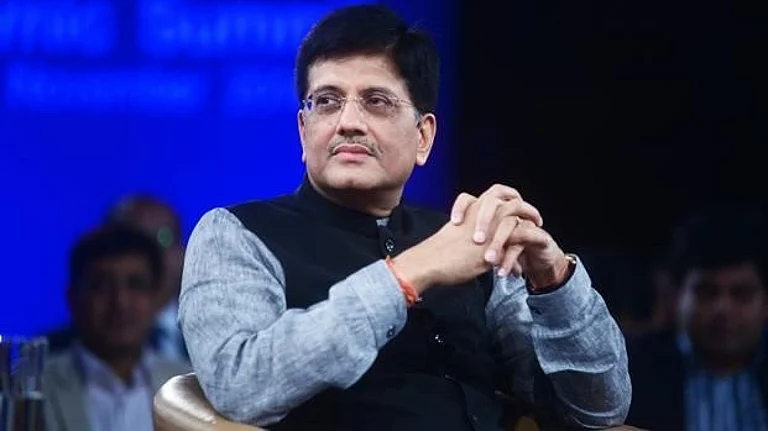
India and New Zealand signed a Free Trade Agreement (FTA) on Monday, reviving a process that first began in 2010, stalled after nine rounds in 2015, and was eventually brought back to life in March 2025. Commerce Minister Piyush Goyal signed for India; Trade Minister Todd McClay for New Zealand. New Zealand Prime Minister Christopher Luxon described it as a once-in-a-generation deal. It took under a year to conclude after negotiations restarted.
From Apples to Engineers: The Many Winners and Quiet Trade-Offs in India’s New FTA with New Zealand
The agreement is India’s seventh FTA in five years, following deals with Mauritius, the UAE, Australia, EFTA countries, the UK and Oman

Advertisement
The agreement is India’s seventh FTA in five years, following deals with Mauritius, the UAE, Australia, EFTA countries, the UK and Oman. Bilateral merchandise trade crossed $1 billion in FY2025. Both sides have set an informal target of doubling that to $5 billion by 2031. The pact still needs cabinet approval in India and parliamentary sign-off in New Zealand before it enters into force, which is expected to take around six months.
The Tariff Asymmetry
The most striking feature of the deal is the gap between what each side is giving away. New Zealand’s average import tariff before the FTA was 2.3%, compared to India’s 16.2%. Nearly 58% of New Zealand’s tariff lines were already duty-free before any agreement was signed.
Under the FTA, New Zealand eliminates tariffs on all 8,284 of its tariff lines from the day the agreement enters into force. India, in turn, opens around 70% of its tariff lines, covering roughly 95% of what New Zealand currently exports to India. Dairy, sugar and edible oils have been kept out altogether.
Advertisement
Ajay Srivastava of GTRI notes that because so much of New Zealand’s market was already open, many Indian exporters will not see a genuinely new benefit. The real gains, his report argues, will come from products that still faced duties and are now being eliminated: textiles, garments, leather, carpets, ceramics, engineering goods and automotive components.

Manufacturing: Leather, Textiles and Electronics
For Indian manufacturers, the tariff elimination is immediate. A Rubix Data Sciences analysis identifies textiles and apparel, leather and footwear, engineering goods, automobiles and pharmaceuticals as the sectors likely to see the most direct uplift. India’s exports to New Zealand have already been shifting towards higher-value categories over recent years, and the FTA is expected to sharpen that trend.
The leather sector drew particular attention ahead of the signing. Agra, which accounts for nearly 75% of India’s leather footwear production, was the site of an industry outreach event on 26 April, jointly attended by Goyal and McClay. Duties on leather goods are being reduced from 5% to zero, and exporters there see New Zealand as a stepping stone to the wider Oceania region.
Advertisement
In electronics, Vikram Gandotra, President of the Indian Electrical and Electronics Manufacturers’ Association (IEEMA), said the agreement “aligns with India’s manufacturing prowess and New Zealand’s $20 billion investment commitment in renewables and technology.” New Zealand was already importing over $25 million in transformers and cables from India before the deal was signed. Gandotra said the IEEMA expects the FTA to be a primary driver in doubling bilateral trade to USD 5 billion within five years.
Food and Agri: Opportunity, With a Caveat on Apples
India’s food and beverage exports to New Zealand grew at a five-year compound annual growth rate of 6.4% to reach $101.85 million in 2025, according to the Trade Promotion Council of India (TPCI). The top categories were fish and crustaceans, coffee, tea and spices, cereals, vegetable preparations and miscellaneous edible goods.
India currently ranks 12th among New Zealand’s import sources in this category, with a share of around 2% of New Zealand’s total food and beverage imports. Mohit Singla, Chairman of TPCI, called the FTA a “forward-looking move” that holds “immense potential for strengthening bilateral trade, especially in a less penetrated, high-income market.” He also pointed to the agreement’s sanitary and phytosanitary provisions, which are expected to reduce compliance costs for Indian food exporters.
Advertisement
Apples are the most politically sensitive agricultural issue in the deal. New Zealand apple imports already account for nearly one-fifth of India’s domestic production. The concession is limited: it applies only between April and August each year, only to apples priced at $1.25 per kg or above, and within a quota that starts at 32,500 tonnes in Year 1 and rises to 45,000 tonnes from Year six. The duty falls from 50% to 25% within that quota. The GTRI report warns that without urgent reforms in storage, grading and transport, these concessions could progressively erode market share for apple growers in Kashmir and Himachal Pradesh.
Dairy has largely been kept out. New Zealand’s dairy exports to India totalled just $2.78 million in 2025. India has resisted opening the sector to protect millions of small farmers, and the agreement signals that access will remain limited to niche, high-value products. Manuka honey and certain other agricultural goods are handled through tariff-rate quotas with minimum prices and safeguard conditions.
Advertisement
Gems and Jewellery: A Three-Year Target
The Gem and Jewellery Export Promotion Council (GJEPC) has put a specific number on its ambitions and expects India’s gem and jewellery exports to New Zealand to grow from $16.61 million to nearly $50 million over the next three years, on the back of zero-duty access. Kirit Bhansali, Chairman of GJEPC, highlighted the duty advantage Indian exporters now hold over competitors such as China and Thailand, and pointed to New Zealand’s Indian-origin population of over 300,000 people as a commercial lever for expanding Indian retail presence through local partnerships.
People Movement: Visas and Students
The services and mobility provisions may ultimately matter more than the tariff schedule. New Zealand has offered commitments across 118 services sectors. On mobility, the deal is specific: Indian students in New Zealand will be permitted to work 20 hours per week.
STEM bachelor’s and master’s graduates will receive three-year post-study work visas; doctorate holders will get four years. A new temporary employment pathway will allow 5,000 skilled Indian professionals, particularly in IT, healthcare and education, to work in New Zealand at any given time for up to three years. A Work and Holiday visa scheme will allow 1,000 young Indians per year to live and work in New Zealand for 12 months.
New Zealand currently runs a significant services surplus with India. In FY2025, India’s services imports from New Zealand were $550 million, against services exports of just USD 255.8 million. Education is the main driver on New Zealand’s side, with Indian students accounting for a substantial share of that revenue.
The Investment Commitment and the Trade Balance Reality
New Zealand has committed to investing $20 billion in India over 15 years, primarily in renewable energy and technology. The GTRI report urges caution. New Zealand’s actual investment in India has been below $1 billion over the past 25 years. The agreement’s own text acknowledges that the target comes with conditions and that unforeseen circumstances may lead both parties to adjust the figure by mutual agreement.
On the trade balance, India’s merchandise surplus with New Zealand has been narrowing sharply. Rubix Data Sciences notes it declined from $203 million in FY2024 to $9.4 million in FY2026. GTRI projects India’s total trade deficit with New Zealand to rise to $353.6 million in 2026 once services are included.
Looking Forward
Both Rubix Data Sciences and GTRI frame the agreement less as a trade breakthrough and more as a framework for deeper engagement with a small but wealthy market. For New Zealand, it offers more predictable access to one of the world’s fastest-growing large economies. For India, New Zealand’s position in Oceania, and the Indian-origin community of over 300,000 people already living there, offers a platform for broader Pacific engagement. TPCI’s Singla noted that with the India-Australia FTA already in place, the New Zealand deal could help knit together supply chains across the largely untapped Oceania region.
Whether trade doubles by 2031 will depend less on the tariff schedule and more on what follows it: direct flights, cold chain investment, mutual recognition of qualifications, and the kind of people-to-people links that turn trade frameworks into trade reality.