India has officially overtaken Pakistan as Afghanistan’s largest export destination
Pakistan’s share of Afghan exports plummeted by 38.2%, falling to $505 million
Trade with India is largely sustained via Iran’s Chabahar Port, bypassing Pakistan’s refusal of overland transit
For Taliban-Run Afghanistan, India Pips Pakistan To Become The Biggest Export Destination
Afghanistan's exports to India jump 23% in 2025, surpassing Pakistan as the top trade destination; explore the shift to Chabahar Port and upcoming lithium mining tenders

For Taliban-Run Afghanistan, India Pips Pakistan To Become The Biggest Export Destination
Summary
Advertisement
India has overtaken Pakistan as the largest export destination for Taliban-run Afghanistan at a time when Kabul's ties with Islamabad are under visible strain and geopolitical upheavals are reshaping global trade.
According to the data shared by the officials of the Afghanistan’s Ministry of Industry and Commerce, Afghanistan's exports to India jumped from 612 million dollars in 2024 to 755 million dollars in 2025, reflecting a rise of over 23 per cent.
Meanwhile, the country's exports to Pakistan shrunk from 817 million dollars to 505 million dollars in the same period, marking a decline of 38.2 per cent.
Afghanistan’s major exports to India include dried figs, asafoetida and its seeds, raisins, apples, pistachios, saffron, green cumin, almonds, and walnuts.
On the import side, Afghanistan brings in a range of goods from India, including pharmaceutical products, raw materials for industrial production, sugar, vehicle batteries, auto spare parts, tractor machinery, clothing, roasted chickpeas, and motorcycles.
Advertisement
Its imports from India in 2025 totalled around 237 million dollars.

Notably, the bilateral trade between the two countries stood approximately at $992 million in 2025, while the figure stood at 1.0087 billion dollars in 2024.
Notably, according to the data shared by the officials in Kabul, the five major export destinations of Afghanistan are India, Pakistan, Uzbekistan, the United Arab Emirates, and Kazakhstan.
Likewise, the five major sources of Afghanistan’s imports are Iran, the United Arab Emirates, Pakistan, China, and Turkmenistan.
Afghanistan has diversified its export markets with Exports to Uzbekistan more than doubled, rising from $56 million in 2024 to $129 million in 2025 and UAE increased from $82 million to $98 million.
On the import side, Afghanistan continues to rely heavily on regional players, with Iran remaining its largest source of imports. Imports from Iran rose to $3.45 billion in 2025, compared to $3.14 billion in 2024.
Advertisement
The UAE retained its position as the second-largest import partner, with imports reaching $2.28 billion in 2025 followed by Pakistan with $1.26 billion (down from $1.64 billion in 2024), China with $1.01 billion (up from $784 million) and others.
One of the most critical elements sustaining this trade relationship is connectivity.
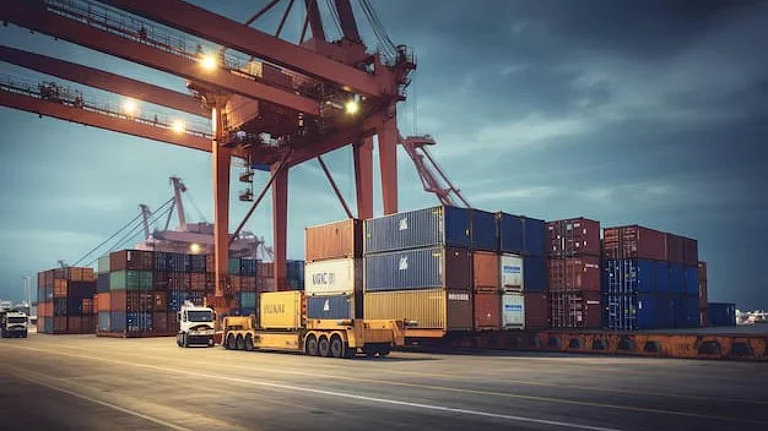
With Pakistan denying overland transit access for India-Afghanistan trade, the two countries have relied on Iran’s Chabahar Port as the primary transit corridor.
Beyond traditional trade, India and Afghanistan are now exploring deeper economic collaboration in the mining and natural resources sector.
During the 2025 visit of Afghanistan’s Industry and Commerce Minister Alhaj Nooruddin Azizi, both sides announced the formation of a joint working group on mining and investment, aimed at facilitating Indian participation in Afghanistan’s resource sector.
Afghanistan is widely believed to possess vast resources of lithium, copper and rare earth minerals- resources that are increasingly critical in global supply chains, especially for clean energy technologies and electronics manufacturing.
Advertisement
According to several international reports, Afghanistan has the stockpile of hundreds of million dollars untapped mineral resources such as lithium, copper and other rare earth elements.
As per by a report by the Australian Institute of International Affairs, after the exit of the US led NATO forces in Afghanistan back in 2021, “China stepped into Afghanistan, focusing on exploiting mineral resources, including lithium, crucial for green technologies like electric vehicle batteries”, raising “geopolitical tensions.”
Notably, Afghan officials have emphasized that these reserves are “not merely speculative but a proven reality” and have expressed openness to “transparent, win-win investment partnerships”, particularly with Indian firms.
While as of now, there has been no official confirmation yet of finalized bids by Indian companies but sources have indicated that Afghan authorities have submitted several tenders to the Indian side for the bidding of mines including for lead, zinc, talc and others.
For India, deeper economic engagement with Afghanistan serves multiple strategic objectives.
Advertisement
First, it helps maintain a foothold in Kabul which has become a geopolitical chessboard with the deeper penetration of China along with the ongoing animosity with Pakistan.
Second, access to Afghanistan’s mineral wealth aligns with India’s push to secure critical supply chains particularly for rare earth elements and battery materials.
Third, strengthening trade ties provides India with soft leverage in Afghanistan, even in the absence of formal diplomatic recognition of the Taliban regime.
Notably, there is a clear push from Kabul to attract Indian private sector participation, alongside government-level engagement in sectors such as mining, infrastructure and manufacturing.