Diet Coke shortage is driven by a crunch in aluminium cans, its only packaging format in India.
West Asia conflict disrupted aluminium supply chains, delaying imports and tightening availability.
Rising demand and supply disruption has resulted in price hike pressure, with costs likely increasing for consumers.
Diet Coke Getting Expensive in India? Here's What's Behind the Shortage and Price Hike
The trigger of this shortage is a war thousands of kilometres away. Iran's blockade of the Strait of Hormuz has severely disrupted aluminium can supplies to India, and Diet Coke, which is sold exclusively in cans, is bearing the brunt

Diet Coke
Summary
Advertisement
A shortage of Diet Coke in parts of India is starting to show up in consumers' wallets. Outlook Business spoke to buyers across cities who reported rising prices, with some pack sizes harder to find and others being sold at higher-than-usual rates.
The trigger of this shortage is a war thousands of kilometres away. Iran's blockade of the Strait of Hormuz has severely disrupted aluminium can supplies to India, and Diet Coke, which is sold exclusively in cans, is bearing the brunt.
While there is no official confirmation of a price hike, consumers across Mumbai, Delhi, Bengaluru and Gurugram are already feeling the pinch.
What Are Consumers Saying?
A Delhi-based consumer told Outlook Business that she noticed the price change about two weeks ago. "I usually bought it for ₹25, but for the past two weeks, the same 180 ml can has been costing me ₹30. I even asked the shopkeepers about the hike, but they didn't really give me a valid answer," she said.
Advertisement
The 300 ml can appears to be the most affected pack size. Sonam from Gurugram said the can is being sold for ₹70 at some stores, nearly double the usual price. A consumer from Mumbai reported the same can being sold for ₹50, while Arghya Deep from Bengaluru said he encountered the ₹70 price point as well. "Three days ago, I went to a store to get myself a ₹40 can, and I was surprised when the shopkeeper told me that it now costs ₹70," he said.
Lakshmi, a daily Diet Coke consumer from Delhi, said the 300 ml can which usually costs ₹40 is no longer available at her usual stores. "I think the shortage is because of the aluminium crisis caused by the war," she said.
Ishpreet from Mumbai added, "I recently purchased a box of 24 cans from a local store and had to pay ₹10 extra per can."
Advertisement
Not everyone has felt the pinch equally. Lakshya from Bengaluru, who buys in bulk through online grocery apps, said he has not seen a formal price hike. "But I have noticed a change recently. Earlier, there were days when I would get one 300 ml can for ₹32 or ₹33 in these apps, but right now each can is strictly sold for ₹40," he said.
Shilpasree from Delhi resonated the same sentiment. "You get the 300 ml can for ₹38 or ₹36, but the price has always been ₹40 only," she said, adding that the 180 ml can is still available at its usual price where it is in stock. Gauri Dalal and Shipra also said prices appeared unchanged for them.
Notably, NDTV Profit has reported that Diet Coke prices are likely to be officially increased by ₹10, taking the price of a standard ₹40 unit to ₹50.
Why Is There a Shortage?
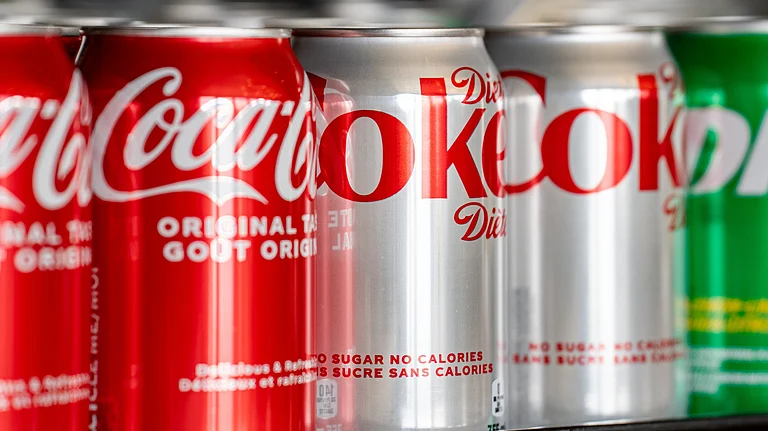
The root cause is a shortage of aluminium cans, the only packaging format in which Diet Coke is sold in India. Unlike other soft drinks that are also available in plastic bottles, Diet Coke's exclusive dependence on cans makes it uniquely vulnerable.
Advertisement
The ongoing conflict in West Asia has severely disrupted aluminium supplies globally. Iran's blockade of the Strait of Hormuz has hit can supplies to India particularly hard. Around 9% of global aluminium production comes from the Gulf region, according to a report by DAM Capital, and the ripple effects have been swift.
Two Coca-Cola distributors earlier told Reuters that the company had notified them it was either rationing supplies or not fulfilling some orders. "We've been placing orders but have been told there is a shortage due to war," one distributor was quoted as saying by Reuters.
Adding to the problem, mandatory BIS certification for aluminium cans came into effect in April 2025. While the regulation aims to bring standardisation, delays in approvals have slowed both domestic production and imports, tightening supply further.
Why Diet Coke Specifically?
While the aluminium shortage is affecting all canned soft drinks, Diet Coke is bearing the brunt. "While can shortages are impacting all soft drinks, the reason why Diet Coke is seeing a shortage in particular is because of a combination of factors," a leading bottling partner told Economic Times. "It is the fastest growing diet drink in the country by a significant margin."
Advertisement
Diet Coke recorded sales of ₹50 billion in 2024-25, its highest since at least 2021, underlining just how much is at stake for Coca-Cola. The shortage has also arrived at the worst possible time, with soaring summer temperatures driving double-digit growth in cola and beer sales across the country.
The supply gap, which first emerged in Mumbai, has since spread to Bengaluru, Pune and parts of Delhi-NCR.
What Happens Next?
To bridge the gap, companies are now sourcing aluminium cans from the UAE, Sri Lanka and Southeast Asia, markets that together supply around a third of India's aluminium can requirements. However, these alternatives cost at least 25-30% more than usual, according to multiple reports, which is likely to keep upward pressure on prices in the near term.
The effects of the West Asia war is not just limited to Diet Coke. Plastic preforms used for PET bottles and glass bottle costs have risen sharply, squeezing manufacturers of bottled water and beer. Brewers have already approached state governments seeking permission to raise beer prices by 12-15%. Even India's condom manufacturing industry, valued at $860 million, has been affected due to disruptions in aluminium and petrochemical derivative supplies.