Challenges the bulky 16-inch laptop stereotype with a sleek yet powerful design
Delivers strong performance with AMD Ryzen AI 465, 32GB RAM, and 1TB SSD
Features a standout 16-inch 3K OLED display with a 120Hz refresh rate
Asus Zenbook S16 Review: A Well-Crafted 16-Inch Laptop That Can Become Your New Daily Companion
Asus Zenbook S16 Review: Premium 16-inch OLED ultrabook pairs Ryzen AI power and stellar design with a few compromises in battery life and touchpad usability

Asus Zenbook S16 Review: A Well-Crafted 16-Inch Laptop That Can Become Your New Daily Companion
Summary
Advertisement
Carrying around a 16-inch laptop is no mean feat. Sure, there are the LG Grams of the world, but those aren’t exactly what you would call ‘powerhouses’. 16-inch laptops are known to be heavyweights, provide more screen real estate, and with that, more power and longer battery life. At least that is the perception.
When I got the Zenbook S16 for review from Asus, I was as sceptical as ever. Quickly though, my thoughts changed, for the better.
For me, it wasn’t just about the design (which I loved, and I’ll get to in a moment), but about what it packs in underneath all the premiumness. There’s the AMD Ryzen AI 465 chip, 32GB of RAM and a 1TB SSD. Couple that with a 16-inch 3K OLED panel (with a 120Hz refresh rate), that is the star of the show, and you have a winner on your hands.
Advertisement
What I Liked
Design language: Something that is very important to me is the design of a product. If it is something that I interact with, on a daily basis, then it must have a good design language, along with accessibility. A 16-inch laptop, weighing just 1.5kg, and one that hardly makes any compromises? I’m sold.
The ceraluminum chassis that Asus has been touting for years, has become one of its mainstays now. On the Zenbook S16, the ceraluminum - a blend of ceramic and aluminum - creates a durable and solid build, yet keeps it lightweight for its size.
The laptop feels premium, and it's a product you’d want to pick up daily. The balance of weight is done just right.
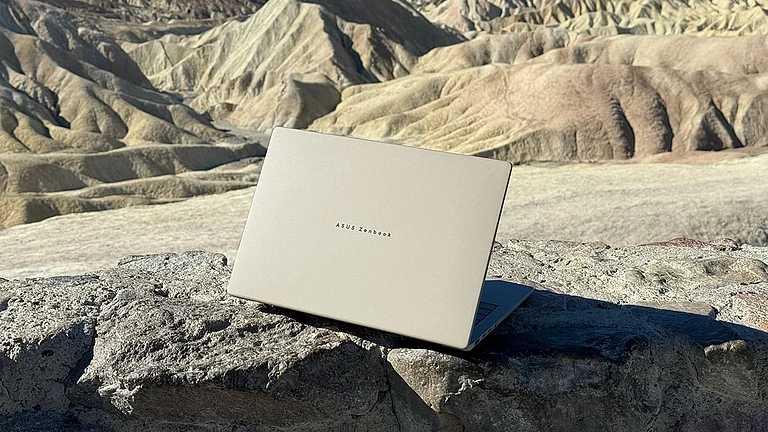
There’s now just a ‘Asus Zenbook’ lettering on the lid, something that has caused varying opinions from onlookers and fellow media friends.
Port selection: Asus hasn’t changed it, vis-a-vis the previous model, and I’m a happy camper. There are two USB-C ports (Thunderbolt 4), one USB-A, one HDMI, a full-size SD card and even a 3.5mm headphone jack!
Advertisement
Snappy keys: The laptop has a small-ish keyboard, yet it offers tactile keys. It’s got good key travel, bright backlighting, and a good amount of feedback.
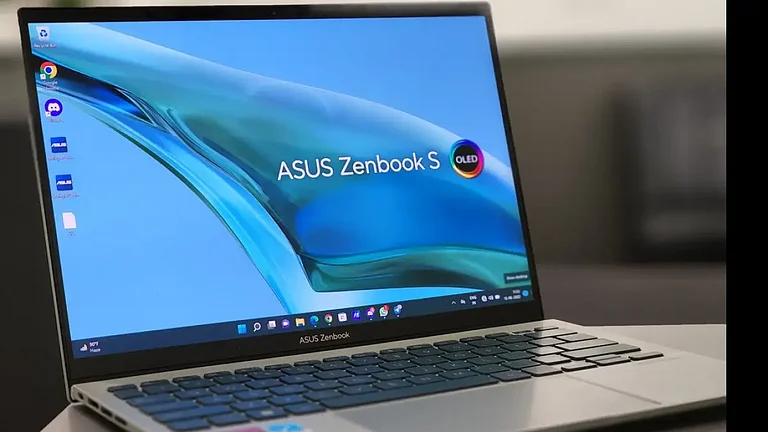
OLED display: What I’ve liked about Asus, over the years, is the fact that they’ve doubled down on OLED displays. The one on the Zenbook S16 is sharp, brighter than before, and has more contrast. Everything was at a premium. This screen also doubles up as a touchscreen, something which I use constantly, especially when scrolling through social media. Asus has some burn-in protection tools and a screensaver, to keep its OLED fresh for the long run.
It’s a 16-inch OLED (2880x1800) display, with a 120Hz refresh date and the colours are popping. What’s new for the Zenbook S16 this year is that peak HDR brightness is now at 1000 nits against 500 nits before. There’s also support for DisplayHDR True Black 1000. Watch your movies with an extra sense of enjoyment.
Advertisement
Performance: AMD’s brand-new Ryzen AI 9 465 chip excels, even if it is just a mid-generation refresh. Forget benchmarks, because they won’t make a difference vis-a-vis last year's model. In real world performance, I had close to zero hiccups.
The only time I had some hiccups was when playing the very latest of games at their highest settings (I even tried Far Cry at the medium settings), and it did stutter and wasn't smooth gameplay. That’s also down to the fact that Asus didn’t include a dedicated GPU in this laptop. It has the AMD Radeon 880M iGPU. It isn’t bad, but yes, this isn’t a gaming laptop.
Rendering videos also took longer than I expected, but nothing that’s a deal breaker.
What I Did Not Like
Speakers: There are downward-firing speakers on the laptop. The speakers are decent, with good clarity at lower volumes. The fact that they are downward-firing, means the placement of the laptop becomes key. I’d say, for any movie you’re watching, connect these to a Bluetooth speaker, and enjoy it to the max.
Advertisement
Touchpad: If I had to change anything about the Zenbook S16 then it would be that large touchpad. Yes, it is massive. It’s an excellent trackpad, when all you want to do is move around the cursor. Anything else, and the trackpad fails. From the left-hand side of the trackpad, I tried performing a ‘left-click’ and it constantly failed me. It constantly sent me into the ‘right-click’ menu. Furthermore, there were way too many accidental touches. Also, Asus should have inserted their famous number pad. Gestures are useful, but again, only when tthey work.
Battery Life: One thing, other than the touchpad, that disappointed me the most was with respect to the battery life. Despite Asus upping the battery capacity to an 83Whr cell, the endurance wasn’t up to the mark.
Many other laptops that I’ve tested, and currently in the process of testing, last longer than the Zenbook S16. Every time I’ve brought the laptop outside of the house, and started my day around 11 AM, I’ve had to charge it once before going to sleep. Yes, it can last a workday, but barely. I was getting around 6-7 hours of screen-on-time. And mind you, this is without gaming. Just some YouTube, Google Docs, Google Chrome, photo editing, and lots of Spotify music in the background.
There is a 68W USB-C charger in the box, but just get yourself a 100W (or more) PD charger, which will be much easier to carry.

Is The Zenbook S16 Worth A Purchase?
The answer isn’t a definite yes. I mean, it’s easy to like the Zenbook S16, and even recommend it, but there are some questionable (read battery life and touchpad) drawbacks.
The Zenbook S16 has one of the best-in-class OLED displays, a suprisingly powerful CPU, an iGPU good for casual gaming, and a keyboard that far excels your initial expectations. It coms in at Rs 1.7 lakh, and that’s a steep price to pay for a thin-and-light laptop. Yes, it is a 16-inch laptop, and got all the bells and whistles (sans a dedicated GPU), but the price tag is something to think about.
What’s going for the Zenbook S16 is its design. Lightweight and oozing premiumness through and through. This segment, the 16-inch one, doesn’t have much to brag about. The options are limited, but the one competitor that comes to mind is the upcoming Dell XPS 16 (yet to launch in India).
Maybe wait for a discount, and then snag the Zenbook S16. It’s definitely a good buy, and you’ll be one happy camper, just like I was, while reviewing the device.