MeitY approves 29 projects worth ₹7,104 crore under the fourth ECMS tranche
India achieves 100% domestic coverage in LED components and electronic relays
The scheme attracts ₹1.15 lakh crore in investment commitments, doubling initial targets
Ashwini Vaishnaw Warns Electronics Industry to Invest in Design, Build Indigenous Supply Chain or Risk Losing Approvals
Union Minister Ashwini Vaishnaw approves 29 new electronics projects, including India’s first rare-earth magnet plant

Union Minister Ashwini Vaishnaw
Summary
Advertisement
The Ministry of Electronics and Information Technology has approved the fourth tranche under the Electronic Component Manufacturing Scheme (ECMS), with Union Minister Ashwini Vaishnaw cautioning companies that future approvals will depend on their commitment to developing in-house design capabilities and building a robust swadeshi supply chain to strengthen India’s electronics ecosystem.
“If we want to build strong systems whether in housing, products, or infrastructure design must be at the core. This requires fostering collaboration among designers, integrating design thinking across sectors such as electronics, manufacturing, and modern industries, and making serious investments in developing robust design capabilities,” said Vaishnaw.

He also emphasized the need for stronger coordination and execution mechanisms, suggesting the establishment of a dedicated coordination cell to ensure alignment among all stakeholders.
Additionally, Ashwini Vaishnaw urged industry associations to meet at least once a month to review progress, share updates, and maintain alignment.
Advertisement
While addressing the gathering, Union Minister for Electronics and Information Technology Ashwini Vaishnaw said that of the 75 projects approved so far, 28 primarily in construction have already begun execution.
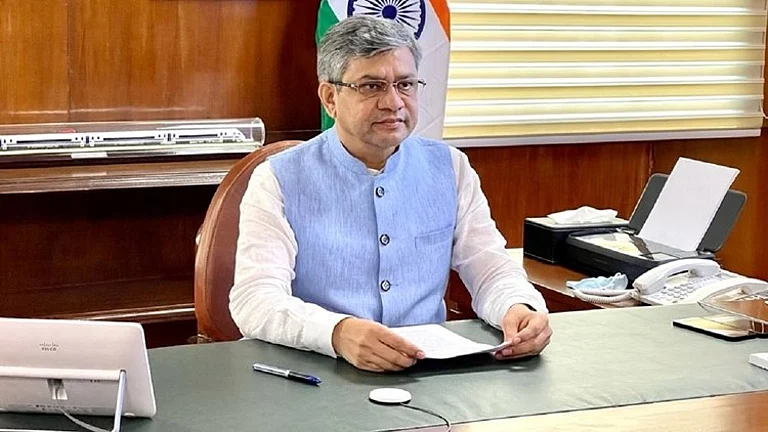
He further noted that the Ministry of Electronics and Information Technology (MeitY), under the fourth tranche, has approved 29 projects worth ₹7,104 crore, including India’s first rare-earth permanent magnet manufacturing facility.
“Domestic manufacturing capacity across electronic components has seen significant gains, with capacitors now meeting around 60% of demand and connectors nearing self-sufficiency. LED components in the digital segment and relays have achieved almost 100% domestic coverage, with the latter also emerging as an export strength,” added Vaishnaw.
He mentioned that component capacity has improved sharply from about 35% last year to near full capacity in select segments.
“Meanwhile, metallized films now meet roughly half of domestic demand reducing reliance on imports while inductors and related components are beginning to build local capacity with new plants coming online,” as per him.
Advertisement
He noted that India has now become a net exporter in certain electronics segments, marking a significant structural shift in the economy.
Vaishnaw explained ss manufacturing scales further; Costs will reduce due to economies of scale value capture will improve through design and innovation.
The scheme, approved by the Cabinet on May 1, 2025 with a fiscal outlay of ₹22,919 crore has received 249 applications with anticipated investment commitment of ₹1,15,351 crores.
The response is nearly double the targeted ₹59,350 crore under the scheme. The estimated production of Electronics Components under the scheme in the next six years will be about ₹10,34,700 crores. The response is 2.2 times of the targeted ₹4,56,000 crore worth of production under the scheme.