Federation of Indian Airlines warns free seat rule could push fares higher
Airlines say lost seat selection revenue will be recovered through ticket hikes
Carriers argue rule hurts margins, pricing flexibility, and market dynamics
Why IndiGo, SpiceJet, Air India Are Opposing the Govt’s 60% Free Seat Selection Rule
Federation of Indian Airlines has pushed back against new seat selection rules, warning airlines may hike fares to offset lost ancillary revenue

Why IndiGo, SpiceJet, Air India Are Opposing the Govt’s 60% Free Seat Selection Rule
Summary
Advertisement
Days after the central government announced new passenger rules for the aviation sector, the top airline companies - including IndiGo, Air India and SpiceJet - have opposed the decision not to levy any charges for the selection of at least 60% seats on flights.
The Federation of Indian Airlines (FIA), which represents these three airlines, said the move will force them to increase airfares to recover lost revenues. It also urged the Civil Aviation Ministry to take necessary steps to withdraw the decision, PTI reported.
Currently, domestic airlines charge passengers ₹200 to ₹2,100 for choosing seats of their choice like front rows, extra leg room, aisle, etc.
The federation has written a letter to Civil Aviation Secretary Samir Kumar Sinha, saying the direction would have unintended and adverse consequences for the aviation sector.
"The financial impact of the directive on airlines will be significant, compelling airlines to recover the revenues through increases in fares. As a result, all passengers, including those who may not wish to preselect seats, will end up paying higher fares," the FIA said, as quoted by PTI.
Advertisement
It also noted that seat selection fees are a valid revenue stream for airlines, especially in a high-cost environment where expenses continue to rise under the Airports Economic Regulatory Authority (AERA) framework, which allows airports full cost recovery along with assured returns.
It added that airlines operate on thin margins and depend heavily on ancillary income to manage increasing costs such as fuel, maintenance, and airport charges. Imposing uniform restrictions on these revenue streams, the body argued, would limit commercial flexibility and disrupt market-driven pricing.
"If applied, this measure will set a precedent for excessive intervention in ancillary pricing with heavy loss of revenues for the airlines, apart from creating uncertainty for airlines regarding future regulatory constraints," the body further stated.
Inside New Passenger Rules
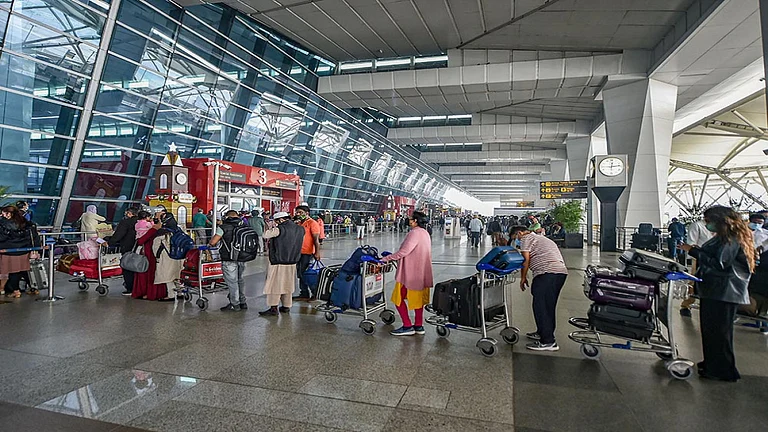
The government on March 18 asked the domestic airlines to ensure a minimum 60% of seats on any flight are allocated free of charge to ensure fair access. The directive followed complaints of many passengers accusing airline operators of exploiting customers through hidden charges like seat selection charges.
Advertisement
In a statement, the Ministry of Civil Aviation also informed to set a few other guidelines to "further strengthen passenger convenience, transparency and uniformity of practices across airlines".
"Ministry has undertaken several passenger-centric initiatives to enhance ease of travel, including UDAN Yatri Cafés for affordable food, Flybrary for free access to books and provision of free Wi-Fi at airports," it said.
Another key directive is that passengers travelling on the same PNR are to be seated together, preferably in adjacent seats.
Additionally, carriage of sports equipment and musical instruments is to be facilitated in a transparent and passenger-friendly manner, subject to applicable safety and operational regulations. Airlines are also advised to bring out clear, transparent policies for the carriage of pets.
On passenger rights more broadly, the DGCA has directed carriers to display entitlements prominently across their websites, apps, and airport counters. Airlines will also be required to communicate these rights in regional languages.
Advertisement
The directives came as Indian airports now handle upwards of five lakh passengers each day. India is currently ranked third globally for domestic air travel. The government said that this position is driven in part by the government's UDAN scheme, which has sought to open up air connectivity to smaller cities and lower-income travellers.