Air India board discussed profitability, cost cuts, and CEO succession planning
West Asia conflict and high ATF prices are impacting global aviation operations
Government approves ECLGS 5.0 to support airlines and MSMEs under stress
Air India Tightens Belt: Furloughs and Bonus Delays Amid Rising Losses
Tata Group-owned Air India board reviews financial performance and leadership transition as rising fuel costs and geopolitical tensions weigh on airlines

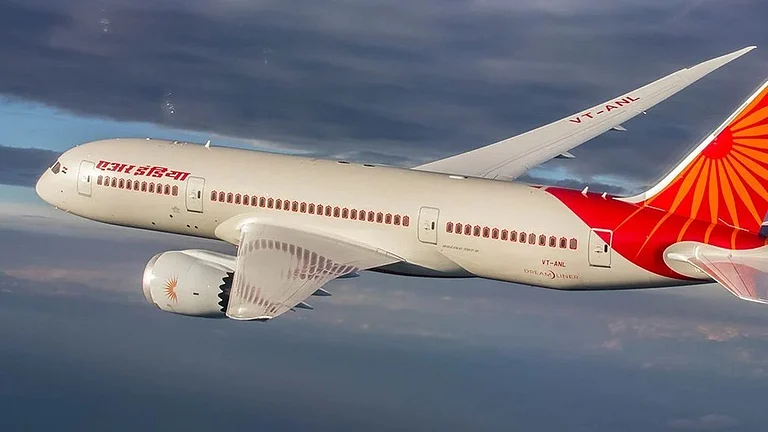
Air India tata group
Summary
Advertisement
Air India’s board met on Thursday, May 7, to review the airline’s financial performance, cost management measures, and the succession plan for its next chief executive officer. The meeting was chaired by Tata Sons Chairman N Chandrasekaran and comes at a time when the Tata group-owned carrier is facing higher fuel costs and operational disruptions due to the West Asia conflict, according to Business Standard.
The board discussed steps to improve profitability amid sharply higher aviation turbine fuel (ATF) prices, longer international routes, and continued closure of Pakistan airspace for Indian carriers.
It also evaluated cost-control measures, including possible rationalisation of flight schedules and a review of ancillary revenue strategies. Employee-related costs, including salaries, increments, and bonuses, were also discussed, according to the report.
According to sources cited by PTI, the board also explored additional steps to reduce costs, including placing employees on furlough and delaying bonus payouts. At Air India, bonuses are performance-linked and form part of employees’ overall cost-to-company package, while furloughs refer to temporary unpaid leave during periods of financial stress.
Advertisement
Leadership Change in Focus
A key agenda item at the meeting was the succession plan for Air India CEO Campbell Wilson, who is expected to step down later this year. The board discussed not only potential candidates but also ensuring a smooth leadership transition. The report also noted that Chandrasekaran was likely to address Air India employees at a townhall meeting on Friday.
Meanwhile, The Indian Express reported that Wilson is scheduled to interact with employees at a ‘town hall’ meeting on Friday, May 8. It also reported that sources had earlier indicated that the airline’s financial performance for 2025-26, cost-reduction strategies and the search for a new chief executive were expected to figure prominently in the discussions.
West Asia Crisis Hits Aviation
The aviation sector continues to face severe pressure due to rising fuel costs and geopolitical disruptions linked to the West Asia conflict. The crisis, now in its third month, has pushed global crude oil prices above $125 per barrel, adding to already elevated aviation turbine fuel (ATF) costs.
Advertisement
The Federation of Indian Airlines (FIA) has urged the government for immediate intervention, warning that the surge in fuel prices and disruptions from the Iran conflict have placed the industry in a “dire condition.” The body said rising crude prices and airspace constraints are forcing airlines into heavy operational losses and capacity cuts.
The airlines have reduced 1,034 weekly international flights in May compared to last year, a decline of nearly 25%, based on Cirium data. Air India Express has cut international operations from 959 to 451 weekly flights, a 53% drop, while Air India has reduced 288 weekly departures.
Last week, airlines also reportedly slashed nearly 100 flights to North America and Europe due to higher fuel costs and longer flying routes.
Notably, Abhishek Kumar, Senior Oil Analyst at Sparta Commodities, said that if fuel costs remain elevated, airline losses could become increasingly difficult to absorb, as per an ANI report. Industry bodies and carriers have already flagged unsustainable financial stress, leading to further schedule cuts.
Advertisement
Air India is also projected to record losses exceeding ₹22,000 crore in FY26, significantly higher than the ₹10,859 crore consolidated loss in FY25, according to reports.
IndiGo’s net profit fell 77.6% year-on-year (YoY) to ₹549 crore in Q3 FY26, reflecting broader pressure on the aviation sector amid rising fuel costs and operational disruptions.
Govt Relief for Airlines
To ease pressure on the sector, the Union Cabinet approved the fifth version of the Emergency Credit Line Guarantee Scheme (ECLGS 5.0), aimed at supporting MSMEs and airlines affected by global disruptions.
As per government statements reported by Business Standard, Air India, IndiGo, and SpiceJet are eligible for up to ₹1,500 crore each under the scheme. Loans will be backed by 100% government guarantees for MSMEs and 90% for larger firms, including airlines, through the National Credit Guarantee Trustee Company (NCGTC).
The scheme allows airlines to borrow up to 100% of funding requirements, with structured repayment tenures and moratorium periods designed to ease liquidity stress.
Advertisement
Air India’s Big Reset
Air India continues to navigate its multiyear transformation under Tata ownership, including fleet modernisation and network expansion after privatisation. However, it is simultaneously facing financial stress, leadership uncertainty, and operational challenges.
Singapore Airlines executive Vinod Kannan and Air India commercial head Nipun Aggarwal are among frontrunners for the CEO role, although a final decision has not been made, Reuters reported. Singapore Airlines holds a 25% stake in Air India through Tata Sons.
With rising fuel costs, geopolitical disruption, and leadership transition converging, Air India remains at a critical juncture in its restructuring journey.