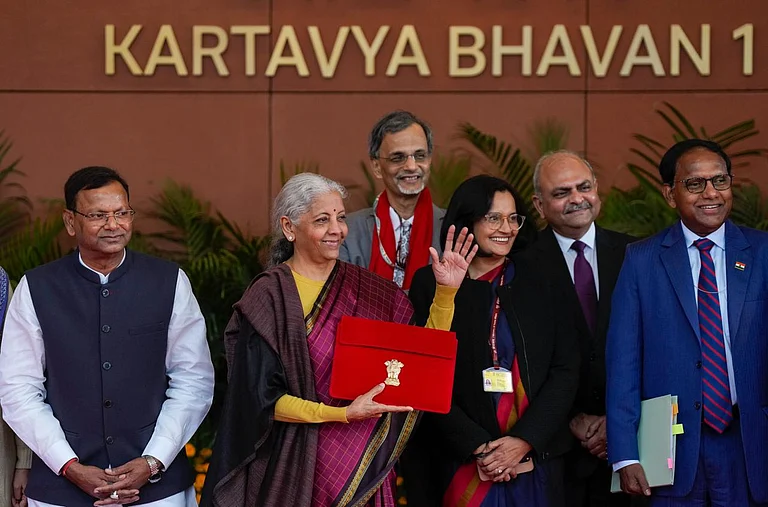
Finance Minister Nirmala Sitharaman will present the Union Budget for 2026–27 next year
The government prepares key announcements in the Union Budget, taxes continue to be the main source of revenue
Direct taxes are paid on income and profits by individuals or companies, while indirect taxes are charged on goods and services and passed on to consumers
Direct vs Indirect Taxes: What Every Indian Should Know Ahead of Budget 2026
India simplifies its tax structure by refining direct taxes and unifying indirect taxes under GST, aiming for fairness and easier compliance

Direct vs Indirect Taxes: What Every Indian Should Know Ahead of Budget 2026
Summary
Advertisement
Finance Minister Nirmala Sitharaman is expected to present the Union Budget for the financial year 2027 on February 1, with preparations already underway. However, the date is tentative as it falls on a Sunday, a restricted holiday. The final schedule to be confirmed by the Cabinet Committee on Parliamentary Affairs in January 2026.
As the government prepares to introduce key announcements, taxes remain the central source of revenue.
If we talk about the last fiscal year, 2025-26, the Indian government projected that 66 paise of every rupee collected would come from taxes. Of this, 39 paise was expected from direct taxes such as income and corporate tax, while 18 paise would come from Goods and Services Tax (GST). Borrowings contributed the remaining 24 paise of government receipts.
Budget documents also show how the government spends each rupee it collects. Interest payments accounted for 20 paise, the states’ share of taxes was 22 paise, and central sector schemes used 16 paise.
Advertisement
With so much of the budget dependent on taxes, knowing the difference between direct and indirect taxes helps citizens to understand who pays what and how government revenue is generated.
What Are Direct Taxes?
Direct taxes are paid straight by individuals or companies on their income and profits and cannot be passed on to others. The Central Board of Direct Taxes (CBDT) oversees their collection. Key direct taxes in India include income tax, corporate tax and securities transaction tax.
Types of Direct Taxes:
Income Tax: Paid by individuals based on their earnings under different tax slabs.
Corporate Tax: It is paid by the companies on the basis of their profits they earn.
Securities Transaction Tax (STT): Charged on buying or selling securities on recognised stock exchanges.

Advertisement
What Are Indirect Taxes?
Indirect taxes are charged on goods and services and can be passed along the supply chain, with the final cost borne by consumers. The Central Board of Indirect Taxes and Customs (CBIC) oversees indirect taxes. Today, the Goods and Services Tax (GST) is the main indirect tax, replacing older taxes such as excise duty, service tax and sales tax.
Types of Indirect Taxes:
Customs Duty: The duty charged on goods imported into the country.
Central Excise Duty: It is paid by the manufacturers but passed on to consumers.
Service Tax: It is applied to the services provided by businesses.
Sales Tax and VAT: Collected at different stages of making and selling goods, eventually paid by customers.
To make tax collection more efficient, India has streamlined indirect taxes through GST and keeps updating direct tax rules. The goal is to reduce evasion, make the system fair and encourage everyone to participate in the economy.
Advertisement