Testing the standard Find X9 before the Pro version helped avoid bias from the Pro’s superior cameras and battery life.
Find X9 Series continues Oppo’s camera-first focus, adding design changes, the new LYT808 sensor and better battery optimisation.
Find X9 stands apart from the similarly priced OnePlus 15, while still justifying the ₹30,000 gap between the vanilla and Pro models.
Oppo Find X9 Review: At ₹74,999, Do You Really Need To Spend ₹1,00,000 On The Pro Model?
Oppo’s Find Series has typically been all about the cameras, and for the Find X9 Series in 2025, this is no different. This time around, though, Oppo has gone all guns blazing, with design changes, a new camera system a quiet focus on battery life, and a MediaTek chipset

Summary
Advertisement
I’m happy that I got the vanilla flagship for testing before getting the souped-up ‘Pro’ model. This way, my bias wasn’t clouded by the ultimate flagship cameras and epic battery life that the Oppo Find X9 Pro delivers.
Oppo’s Find Series has typically been all about the cameras, and for the Find X9 Series in 2025, this is no different. This time around, though, Oppo has gone all guns blazing, with design changes, a new camera system (say hello to the LYT808 sensor), a quiet focus on battery life, and a MediaTek chipset that has become uber-competitive with its Qualcomm Snapdragon rival.
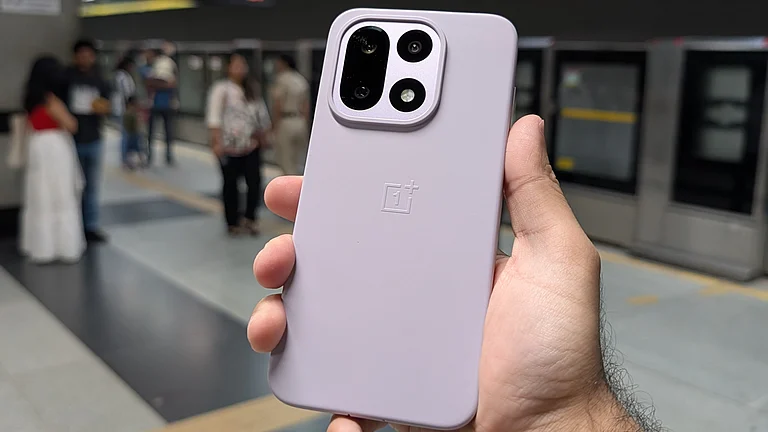
From my three weeks of using the Find X9 (as I’ll refer to it henceforth), it’s been clear that there are enough differences to differentiate it from the recently launched OnePlus 15 (which is priced similarly), while there are many trade-offs to justify the almost ₹30,000 difference between the vanilla and Pro variant.
Advertisement
Let’s dive in deeper.
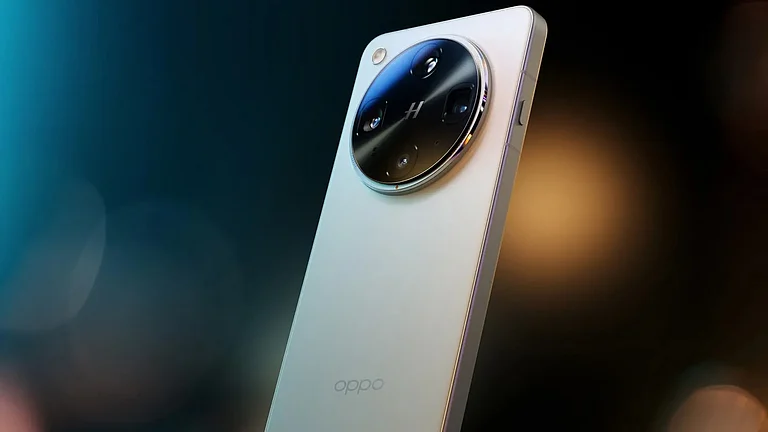
Not as compact a design as I would have liked
How has Oppo managed to cram a 7,025 mAh battery (one of the largest on any flagship on the market) into a phone that weighs just 203 grams and measures 7.99mm thick? The answer is a silicon-carbon battery. Still, with all that said, the phone is surprisingly good to hold in the hand. It’s lightweight, and the weight has been well-balanced. My only complaint is that the phone doesn’t feel compact enough. The vanilla flagship is supposed to be small, compact, and one-handed friendly, yet it isn’t. I had to take the Vivo X300 with me on my trip to Goa, and that design blew my socks off.
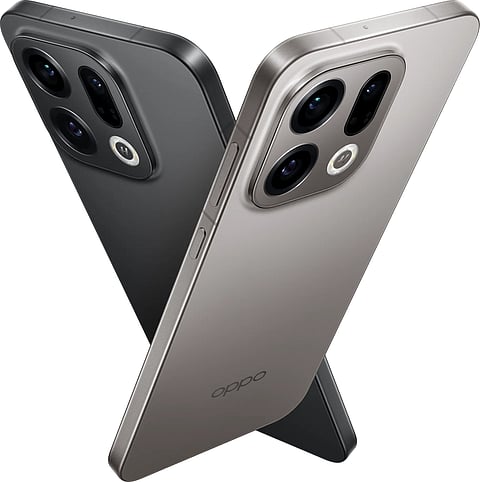
It isn’t to say the Find X9 isn’t a beautiful phone to look at. In fact, the back has been completely redesigned. Gone are the days of the huge circular camera ring. Now there is just a rectangular module on the top left, albeit it comes with its own trade-offs. Chief amongst those is the wobble. It’s subtle, but yes, without a case, the phone will wobble. It aligns with the frame, giving it a nice yet bold look. There’s a metal edge around the rectangular camera island that matches the phone's edges.
Advertisement
Overall, the design is clean and elegant. On the top left, you’ll find the customisable Snap Key (hello there, Apple), but it's a little too high to use at all times. Oppo has also gone all out, earning certification for IP66, IP68, and IP69 dust- and water-resistance ratings.
The display surprised me the most.
Yes, you’d be surprised. If Oppo’s Find Series is all about the cameras, why am I praising the display as the one feature that surprised me the most? Well, let me tell you.
It may not be the highest resolution display out there. It may also not be the brightest display on the market. Still, it strikes a delicate balance between resolution, outdoor visibility, crispness and vividness. The Find X9 sports a 6.59-inch AMOLED display with a peak brightness of 3,600 nits. It supports a 1256x2760 resolution and a 120Hz refresh rate. Corning Gorilla Glass 7i protects it. The lower FHD+ resolution is enabled by default, but that’s easily changeable. Keeping it as FHD+ does help conserve some battery life, so that’s something to think about.
Advertisement
It’s got vibrant colours with deep contrast, and crisp text. Perfect for binge-watching your favourite TV shows or live-streaming India’s cricket matches. The display is pleasant on the eyes, even in pitch-dark conditions, and it can go all the way down to 1 Nit for nighttime usage. The 3,840 Hz PWD reduces flicker at lower brightness levels and helps prevent eye strain.
There is support for Dolby Vision, HDR Vivid and HDR10+. It’s got full DCI-P3 coverage and 10-bit depth. There’s only one drawback: the lack of LTPO. At this price point, that’s a baffling decision from Oppo. In fact, the OnePlus 15 sports an LTPO display.
Despite that, the display shines bright thanks to its uniform bezels, comfortable viewing, and excellent brightness levels.

Performance: More than satisfactory
Yes, I had absolutely no complaints vis-à-vis the performance from the Find X9. Oppo has outfitted the Find X9 with the flagship MediaTek Dimensity 9500 chipset, built on TSMC’s 3nm process. Pair that with LPDDR5X RAM and UFS 4.1 storage, and you have a winner on your hands.
Advertisement
It’s fast, smooth, and multitasking is a breeze. Even gaming is surprisingly good. Many games can run smoothly at 120 FPS, and that’s something to look forward to, even for the casual gamers out there, as it doesn’t throttle or get too hot to handle.
Forget about all those benchmarks, because it's about the day-to-day performance. I haven’t noticed even the slightest dip in peak performance, even when pushing this smartphone to its limits. It can cope with just about any task you throw at it. It’s efficient, doesn’t heat up, and just breezes through any task you throw at it. MediaTek really has done a stellar job with respect to its flagship chipset this time around (more on that in my ‘Pro’ model review), and I’m genuinely happy to see Qualcomm feel the heat.
Cameras: It’s all about the portraits
The Find X9 sports a 50MP triple-camera setup. There’s the 50MP f/1.6 main camera. A 50 MP f/2.0 ultra-wide sensor and a 50MP f/2.6 periscope telephoto lens (with 3x optical zoom). Daylight photos are genuinely brilliant. Oppo has upped its game in the camera department, and how. The new Sony LYT-808 sensor shines bright in the Find X9. With a larger physical sensor, the phone can capture more light, resulting in less noise and better low-light performance.
For the photos taken with the primary sensor, that is absolutely true. The new LUMO Image Engine prioritises details and reduces computational noise. There is also a 50MP mode, and even in that mode, the shutter speed is fast, which is a good thing. In daylight shooting, the primary sensor captures detailed photos with a wide dynamic range and true-to-life colours. The highlights are not overblown, even in harsh sunlight.
The ultrawide also performs admirably during good daylight conditions. The winner, though, has (almost always been the case with the Find Series smartphones) been the portraits. The edge detection is on point, even in the most difficult of situations. A much improved bokeh effect from last year, and it looks clean and natural. Oppo has also emphasised that they’ve been working to make skin tones look natural, and yes, it shows.
The telephoto at 3x is a real winner, and you can even zoom to 30x and get usable shots. Just a reminder: AI kicks in more aggressively post-10X, and it’s pretty noticeable.
It’s the ultra-wide and the zoom performance that take a massive hit during low-light conditions. Photos are oversharpened at times, resulting in lost details. Noise does creep in, but nothing that is a dealbreaker.
Selfies are good, but nothing mind-blowing. The lack of autofocus at this price point is frustrating and limits low-light performance.
Battery life: Mind-blowing
Yes, the Pro model takes the cake here, but the Find X9 is no slouch when it comes to battery life. Thanks to the denser silicon-carbon technology, Oppo has managed to cram in a 7,025mAh battery into the Find X9.
I was surprised that, in real-world use, I was able to get over 10 hours of screen-on-time (SoT). That’s when I used social media, took dozens of photos, browsed the web, casually watched some YouTube videos, and performed various other general daily tasks. Even during standby, the battery drains quite slowly.
If you do need to juice it up (typically after two whole days of use), the bundled 80W SUPERVOOC charger will fully charge it in just under an hour. In fact, there is also 55W PD/PSS charging, 50W AIRVOOC wireless charging, and 10W reverse wireless charging support.
Verdict: Is it worth saving ₹30,000 to get the vanilla flagship?
While I’ve genuinely loved my time with the Find X9 and took an in-depth look for a week before I got the ‘Pro’ model, some of the company's decisions have baffled me. The lack of LTPO and slower USB speeds at this price point aren’t easy to overlook.
But let’s zoom out a little here. Oppo has genuinely taken the fight to Vivo, and that’s something I didn’t say over the last two years of smartphones. The Find X9, coupled with the MediaTek Dimensity 9500, a brand-new LYT-808 primary sensor, and a massive silicon carbide battery, has genuinely given Vivo a run for its money and, in many areas, surpassed it. Yes, smartphones are genuinely better than the iPhone (unless you love iOS and are locked into the ecosystem), and Samsung has yet to release its competitor.
In fact, at Reliance Digital, there was an offer: the Find X9 plus a free 32-inch TV for ₹65,000, or just the Find X9 for ₹58,000. At that price point, this is an incredible value. If you’re looking for a compact flagship that takes excellent portraits, has an outstanding battery, and doesn’t lag in daily tasks, then the Find X9 is for you.
If you need a more compact smartphone with a slightly better design and cameras that are equally, if not better, than the Vivo X300's, then it's for you. If you want an all-out performance-centric and gaming smartphone, check out the OnePlus 15.
The Find X9 is a well-rounded and capable smartphone, and you won’t be disappointed with having it as your new daily companion, especially if you grab it at the ultimate sale price!
The 12GB + 256GB configuration is the one to go for, and that is an incredible value. The 16GB + 512GB variant at ₹84,999 isn’t worth it, as that’s much closer to the ‘Pro’ model, and then the trade-offs make even less sense.