As per the ILO, India accounts for 20 per cent of the world’s platform workers
64 per cent of India’s gig workers fall in the 24–38 age bracket
Around 29 per cent of Gig Workers Have Passed Middle School
Pay, Education, Demographics: What The Numbers Say About India's One Crore Gig Workers
Based on reports from recent years and arguments put forward by Zomato chief Deepinder Goyal on social media over the past few days, here are some of the most important data points to consider when looking at India’s gig economy

Gig Workers Debate
Summary
Advertisement
Over the past few days, one of the biggest talking points among netizens has been a heated debate on social media around gig workers — many of whom have gone on strike to protest against low pay and poor working conditions. As per the Indian Federation of App Based Transport Workers, around 0.2 million gig workers from delivery platforms such as Zomato, Swiggy, Amazon, Blinkit, Instamart and Zepto participated in the strike.
Meanwhile, Zomato founder Deepinder Goyal and the e-commerce company’s early investor Sanjeev Bikhchandani have taken critics head-on.
Gig workers say that the intent of the strike was to hit a raw nerve on one of the busiest days of the year, when sales peak. They said they were protesting against relentless pressure, including expectations to deliver orders in under 10 minutes — claims that the companies have denied.
According to Niti Aayog, the total number of gig workers in the country currently stands at around 12.7 million. This figure is projected to rise to 23.5 million by 2029–30. Also, some estimates suggest that India’s gig workforce could expand to nearly 61.6 million by 2047.
Advertisement
Based on reports from recent years and arguments put forward by Zomato chief Deepinder Goyal on social media over the past few days, here are some of the most important data points to consider when looking at India’s gig economy.
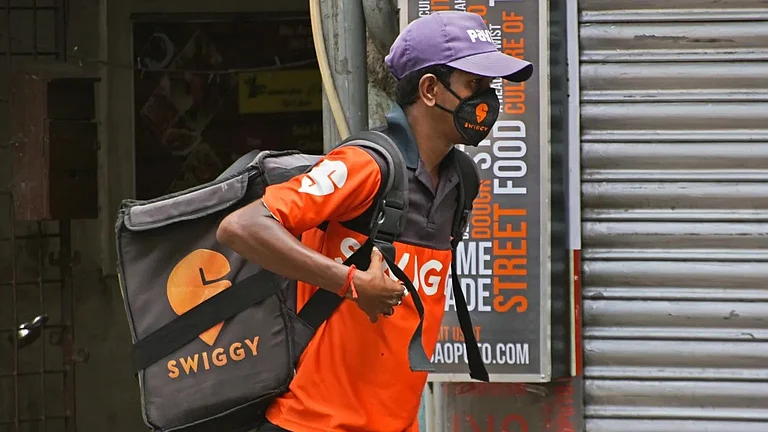
Only 2.3 per cent of delivery partners [in Zomato] worked most of the year
Amid efforts to ease tensions online, Goyal said on X that gig work on food delivery platforms is largely temporary in nature. In 2025, the average Zomato delivery partner worked about 38 days in the year, spending roughly seven hours per working day. Goyal highlighted that only 2.3 per cent of delivery partners were active for more than 250 days in a year, a trend he said is similar at Swiggy. “Attrition percentage is 65% in a year, indicating that this is truly "gig" and not a permanent job for anyone,” he added.
Advertisement
64 per cent of India’s gig workforce is aged between 24 and 38
An Assocham–Primus Partners study from 2021 shows that 64 per cent of India’s gig workers fall in the 24–38 age bracket, with Bengaluru, Delhi, Chennai, Pune and Mumbai emerging as the biggest hubs for gig employment.
43 per cent of delivery workers earn under ₹10,000 a month
A 2024 study by the People’s Association in Grassroots Action and Movements and the Indian Federation of App-based Transport Workers found that earnings remain low despite long working hours. Over 43 per cent of respondents earn less than ₹500 a day, or about ₹15,000 a month, after expenses, with almost all workers in smaller cities falling into this bracket.
While 27 per cent earn ₹500–1,000 a day, 87.6 per cent of them are based in Bengaluru, highlighting a sharp metro–small city income divide.
However, Goyal presented a starkly different picture.
Advertisement
"In 2025, average earnings per hour (EPH), excluding tips, for a delivery partner on Zomato were ₹102. In 2024, this number was ₹92. That’s a ~10.9% year-on-year increase. Over a longer horizon also, EPH has shown steady growth. Most delivery partners work for a few hours and only a few days in a month. But if someone were to work for 10 hours/day, 26 days/month, this translates to ₹26,500/month in gross earnings. After accounting for fuel and maintenance (~20%), the net earnings for the partner are ₹21,000/month," the Zomato chief claimed in a post on social media platform X.
India accounts for 20 per cent of the world’s platform workers
According to the ILO, participation in the gig economy is much higher in emerging markets, ranging between 5–12 per cent, compared with just 1–4 per cent in developed economies. India alone makes up roughly 20 per cent of the world’s platform workforce, positioning it as the largest supplier globally
Advertisement
Around 29 per cent of Gig Workers Have Passed Middle School
Of the 4,016 gig workers surveyed, 1,176, or nearly 29 per cent, have a middle school education, making this the largest educational group among gig workers. The rest are largely high school graduates (1,125 workers or about 28 per cent), followed by those with undergraduate degrees (590), primary school education (486), no schooling (300), diplomas (276), and a small fraction of postgraduates (63).
These findings are from a 2022 study by CIIE.CO, the IIM Ahmedabad–based incubator and accelerator, titled Data Ownership and Well-being of Gig Workers, which was based on a survey of around 4,000 individuals.
The report highlights the dual role played by platforms such as Swiggy and Uber. While they provide much-needed employment opportunities in a market where job discovery remains difficult, they also risk limiting long-term professional growth. As the report notes, “They give occupations to a young India that struggles to climb up the social ladder. At the same time, they can potentially restrict the professional growth of individuals.”
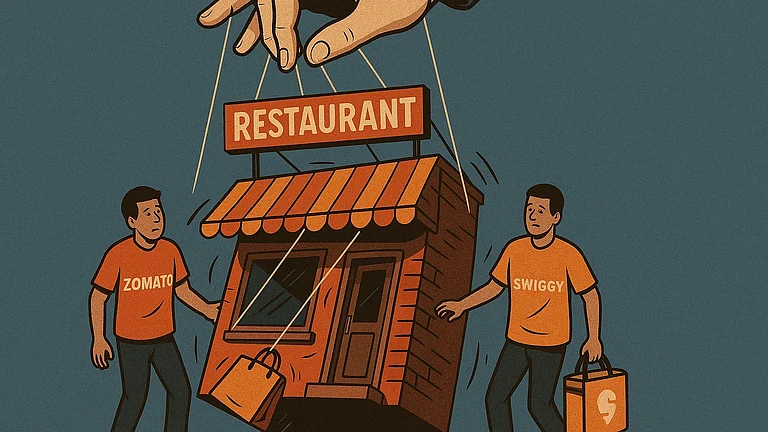
Six Platforms Score on Fair Contracts, Says Fairwork India
According to the global research network Fairwork India, six out of 11 platforms were awarded the first point under the ‘Fair Contracts’ principle in 2024.
Platforms including BigBasket, BluSmart, Swiggy, Zepto, and Zomato met the requirements for the second point under Fair Contracts.
The platforms earned these scores by introducing change-notification clauses in worker contracts, reducing asymmetries in liability, including provisions to compensate workers for losses caused by app malfunctions or outages, and improving pricing transparency, especially where dynamic pricing models are used.
Real Wages of Gig Workers Fall 11 per cent Since 2019, NCAER Study Finds
According to a study by the National Council of Applied Economic Research (NCAER), the real wages of gig workers declined by 11 per cent, dropping to ₹11,963 per month in 2022 compared with 2019 levels. For context, real income, or real wages, refers to earnings adjusted for inflation, reflecting the actual purchasing power of workers.
The findings are based on a survey of 924 food delivery workers, which attributed the fall largely to rising fuel costs and high consumer price inflation.
Nearly Half of Gig Workers Lack Any Insurance Cover, Study Finds
Nearly 47 per cent of gig workers have no form of insurance, while only 7.4 per cent are covered by health insurance, according to a 2022 study by CIIE.CO, the IIM Ahmedabad–based incubator and accelerator.
It says, “In spite of the high levels of risk to their own personal lives, only one in five gig economy workers we spoke to had some kind of life or health-related insurance. We thought it would be standard practice for platforms that hire these individuals to bundle insurance in the onboarding process.”
Little Tipping For Gig Workers
The average tip per hour in 2025 on Zomato was ₹2.6 and in 2024 was ₹2.4 per hour, according to Goyal. Tips are transferred instantly, with zero deductions. The company absorbs the payment gateway processing cost. About 5 per cent of the orders get tipped on Zomato; 2.5 per cent on Blinkit.