PM2.5 drives India’s highest air pollution health burden and premature mortality.
NCAP remains PM10-focused, misaligned with pollution sources and health impacts.
NCAP 2.0 must prioritise PM2.5 monitoring, measurement and accountability frameworks.
Why NCAP 2.0 Must Shift Focus to PM2.5
India’s clean air strategy must pivot to PM2.5 to deliver real health gains

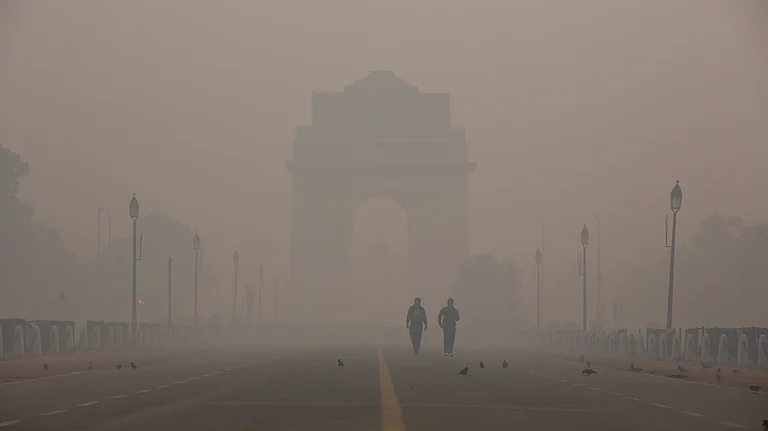
Smog blankets an Indian city as commuters navigate heavy traffic pollution
Summary
Advertisement
Air pollution imposes substantial health and economic costs on India, contributing significantly to disease burden measured in disability-adjusted life years (DALYs) and to productivity losses from premature mortality and illness. Evidence synthesised by The Lancet shows that India’s air pollution burden is among the most severe globally and driven by fine particulate matter (PM2.5) and combustion-related gases. While PM10 remains relevant in dust-prone and construction-intensive urban areas, PM2.5 is more harmful due to its ability to penetrate deep into the lungs and bloodstream, contributing disproportionately to premature mortality and chronic disease. This distinction has direct implications for the design of India’s clean air policy under the National Clean Air Programme (NCAP), which remains largely PM10-centric.
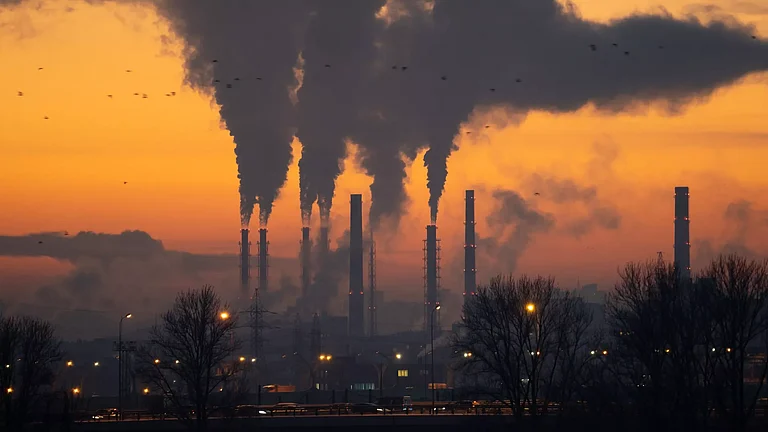
PM2.5 arises both from direct emissions and from secondary formation through precursor gases such as NOx and SO2, largely emitted by transport, power and industry. Residential solid fuels, coal-based industry, waste burning and construction dust together account for the bulk of India’s pollution load. India’s national annual average PM2.5 in 2023–24 averaged 50 µg/m³ - nearly 10 times the WHO guideline with the highest concentration across the Indo-Gangetic Plain and major industrial clusters particularly during winter.
Advertisement
It is critical to mention here that India’s National Air Quality Index launched in 2014 is a color-coded public communication tool designed to make air quality information through categories based on a 0–500 scale. The index aggregates data from eight key pollutants—PM10, PM2.5, NO2, SO2, CO, O3, NH3 and Pb, by converting their measured concentrations into sub-indices, with the highest sub-index determining the overall air quality index (AQI) value. The Central Pollution Control Board (CPCB) uses the AQI to communicate daily air quality conditions and associated health advisories to the public.
India’s NCAP Initiative
Launched in 2019 to improve air quality across non-attainment and million-plus cities/urban agglomerations across 24 states/union territories, NCAP initially targeted 20–30% reduction in particulate pollution using 2017–18 as the baseline and revised to 40% reduction in meeting PM10 by 2026. An independent review by the Centre for Research on Energy and Clean Air (CREA), 'Tracing the Hazy Air 2025', assessed ambient air quality trends up to 2024 finds that only a subset of NCAP cities have achieved the initial 20–30% PM10 reduction milestone, while significant gaps persist in monitoring coverage, data quality and reporting inconsistencies across cities. Although cities have utilised over 67% of allocated funds for road dust management, spending on industries (1%), domestic fuel (1%), public outreach (1%) and capacity building and monitoring (4%) remains minimal. As a result, fund utilisation has been disproportionate, with a predominant focus on PM10 only.
Advertisement
Designing NCAP 2.0: Making MMR the Backbone
For NCAP 2.0 to succeed, Monitoring, Measurement and Reporting (MMR) must become the programme’s backbone rather than a peripheral function. This requires standardising station uptime and data completeness, strengthening QA/QC protocols, developing credible emissions inventories, undertaking periodic source apportionment and ensuring transparent public dashboards. A robust NCAP 2.0 must explicitly orient monitoring and targets toward PM2.5 outcomes, rather than relying primarily on PM10. PM2.5 accounts for the largest share of India’s air pollution–related health burden. While PM10 should continue to be tracked particularly for dust-related interventions, it should serve as a co-benefit metric. Core NCAP 2.0 targets should be designed around annual PM2.5 concentrations and seasonal peaks, which are most closely linked to health outcomes.
A practical governance split would assign standards-setting, quality control, network design, audits and enforcement to CPCB and SPCBs, while empowering Urban Local Bodies (ULBs) to deploy execution levers such as solid waste management, road dust control, construction compliance, public transport operations, regulation of municipal fuels and diesel generator sets, permitting and local behaviour-change programmes. Without this clarity, ULBs risk remaining implementation-heavy but measurement-light.
Advertisement
The central design should be to ensure public finance translates into outcomes. This requires linking expenditure to credible measurement, sector-specific milestone delivery and regional coordination, particularly because air pollution routinely crosses district and state boundaries. Without these safeguards, increased allocations risk repeating the same cycle of under-utilisation and limited impact.
Finally, NCAP 2.0 must sharpen sectoral action across transport, industry and power, residential sources and construction. Electrifying vehicle fleets, strengthening inspection and congestion management, enforcing industrial emission norms, scaling clean cooking, reducing biomass burning and rigorously implementing dust-management and hotspot monitoring are essential.
NCAP 1.0 should be viewed as a foundational phase that built monitoring and policy attention. NCAP 2.0 must now move decisively toward outcome-oriented, health-relevant PM2.5 reductions. A PM2.5-first, measurement-led and governance-smart framework is needed to deliver cleaner air and measurable health gains.
(Vij is Director for Programmatic Advancement, while Purkayastha is Senior Program Advisor at EPIC India. The views expressed are personal.)