Delhi government extends ‘no PUC, no fuel’ rule beyond GRAP IV restrictions.
Vehicles without valid PUC barred from refuelling as year-round enforcement begins.
Persistently poor air quality reinforces the need for sustained and consistent pollution control.
Delhi Extends ‘No PUC, No Fuel’ Rule Year-Round Despite Lifting GRAP-4 Curbs
Policy to curb vehicular emissions continues beyond emergency curbs as Delhi battles persistent pollution

Manjinder Singh Sirsa Environment Minister inspecting pollution checking centre Photo by PTI
Summary
Advertisement
The Delhi government has decided to continue its “no PUC, no fuel” policy despite lifting the GRAP IV restrictions, indicating a year round crackdown on vehicular emissions in the capital, reported The Hindu.
The decision was approved by the Delhi Cabinet on December 23 as part of a broader set of measures aimed at strengthening pollution control and environmental governance.
While announcing the cabinet’s decisions, Environment Minister Manjinder Singh Sirsa stated that vehicles without a valid Pollution Under Control (PUC) certificate will be barred from refuelling, regardless of prevailing air quality restrictions. “Vehicle pollution is one of the biggest contributors to air pollution. A vehicle driving without a valid PUC certificate is no less than committing a crime against Delhi’s air,” Sirsa told The Hindu.
He added that inspections of PUC centres had revealed irregularities at 12 locations, following which continuous verification and monitoring would be carried out to ensure transparency and strict compliance with pollution norms. As part of intensified action against industrial pollution, over 800 polluting units have faced enforcement measures in recent weeks.
Advertisement
Officials claim that the Municipal Corporation of Delhi (MCD) sealed about 400 units for violating pollution standards, and the Delhi Pollution Control Committee (DPCC) sent closure notices to 411 industrial units. In order to improve commercial vehicle fitness and emissions testing, the government also announced that four new Automated Vehicle Testing Stations (ATS) will be operational in the next few days. It is anticipated that the action will lower emissions from heavy vehicles and increase compliance.

Very Poor Air Quality Persists in Delhi
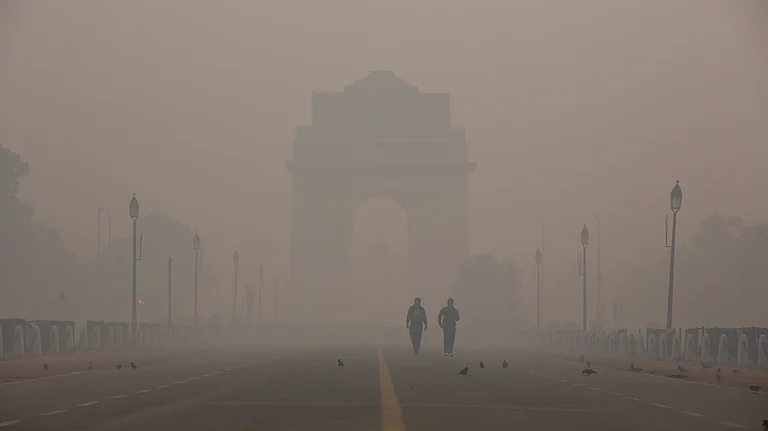
Despite the lifting of GRAP IV restrictions, Delhi continues to grapple with hazardous air quality, reinforcing the state government’s rationale for sustained pollution control measures. On December 24, 2025, the city recorded an Air Quality Index (AQI) of around 349, placing it firmly in the 'very poor' category, with dense smog affecting visibility and public health across the capital, according to Times of India.
Advertisement
Several monitoring stations reported widespread pollution, delaying flight and train operations due to the persistent smog layer blanketing the region. Weather conditions typical of winter — low wind speeds and temperature inversion — have contributed to trapping pollutants close to the ground, keeping AQI levels well above safe thresholds. Experts warn that such poor air quality is likely to continue without consistent mitigation, underscoring the significance of long-term policies like the “no PUC, no fuel” rule to reduce vehicular emissions and improve air quality for residents.
What is Pollution Under Control Certificate?
A Pollution Under Control (PUC) certificate is an official document that verifies whether a vehicle’s emissions are within the limits prescribed by environmental standards.
All petrol, diesel and CNG vehicles in India must undergo periodic emission testing at authorised centers to keep a valid PUC. The certificate usually shows levels of key pollutants like carbon monoxide (CO) and hydrocarbons (HC). It needs to be renewed regularly to ensure compliance. Vehicles without a valid PUC or with emission levels above the allowed limits can be fined.
Advertisement
Under Delhi's current enforcement, these vehicles will also be prohibited from refuelling. This approach aims to reduce pollution from poorly maintained vehicles, which significantly contribute to urban air pollution. It also ensures that emission controls are consistently followed by drivers and enforcement agencies.