India and Australia are expected to sign a major uranium supply agreement to support India's expanding nuclear power programme, building on their decade-old civil nuclear cooperation framework.
The summit is also likely to produce agreements on critical minerals, cybersecurity, emerging technologies, clean energy and resilient supply chains.
Bilateral trade reached $54.4 billion in FY25, while the India-Australia ECTA continues to boost market access and investment between the two countries.
Why Modi's Australia Visit Could Be a Game-Changer for India's Nuclear Ambitions
The India-Australia Summit is expected to deliver a landmark uranium supply pact alongside agreements on critical minerals, cybersecurity, clean energy and technology cooperation

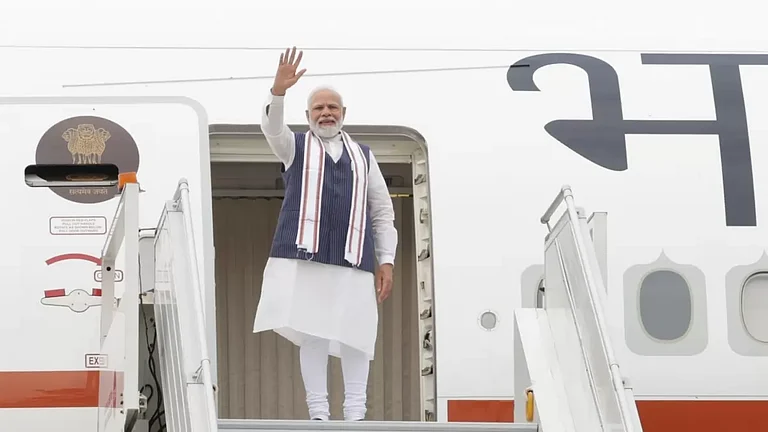
PM Modi File Photo
Summary
Advertisement
Prime Minister Narendra Modi is set to travel to Melbourne this week for the annual India-Australia Summit with Australian Prime Minister Anthony Albanese. A landmark uranium supply agreement is expected to be the centrepiece of the visit, marking a significant step in deepening the two countries' strategic and energy partnership.
According to The Economic Times, the deal is aimed at supporting India's ambitious plans to expand its nuclear power generation capacity as it seeks cleaner and more reliable energy sources to meet rising demand.
Australia possesses nearly one-third of the world's known uranium reserves, making it one of the largest suppliers of the critical fuel.
The two countries signed a civil nuclear cooperation framework more than a decade ago, and the proposed uranium supply pact is expected to build on that foundation by enabling long-term cooperation in the nuclear energy sector.
Expanding Economic Partnerships
Beyond the uranium agreement, the two leaders are also expected to finalise several other partnerships spanning critical minerals, cybersecurity, emerging technologies, clean energy and supply-chain resilience.
Advertisement
These areas have emerged as key pillars of the India-Australia Comprehensive Strategic Partnership amid growing geopolitical and economic uncertainties in the Indo-Pacific region.
During his visit, Modi will also participate in the India-Australia CEOs Forum, where business leaders from both countries are expected to explore new investment opportunities in manufacturing, technology, renewable energy and advanced industries.
The discussions are likely to build on Australia's "A New Roadmap for Australia's Economic Engagement with India," unveiled in February 2025, which seeks to expand trade, investment and commercial cooperation between the two economies.
Ahead of Modi's July 8-10 visit, Albanese underscored the growing importance of bilateral ties, saying, "India ties have never been more consequential."
Bilateral Trade Milestones
Economic relations between the two countries have strengthened steadily in recent years. India is now Australia's fifth-largest trading partner, with bilateral trade in goods and services reaching $54.4 billion in FY25.
Advertisement
The India-Australia Economic Cooperation and Trade Agreement (ECTA), which came into force on December 29, 2022, has played a key role in boosting trade.
Under the agreement, 98.3% of Australian exports receive immediate zero-duty access to the Indian market, while Indian exports enjoy 100% duty-free access to Australia.
Indian shipments of textiles, pharmaceuticals, chemicals and agricultural products have benefited significantly, while India continues to import Australian base metals, raw cotton, fertilisers, chemicals and pulses.