Consolidation in public sector banks is expected to gain momentum in the coming year, as the government has expressed its desire to have more big, world-class banks in the country to fuel the next phase of growth for Viksit Bharat by 2047.
PSB Consolidation to Gain Momentum in 2026 as Govt Eyes Big, World-Class Banks
Consolidation in public sector banks is expected to gain momentum in the coming year, as the government has expressed its desire to have more big, world-class banks in the country to fuel the next phase of growth for Viksit Bharat by 2047

PSB Consolidation to Gain Momentum in 2026 as Govt Eyes Big
Advertisement
Last month, Finance Minister Nirmala Sitharaman said India needs many big, world-class banks, and work in this regard has already commenced.
The government has initiated discussions with the Reserve Bank and public sector banks, she had said, dropping enough hints about consolidation in the public sector space.
Currently, there are 12 public sector banks, and only the country's biggest lender, State Bank of India (SBI), is among the global top 50 by assets. SBI is ranked 43rd globally by assets, followed by private-sector HDFC Bank at 73rd.
In a bid to create larger banks, the government previously conducted two rounds of consolidation. In the biggest consolidation exercise in the banking space, the government announced four major mergers of public sector banks in August 2019, bringing the total number down to 12 from 27 in 2017.
Effective April 1, 2020, United Bank of India and Oriental Bank of Commerce were merged with Punjab National Bank; Syndicate Bank was merged with Canara Bank; Allahabad Bank was amalgamated with Indian Bank; and Andhra Bank and Corporation Bank were consolidated with Union Bank of India.
Advertisement
In 2019, Dena Bank and Vijaya Bank were merged with Bank of Baroda. Prior to this, the government had merged five associate banks of SBI and Bharatiya Mahila Bank with the State Bank of India. This was done in April 2017 with the intent to make SBI much bigger.
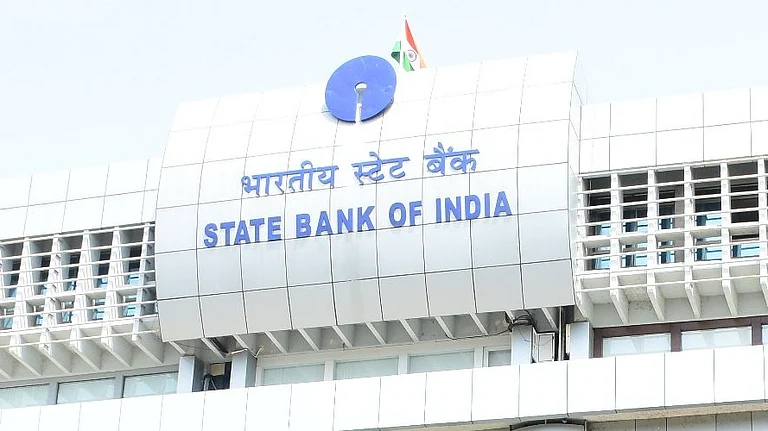
As regards the State Bank of India, the bank's board in 2016 submitted a proposal to the government to merge its five subsidiaries, including the first women-oriented lender, Bhartiya Mahila Bank, with itself.
The merged entity, effective April 1, 2017, expanded SBI's asset base to ₹44 lakh crore, with 22,500 branches and 58,000 ATMs.
SBI first merged the State Bank of Saurashtra with itself in 2008. Two years later, the State Bank of Indore was merged.
Besides, the government has initiated the privatisation of IDBI Bank, and Department of Investment and Public Asset Management (DIPAM) Secretary Arunish Chawla had expressed hope that the strategic sale would be concluded by March 2026.
Advertisement
As part of the privatisation exercise, the government in January 2019 sold its controlling 51% stake in IDBI Bank to Life Insurance Corporation of India (LIC).
As regards the profitability of public sector banks, 12 banks, which account for around 60% of the market share in total business, together reported a net profit of ₹93,675 crore during the first half of 2025–26. This is 10% higher than ₹85,520 crore in the April-September period of FY25.
Going by the trend, the net profit of public sector banks is expected to cross the landmark ₹2 lakh crore mark at the end of FY26.
The previous financial year closed with PSU banks posting a record profit of ₹1.78 lakh crore, up from ₹1.41 lakh crore in FY24, a 26% growth.
On the other hand, the private sector banking space witnessed a large inflow of foreign capital.

Advertisement
For example, Japan's Sumitomo Mitsui Banking Corporation (SMBC) in May decided to acquire a 20% stake in Yes Bank for ₹13,483 crore. The deal was concluded in September, with the stake transferred to the Japanese firm.
In October, Emirates NBD Bank, the second-largest in the UAE, decided to acquire a 60% majority stake in RBL Bank for ₹ 26,853 crore.
"India's financial institutions remain structurally attractive to foreign investors, driven by constructive structural trends and a supportive regulatory environment. We expect loan growth to remain at 11-12%, with retail loans expanding the fastest," S&P Global Ratings Associated Director Deepali Seth Chhabria said.
As far as the insurance sector is concerned, the year saw the passage of the landmark Sabka Bima Sabki Raksha (Amendment of Insurance Laws) Bill, 2025, from Parliament, paving the way for 100% FDI in the sector.
"Probably the most defining development of this year was the decision to open the sector to 100% foreign direct investment. This is a meaningful step that can bring in fresh capital, global expertise, and new ideas while attracting more foreign players and inducing healthy competition," Generali Central Life Insurance MD and CEO Alok Rungta said.
Advertisement
Besides, the GST rate cut, effective September 22, made premiums for individual policies more affordable, as the 18% rate was removed entirely.
The general insurance sector witnessed a spat between hospitals and health insurers over the cashless treatment.
"The removal of GST improved affordability and access, while continued advancement on platforms such as the National Health Claims Exchange and Bima Sugam helped reduce friction from purchase, servicing, and claims. Together, these developments strengthened confidence in the system and supported broader adoption," Aditya Birla Health Insurance, MD & CEO Mayank Bathwal said.
During the year, there was a net inflow of foreign capital into the industry. Kotak Mahindra General Insurance, a promoter of Kotak Mahindra Bank, in February decided to sell its 70% stake in the insurance firm for a total consideration of approximately ₹5,560 crore.
As far as the outflow of foreign capital is concerned, one major announcement in this regard was Allianz Germany's exit from Bajaj Finserv.
Bajaj Finserv proposed to acquire Allianz SE's 26% stake in the erstwhile Bajaj Allianz General Insurance Company and Bajaj Allianz Life Insurance Company for ₹24,180 crore.