The project is expected to reduce imports by about 0.66 million tonnes a year and save more than $360 million annually.
Industry experts said cumulative savings over the plant’s life could exceed $9 billion.
The initiative is being seen as a major step toward coal-to-chemicals production, energy security and Atmanirbhar Bharat.
Odisha Coal Gasification Project to Meet 35% of India's Ammonium Nitrate Needs by 2030: Industry
The ₹25,016-crore BCGCL project at Lakhanpur is projected to meet nearly 35% of India’s ammonium nitrate demand by 2030

Odisha Coal Gasification Project to Meet 35% of India's Ammonium Nitrate Needs by 2030: Industry
Advertisement
The ₹25,016-crore coal gasification project in Odisha, whose foundation stone was laid on Saturday, is expected to meet nearly 35% of India's projected ammonium nitrate demand by 2030, industry experts said.
Once operational, the plant would reduce imports by about 0.66 million tonnes annually and generate foreign exchange savings of more than $360 million every year, they added.
Over its operating life, cumulative savings from import substitution could exceed $9 billion, the industry said.
President Droupadi Murmu and Prime Minister Narendra Modi jointly laid the foundation stone for the Bharat Coal Gasification and Chemicals Ltd (BCGCL) project at Lakhanpur in Jharsuguda district of Odisha.
The project, being developed by Bengal Coal and Gasification Company Ltd a joint venture of Bharat Heavy Electricals Ltd (BHEL) and Coal India Ltd (CIL) will use indigenous coal gasification technology to convert locally available coal into synthesis gas, which will then be processed into ammonium nitrate a crucial feedstock for fertiliser and industrial explosives.
Advertisement
"Today's foundation stone laying of the BCGCL Coal-to-Ammonium Nitrate Project marks a defining moment in India's industrial evolution. This is not merely the inauguration of an ammonium nitrate plant; it is the emergence of a new coal-to-chemicals ecosystem that demonstrates how India's abundant coal resources can be transformed into strategic industrial products," Balasaheb Darade, Founder & Managing Director, New Era Cleantech Solution Pvt Ltd, said.
The Prime Minister deserves immense credit for recognising that true energy security in the 21st century extends beyond fuels to strategic molecules, he said, adding that his vision has transformed the national conversation from 'mines and megawatts' to "molecules and manufacturing".
The National Coal Gasification Mission and the target of 100 million tonnes of coal gasification by 2030 have created the foundation for a new industrial revolution.
"If the refinery revolution unlocked value from crude oil, coal gasification can unlock similar value from India's vast coal reserves through ammonia, ammonium nitrate, methanol, hydrogen, synthetic fuels and downstream chemicals. India's coal is no longer just a fuel it is becoming a strategic industrial resource capable of powering the nation's journey towards Atmanirbhar Bharat and Viksit Bharat," he said.
Advertisement
Gasification Technologies & Research Council (GTRC) Chairman Amrit Lal Meena, former coal secretary, said at a time when geopolitical uncertainties continue to impact energy security, fertiliser and chemical markets, coal gasification offers India a pathway to greater resilience.

Prime Minister's vision for coal gasification is timely and transformational. By positioning coal gasification as a national mission, the government has created the framework for India to convert its natural resource advantage into economic strength.
The BCGCL project represents one of the most important milestones in India's coal sector. For decades, coal was primarily fuelling power.
BCGCL demonstrates that coal can also become a source of high-value chemicals, fertilisers, industrial feedstocks, and strategic manufacturing growth, Meena said.
The significance of this project extends far beyond its production capacity. It showcases India's first indigenous pressurised fluidised bed coal gasification technology developed by BHEL, establishing a technological foundation for future coal-to-chemicals investments across the country. Every successful gasification project strengthens India's capability to build domestic technology, manufacturing and supply chain, he added.
Advertisement
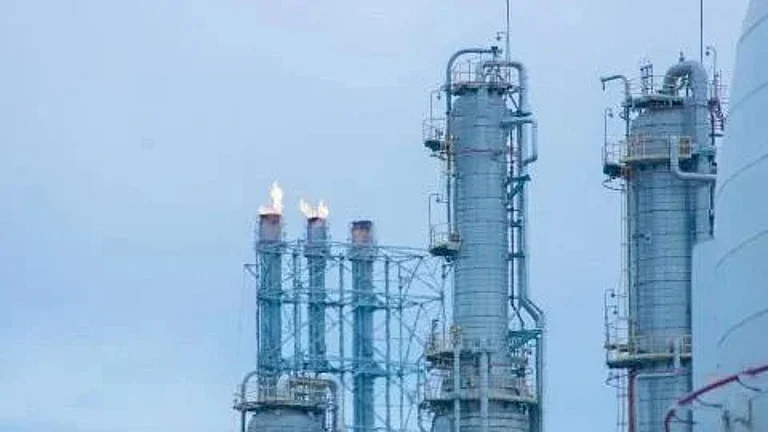
Coal gasification is emerging as a key pillar of India's strategy to strengthen energy security, reduce dependence on imported critical feedstocks, promote value addition to domestic coal resources and support the development of downstream industries. The process converts coal into synthesis gas (syngas), which can be used to produce a wide range of value-added products such as methanol, urea, ammonium nitrate, synthetic natural gas, and other chemical feedstocks.
Recognising the transformative potential of coal gasification, the government has approved incentive schemes with a cumulative outlay of up to ₹46,000 crore to promote surface coal and lignite gasification projects across the country.
The initiative aims to accelerate the establishment of coal gasification projects across the country, encourage the use of domestic coal for strategic industrial and chemical outputs, and reduce dependence on imports of natural gas, methanol, ammonia, and other critical feedstocks.
Advertisement