A growing number of former ISRO scientists and engineers are moving into India’s private space sector.
At least eight of the country’s 20 most-funded spacetech startups have founders with prior ISRO experience.
From rockets and propulsion to radar and satellite intelligence, their expertise is now shaping India’s private space sector.
Meet The ISRO Scientists Who Have Become Top Spacetech Founders
From building launch vehicles and radar systems at ISRO to developing rockets, Earth-intelligence platforms and space technologies, former space scientists are helping drive India’s private space push

AI Generated Image
Summary
Advertisement
For years, the Indian engineer with dreams of space looked to ISRO for a career in India, while NASA represented the global aspiration. The 2004 film Swades captured that aspiration through Mohan Bhargava, an Indian scientist working at NASA who returns to India.
Today, the career path is changing. A growing number of former ISRO scientists and engineers are choosing another route — building India’s private space companies.
According to Tracxn data, at least eight of India’s 20 most-funded spacetech startups were founded by people with prior experience at ISRO or its centres and units. Their expertise ranges from launch vehicles and propulsion to radar, Earth observation and satellite intelligence.
Outlook Business recently explored this transition in its September cover story, “Guts, 'Jugaad' And Scientific Odyssey: Can India’s Rocket Start-Ups Conquer The World?” The story traced Skyroot Aerospace’s journey and the growing role of former ISRO talent in India’s private space push.
Advertisement
Pawan Kumar Chandana And Naga Bharath Daka — Skyroot Aerospace
Pawan Kumar Chandana and Naga Bharath Daka left ISRO to build Skyroot Aerospace, one of India’s best-known private rocket companies.
Both had worked on launch vehicles at ISRO. Daka was a flight computer engineer at the organisation’s rocket centre and worked on avionics systems for Indian launch vehicles.
For Chandana, leaving ISRO was far from an obvious decision. “Leaving ISRO was certainly not an obvious decision,” he told Outlook Business, adding that he and Daka had gained first-hand experience of the complexity of launch vehicles and the depth of capability India had built over decades.
Skyroot has since developed the Vikram series of launch vehicles and emerged as a major player in India’s private launch market.
Prateep Basu And Rashmit Singh Sukhmani — SatSure
At SatSure, former ISRO-linked talent is being used for Earth observation rather than rockets.
Advertisement
Co-founders Prateep Basu and Rashmit Singh Sukhmani are building an Earth-intelligence platform that combines satellite imagery, artificial intelligence and geospatial technology.
Basu is the company’s CEO and Rashmit its CTO. SatSure uses satellite data to generate insights for sectors including agriculture, banking and insurance. The company, founded in 2017, has increasingly focused on AI-led Earth observation applications.
Shubhayu Sardar — EtherealX
Shubhayu Sardar has taken his ISRO experience into reusable rocket technology.
Sardar is a co-founder and COO of EtherealX, which is developing reusable launch vehicles. Its Razor Crest Mk-1 is being designed as a medium-lift reusable rocket aimed at reducing the cost of accessing space.
Sardar previously worked at ISRO and was involved in India’s human spaceflight ecosystem. At EtherealX, that experience is being channelled into the development of reusable launch technology.

Kuldeep Kumar Saxena — Optimized Electrotech
Kuldeep Kumar Saxena brings decades of optical engineering experience from ISRO to the private sector.
Advertisement
The former ISRO scientist is a co-founder of Optimized Electrotech, which develops electro-optical systems for imaging, sensing and surveillance.
His expertise covers optics, detectors, imaging systems and system architecture. The company’s work spans defence and space applications, showing how specialised capabilities developed within India’s space programme can find applications beyond government missions.
Pradeep Kumar — AADYAH Aerospace
Pradeep Kumar represents another generation of ISRO expertise moving into private space.
He spent nearly four decades with ISRO and served as Director of the Control Actuation Group at the Vikram Sarabhai Space Centre. He is now CTO at AADYAH Aerospace.
The company works on the design, development and commercialisation of space systems. Kumar’s experience in control and actuation brings decades of launch-vehicle expertise to a young private-sector company.
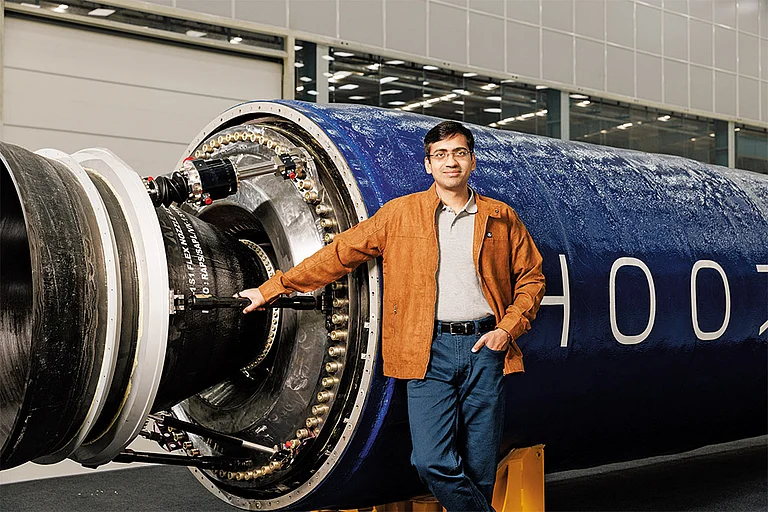
Devakumar Thammisetty — Astrobase Space Technologies
Devakumar Thammisetty has taken his experience in rocket propulsion into the private sector.
Advertisement
After more than 13 years at ISRO, he co-founded Astrobase Space Technologies, which is developing launch vehicles and liquid rocket engines.
His work at ISRO included cryogenic propulsion systems for GSLV upper stages and high-thrust booster engines. Astrobase is now working on reusable launch systems and has also built a team that includes former ISRO propulsion scientists and engineers.
Tapan Misra — Sisir Radar
Tapan Misra’s expertise lies in radar rather than launch vehicles.
The former ISRO scientist and director of the Space Applications Centre founded Sisir Radar to develop synthetic aperture radar (SAR) systems.
Misra has spent decades working on imaging radar and contributed to several major Indian space missions. His experience includes SAR systems for Earth observation and radar technologies associated with missions such as Chandrayaan-2 and NISAR.
At Sisir Radar, that expertise is being taken into a private venture focused on high-resolution radar applications.
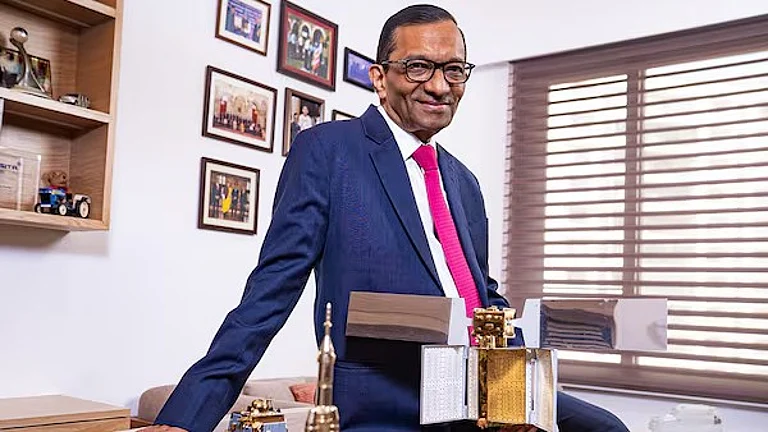
Gaurav Seth — PierSight
Gaurav Seth is another former ISRO engineer building a business around satellite technology.
Seth spent nine years working on SAR payloads at ISRO, including technologies associated with NISAR, Chandrayaan-2 and Chandrayaan-3.
He later founded PierSight, which is developing satellite-based maritime surveillance systems combining SAR and AIS data. The technology is aimed at applications including maritime monitoring, security and oil-spill detection.
PierSight is among the private companies emerging in India’s commercial Earth-observation ecosystem.
From ISRO To Private Space
India’s space sector has expanded beyond government-led activities, with private companies now working across launch vehicles, satellites, propulsion, Earth observation and space-based applications.
The government opened the space sector to private participation in 2020 and established the Indian National Space Promotion and Authorisation Centre (IN-SPACe) as a single-window nodal agency to promote, enable, authorise and supervise private space activities.
According to the Department of Space, the number of space startups in India has grown to more than 400. The government said in February 2026 that investment in space startups had crossed $500 million.
The growth has created opportunities for companies working on launch vehicles, satellite systems, propulsion, Earth observation and space-based services. Several of these ventures are also being led by former ISRO scientists and engineers, bringing experience from India’s space programme into the private sector.
For India, the expanding startup ecosystem is creating a new avenue for commercialising space technologies alongside ISRO’s continuing role in national space missions and advanced research.