India had over 10 million registered EVs as of July 2026, up more than 11 times from FY20 levels.
The country had 52,718 public EV charging stations as of March 2026.
The Centre is supporting charging infrastructure expansion through schemes such as FAME-II and PM E-DRIVE.
India Hits 10 Million EV Mark, But Charging Network Struggles to Keep Pace
India’s EV registrations have crossed 1 crore, but the expansion of public charging stations has lagged behind the rapid adoption of electric vehicles

File Photo
Summary
Advertisement
India’s electric vehicle (EV) adoption has crossed a major milestone, with the number of registered electric vehicles surpassing 10 million for the first time. However, the expansion of public charging infrastructure has not matched the pace of EV growth, highlighting a key challenge for the country’s electric mobility push.
According to a Business Standard report, in a written reply to an unstarred question in the Lok Sabha, Road Transport and Highways Minister Nitin Gadkari said India had 10,023,396 registered EVs across vehicle categories as of July 26, 2026. In comparison, the country had 52,718 public EV charging stations as of March 31, 2026, according to data from the VAHAN portal and Bharat Heavy Electricals Limited (BHEL) portal.
This means India currently has around one public charging station for every 190 registered EVs. EV penetration has increased from 0.71% in FY20 to 8.26% in FY26, marking an over 11-fold rise in six years.
Advertisement
Lower Costs Drive EV Growth
According to Gadkari, the growth in EV adoption has been driven by lower running costs and zero tailpipe emissions compared with internal combustion engine (ICE) vehicles. He added that government initiatives and increasing consumer acceptance have also supported the rise in EV registrations.
However, the sharp increase in EV numbers has created pressure on the existing charging network. While EV sales and registrations have grown rapidly, public charging infrastructure has expanded at a slower pace.
The minister did not provide specific reasons for the gap between EV adoption and charging availability. However, he said private entities are allowed to establish charging stations under the Ministry of Power’s Guidelines for Installation and Operation of Electric Vehicle Charging Infrastructure-2024.
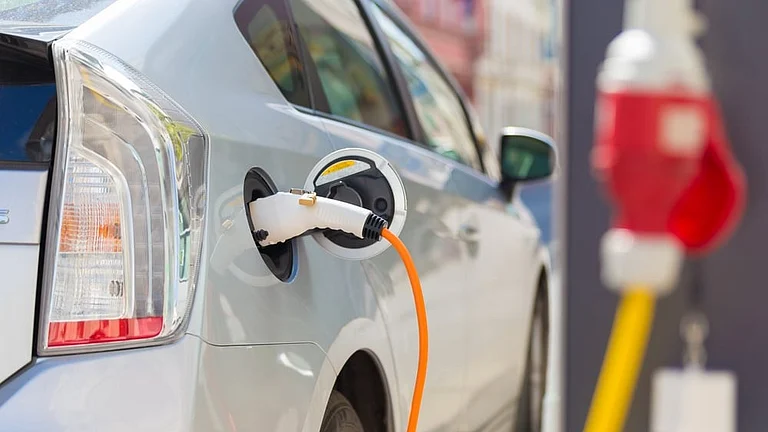
Centre Boosts Charging Network
The government is supporting the expansion of charging infrastructure through various schemes. Under the Faster Adoption and Manufacturing of Electric Vehicles (FAME-II) scheme, ₹912.50 crore has been allocated for setting up public EV charging stations across the country.
Advertisement
In addition, ₹2,000 crore has been earmarked under the PM Electric Drive Revolution in Innovative Vehicle Enhancement (PM E-DRIVE) scheme for deploying charging stations across India, including along national and state highways.
The Ministry of Power’s 2024 guidelines aim to create a connected and interoperable charging network. The rules allow individuals and entities to set up charging stations without requiring a licence, while distribution companies must provide electricity connections within three to 15 days depending on the location.EV
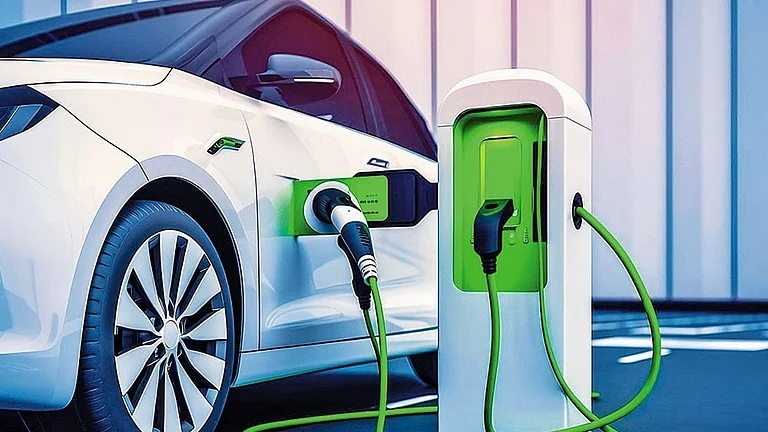
Highway Charging Network Expansion Plans
The government is also focusing on building charging facilities along highways. Gadkari said the National Highways Authority of India (NHAI), through National Highways Logistics Management Limited (NHLML), plans to develop wayside amenities every 40-60 kilometres on national highways and expressways.
These facilities will include EV charging stations along with fuel stations, parking areas, food outlets, toilets and other amenities for travellers and truckers.
Advertisement
Some states have already started seeing progress under these initiatives. In Assam, 117 public EV charging stations were sanctioned under FAME-II, of which 88 were operational as of July 1, 2026. Three highway wayside amenity sites with EV charging facilities are also currently operational in the state.