India records highest heat-related liveability limits amid rising global temperatures.
Expert warns cooling access gap is deepening India’s growing heat divide.
Global North-South partnership seen key for scalable heat adaptation solutions.
India’s Big Opportunity to Build Heat Stress Solutions at Scale, Says NRDC’s Adelle Thomas
India faces world’s highest heat stress risks, calls grow for scalable climate solutions and global cooperation

Adelle Thomas, Senior Director, Climate Adaptation, Environmental Health at the Natural Resources Defense Council
Summary
Advertisement
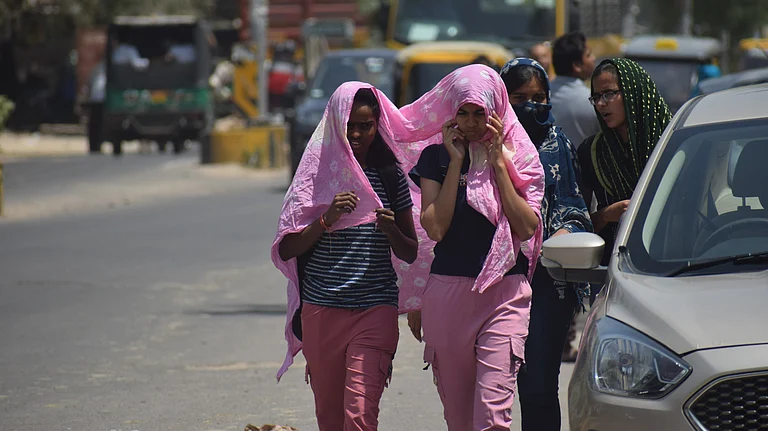
There is growing narrative globally around heat stress and the ability of current adaptation systems to mitigate the impact of extreme heat. A recent global assessment shows that India faces the world’s highest level of heat-related “liveability limits”— hours when it is too hot for people to safely go about daily activities. At the same time, access to cooling for people remains limited, amid growing ‘heat divide’. As of 2023, about 1.12bn people globally were at high risk due to lack of access to cooling for thermal comfort, with 309mn of them in India, according to a study by United Nations-backed entity, Sustainable Energy for All.
Despite the challenges, India is seen as one of the leaders in the Global South when it comes to dealing with heat, says Adelle Thomas, Senior Director, Climate Adaptation, Environmental Health at the Natural Resources Defense Council (NRDC), a leading international environmental advocacy.
Thomas, who serves as vice chair for the IPCC Working Group II for its seventh assessment cycle, was in India recently at the NRDC-organised Global Heat & Cooling Forum in Delhi, that deliberated on best practices and implementable climate-friendly solutions that are interoperable across countries and regions. In an interaction with Sudipto Dey, Thomas highlights the need for partnership between Global North and Global South to develop heat stress solutions at scale.
Advertisement
Edited Excerpts:
It is only in the last four-five years we see growing mainstream narrative around heat stress, and its impact on people, livelihood and infrastructure. Would you agree with the assessment that policymakers have largely underestimated the impact of heat stress?
Coming from the academic and the research side, heat has been identified as one of the climate hazards that would have a big impact. I think, along with a few other climate hazards, people don't react until they really start feeling the impacts. In the last few years, the impacts have gotten increasingly pervasive throughout society. We're seeing how it affects workers, how it affects young people, children andex elderly.
Heat is really at the forefront of how our decision-makers and policy makers are having to deal with climate change, because it’s happening right now. Researchers for a while have been talking about what the impacts would be, but until it's felt, that's when we start seeing attention being paid to it.
Advertisement
So, when did you sort of start feeling that the policy makers are taking note of heat stress? When did the needle move?
I think globally the needle has been moving over the past decade. I've been involved in doing research on climate impacts and adaptation since 2007. When we first started talking about what would be the impact of climate change, we would use a time horizon of how things would be very different by the year 2100. As we've gotten better information, better research, and unfortunately, as the impacts of climate change have sped up, we're seeing that those impacts happening now. So, policymakers are having to respond to it now.
How do you assess India's reaction to this whole heat mitigation debate?
India is one of the leaders in the Global South on dealing with heat. India has the heat action plans. It has been a leader in developing the heat action plans at the city level, whereas other countries have largely done it at the national level. One of the areas (India) could improve is moving from having the heat action plans to implementing all the different components of it. If we can see more of a shift from planning to implementation, then some of the impacts would be dealt with better.
Advertisement
Where does India sit in mitigation versus adaptation debate? Where does heat sit in that debate?
Heat is really a great example of how we need to deal with both mitigation and adaptation at the same time. Heat is always given as an example of where we can be maladaptive. So, if we respond to increasing heat by just putting in more air conditioners, then that is going to increase the emissions that drive the climate change, and the heat in the first place. Heat really straddles both adaptation and mitigation, and it's a good example of how we need to have a holistic approach to climate action.
Are countries reacting differently, especially between the Global North and the Global South?
Heat is an issue that the Global South is having to grapple with, with less resources, less access to cooling. So, the equity issues really surface there in terms of who can afford to even have cooling. Is cooling even available with electricity access. In the Global North we see some countries aren't used to extreme heat. And when they have these heat events, they're just not prepared. For example, in places in Europe, they're not accustomed to having these extreme heat days. So, you'll see lots of deaths that happen when they do have a heat wave. The Global North can learn from the Global South - we have been more proactive in thinking about how we deal with extreme heat, even with limited resources.
Advertisement
So, do you see the Global North and the South working together on heat?
We’re going to see the Global North and the Global South cooperating when it comes to heat solutions because the Global South has more of the experience with dealing with extreme heat. I think even in the Global North and the Global South, it's the most vulnerable populations that are affected by the heat extremes. In the United States, for example, we'll see elderly people, workers that are outside, people that don't have access to cooling, and lower income populations. Be it the Global North or the Global South, it's the same vulnerable population that are affected. We need to have solutions and policies in place to make sure that the most vulnerable are protected.
What would be the key things that the Global North could pick up from the South?
Globally what we need to do is not just jump straight to air conditioning, (but) put in place passive cooling measures. These are things like, making sure that the neighbourhoods that we live in have the green space, have the open space, have the ventilation that will allow buildings not to be as hot. We need to think about how we design buildings so that we have overhang and shading, when we expect people to be working outdoors, about having cooling centers so that people can go to one place for cooling. There are lots of different things we need to turn to before we go to individual households that need to invest in air conditioning.

So, there's scope where countries could sort of work with each other, build solutions at scale?
Absolutely. There's a big opportunity for Global North and Global South to partner, but also for Global South to partner with other Global South countries on putting in these solutions at scale. Part of the Global Heat and Cooling Forum (held at Delhi), which just concluded, was trying to make sure that we cross-pollinate these solutions (across countries).
Adaptation planning is very critical for mitigating the impact of extreme heat. How do you see countries looking at adaptation planning?
Countries have largely been responding to heat on an emergency basis and then responding to it as a one-off event. We would like to see heat incorporated into long-term planning and into adaptation planning, in general. We still have way to go with that. The IPCC report, that I was a part of in 2022, we found adaptation planning is really on the rise.
Over 160 countries include adaptation planning in their climate action. But what we're not seeing is sort of the shift from moving from planning to implementation. One of the big barriers to that is finance. The amount of money that goes towards adaptation is a fraction of what goes towards mitigation. As we start seeing the impacts of climate change that are affecting people, and heat is a prime example of that, it shows why we need to move from just talking about planning to putting in place adaptation measures that help us to deal with these impacts
In the 2022 IPCC report, where was heat in that?
Most of the countries in their adaptation plans focused on things like flooding and extreme weather like storms. Heat was included in many of the plans, but it wasn't as pervasive as some of the other climate hazards. If we were to redo our study - the next IPCC report will be out next year focusing on cities - we will probably see an increase in adaptation planning that includes heat, just because it has been so pervasive in the past few years.
There's also the whole issue of how you design heat into the development models.
We need to move heat into - how does heat affect our long-term planning? How does it affect how we build, where we build? We can't continue building in the same way in the same places if we're going to account for the temperature being hotter. How do we have those open spaces in the green areas? What type of materials are we using for construction? What must go from just thinking of extreme heat as an emergency and respond right after something happens. We must deal with heat on an ongoing basis.
One missing bit when we talk of heat - its direct impact on livelihood and on business. But we don't see that in mainstream narrative. Do you think there's a messaging gap out here?
You have different messages that appeal to different audiences. For the business audience, it's needed to underscore the effect that heat has on worker productivity and on output. There are studies out there specifically focused on India that show like what is the impact on GDP, and why heat is an issue that's not just affecting health but affecting the bottom line and the economy of India.
We need to make sure that we get even the private sector involved into responding to heat. That message of how it affects productivity, the bottom line is something that we need to get out there.
Is there anything specific that NRDC is working on, from India perspective, on heat?
NRDC has really been doing a lot on the heat action plans and supporting several cities in developing those. The team is now looking at how the heat action plans are being implemented. We are moving from the planning to implementation. We are monitoring the effectiveness to see what solutions are working, how we can better refine those heat action plans.