India reacted to US legislation that could allow tariffs of up to 100% on Russian energy buyers.
New Delhi reaffirmed its commitment to energy security and protecting trade interests.
GTRI warned the tariff threat could pressure India to cut Russian oil purchases and seek trade concessions.
India Faces 100% US Tariff Risk Over Russian Oil, New Delhi Responds
India says it remains committed to energy security and will take necessary steps to protect its trade and economic interests as the US moves closer to imposing additional tariffs on buyers of Russian energy

Summary
Advertisement
India has reacted to the US Congress passing legislation that could pave the way for tariffs of up to 100% on major buyers of Russian oil and gas, saying it remains committed to energy security and will take necessary measures to protect its trade and economic interests.
The US House of Representatives passed the Lindsey O. Graham Sanctioning Russia and Iran Act of 2026 by 262-159 on September 16, after the Senate approved it 86-11 on August 7. The legislation now goes to US President Donald Trump and gives him the authority to impose additional tariffs on countries buying Russian energy.
In a statement, the Government of India said, “India remains firmly committed to ensuring energy security for its 1.4 billion people.” It added that India would continue sourcing energy through diversified supplies and based on evolving market dynamics.
India Flags Trade, Energy Concerns
New Delhi said the issue has been discussed at high levels with various US interlocutors in recent months. It said the potential implications for both the bilateral relationship and the international energy market had been clearly communicated to the US side.
Advertisement
“The Indian side has also made clear its determination to take all necessary measures to protect its trade and economic interests,” the government said. It added that it would work closely with Indian trade and industry bodies to deal with the implications of the developments.
The potential tariff threat comes at a time when India remains heavily dependent on imported crude. According to the Global Trade Research Initiative (GTRI), “India imports more than 88% of its crude-oil requirements.” In July 2026, Russia supplied India with crude worth $7.27 billion, accounting for 51.1% of India's total crude imports of $14.21 billion.

GTRI Warns Of Tariff Pressure
GTRI said the US could use the legislation to put greater pressure on India to reduce its purchases of Russian oil. While China buys more Russian crude than India, the think tank said “Washington will put greater pressure on New Delhi as it may fear retaliation by China.”
Advertisement
GTRI described the development in strong terms, saying, “The new US Act turns sanctions into a trade weapon against India.” It said Washington could threaten tariffs of up to 100% and then offer a lower rate if New Delhi cuts Russian oil purchases and accepts concessions under a bilateral trade agreement.
The think tank also argued that India should not allow tariff threats to determine its energy policy. GTRI said, “Discounted Russian crude has lowered India’s import bill, strengthened energy security and helped contain inflation.” It recommended that India continue buying Russian oil as long as it remains commercially competitive and negotiate with Washington without granting unilateral trade concessions.
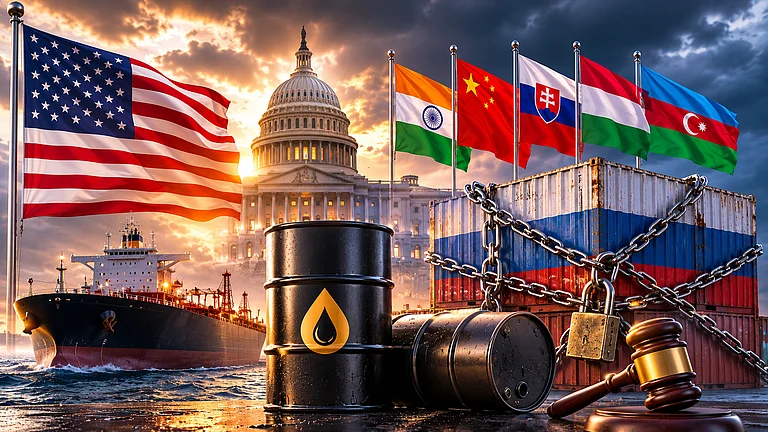
Actual Tariff Impact Yet To Be Seen
GTRI also pointed to the possibility of further US trade action even if India reaches a trade agreement or reduces Russian oil purchases. It said neither step can fully protect India from future US action under Section 301, sectoral measures or other trade laws.
Advertisement
However, the immediate impact on Indian exports remains unclear. GTRI said, “The actual impact of new tariffs on Indian exports can be assessed only after the US announces the tariff rates, product coverage and implementation timetable.”
For now, the Indian government has said it will monitor further developments while continuing to protect the country's energy security and trade interests.