Taylor Swift’s Eras Tour earned about $2 billion from 149 shows, with over 10 million attendees
BTS’s tour is projected to make $1.3–$2 billion from around 82 shows, drawing 5–6 million fans
The shift is clear: scale-driven touring versus high-efficiency fandom monetisation
BTSnomics vs Swiftonomics: Inside BTS Comeback and Taylor Swift’s $2 Bn Fandom Engine
The global concert business is witnessing a high-stakes comparison between Taylor Swift and BTS, as both acts turn tours into billion-dollar economic engines. Swift’s Eras Tour set the benchmark with over $2 billion in ticket sales across 149 shows, driving spikes in travel, hospitality and local spending

BTSnomics vs Swiftonomics: Inside BTS Comeback and Taylor Swift’s $2 Bn Fandom Engine
Summary
Advertisement
When artists like BTS and Taylor Swift go on tour, they don’t just perform on the stage, they give a boost to billion-dollar economies with their stardom. In 2023, Taylor Swift fans, monikered as Swifties, sent hotel prices soaring, flight bookings surging and resale tickets crossing four figures. The concert felt as much like an economic event as it did a musical one.
By the time the final show of Eras Tour wrapped, the tour had generated over $2 billion in ticket sales alone. And now, a different global artist ‘BTS’, popularly known as K-pop group, is ready to break the Swifty record. BTS, the most organised fandom force in global music, is making a massive comeback after a four-year hiatus with its new album Arirang.
The 82-show world tour that is already creating buzz worldwide despite being 45% shorter than Swift’s 149 show-Eras Tour, is expected to generate 2.7 trillion won ($2 billion), potentially surpassing the earnings of the highest-grossing Eras Tour. Demand for tickets has been overwhelming, with presales across all legs selling out almost instantly. The new album Arirang features 14 tracks, including the lead single ‘SWIM’.
Advertisement
The two has brought the fandom economy at the centre of comparison: can BTS actually generate near Taylor Swift-level revenues with fewer shows, and what does it signal for the future of concerts.

BTS-nomics
Ticket revenue, which is expected to reach around $2 billion in 82 shows across 23 countries, is only part of the story. A significant share of earnings is driven by fans travelling across borders and spending days in host cities. The tour is set to begin in Goyang, South Korea, on April 9, and run for nearly 11 months, including 30 performances in North America.
Analysts expect the economic spillover to be substantial. “These ripple effects will likely be distributed across all the countries and cities hosting the performances,” said SooCheong Jang, a Tourism Professor at Purdue University, as quoted by AFP. Given the scale of BTS’s global fanbase, known as ARMY, Jang predicts that the overall impact could exceed even the so-called ‘Taylornomics’.
Advertisement
The AFP report also points to massive commercial potential. According to Kim Yu-hyuk, analyst at IBK Investment & Securities, a “highly conservative” projection pegs combined ticket and merchandise revenue at at least 2.9 trillion won (around $2 billion), with total attendance potentially reaching 6 million fans. Additional tour dates could further lift these numbers.
Apart from the physical attendance, the tour is also expanding into digital distribution. Netflix is set to livestream select performances globally, in what executive Brandon Riegg described as the platform’s largest-ever live music broadcast.
The Korea Culture and Tourism Institute data revealed that the 34-city tour could bring in around 1.2 trillion won (approximately $840 million) per show. The report added that five-star hotel prices have also surged to nearly 2 million won per night in areas around Gwanghwamun in Seoul.
In addition, duty-free outlets, K-pop merchandise shops and department stores have also started preparations for a sharp rise in demand created by international tourists.
Advertisement
The group’s historical data supports this pattern. Even during limited runs such as Permission to Dance On Stage, BTS generated tens of millions per venue through a combination of ticket sales, livestreaming, and merchandise, indicating a strong ability to monetise each event at scale.
Swift-onomics
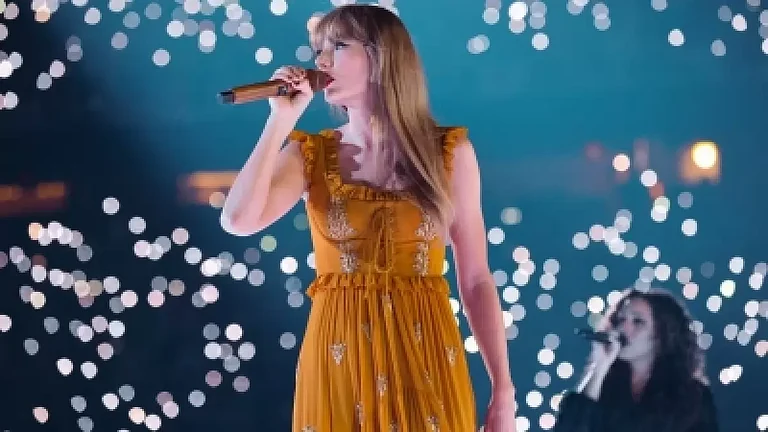
Taylor Swift’s Eras Tour had set a financial baseline for the live music industry. Industry estimates stated that the tour grossed over $2 billion across 149 shows, with total footfall exceeding 10 million fans globally. This translated into an average of roughly 67,000 attendees per show, assuming an estimated per-show revenue of $13-17 million.
At that time, pricing also played a crucial role. In several markets, average ticket prices were estimated at $200 or higher, with premium seats and resale listings pushing effective prices significantly crossing $1,000 for high-demand venues. And resale prices vary widely, with some seats costing over $700 and others potentially reaching thousands.
Advertisement
Beyond show tickets, Swift’s tour expanded into a multi-channel revenue engine. The Eras Tour concert film grossed over $250 million globally, while merchandise sales—often estimated at $20–30 per attendee on average—added hundreds of millions more to the overall ecosystem.
Some local media reports stated that Swift recorded an audience of 4.6 million and revenue of $1.04 billion in the single year of 2023. Her tours also generated about $5 billion in direct consumer spending across the United States.

K-Pop Cash Machine
Merchandise, which includes tuna cans, beauty gadgets, glow sticks, apparel, blankets and character dolls, has emerged as a major revenue engine in the BTS ecosystem.
Shinsegae Duty Free, as quoted by AFP said its Myeongdong “K-Wave Zone,” which opened earlier this year to sell K-pop merchandise, is already facing stock shortages of BTS-related products. Sales of BTS merchandise alone surged 430% between March 13 and 19 compared to the previous week, underscoring the scale of demand.
“Key rings were the first to sell out, followed by travel-friendly items like toothbrush-and-toothpaste kits and even disposable bandages,” a company spokesperson said, highlighting the breadth of consumer spending.
This extends beyond music into games, comics and branded merchandise, turning the group into a diversified commercial platform. The impact is also visible at a macro level.
According to Yonhap News Agency, foreign tourist arrivals to South Korea rose over 30% year-on-year between March 1 and 18, the report said. Data cited by BTS’s agency HYBE shows overseas searches for Seoul jumped 160% within 48 hours of the tour announcement, while Busan saw a staggering 2,400% surge.
“The group’s economic footprint is measurable not just in tourism, but in the global expansion of Korean culture—from K-pop to beauty, food and fashion,” said Gi-Wook Shin. In effect, BTS has helped accelerate what is now widely described as the ‘K-everything’ wave.
BTS is now testing whether a more concentrated model, built on intense fan loyalty and higher per-event monetisation, can deliver similar results. If the K-pop boys reach the upper end of its projected $2 billion range, it would signal that the industry may not need 150 shows to generate record-breaking revenue.
Instead, the focus could shift toward maximising value per fan, per show, and per engagement cycle.