India must balance automation with employment, unlike the US, where labour shortages are driving “lights-off” factories
Advanced automation is unavoidable in new-age sectors such as defence, drones, EVs and semiconductors
Design and simulation software is emerging as a key enabler of productivity without excessive job displacement
Automation In India Is As Much A Social Challenge As An Engineering, Says Dassault Systèmes' Manish Kumar
India should not blindly follow the US’s automation-heavy manufacturing model, as its economic and social realities are fundamentally different, according to Manish Kumar of SOLIDWORKS

Manish Kumar, CEO and Vice President, R&D, SOLIDWORKS
Summary
Advertisement
As global manufacturers move towards fully automated processes, India needs to adopt a more cautious path to address both social and employment problems, said Manish Kumar, CEO and Vice President, R&D, SOLIDWORKS — a software company acquired by Dassault Systèmes in 1997.
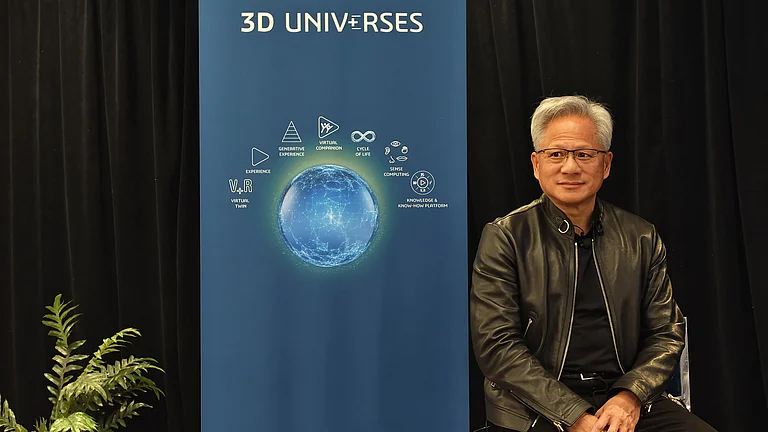
Addressing the company’s annual 3DEXPERIENCE WORLD event in Houston, Kumar said, “India faces a very different challenge. The US lacks manpower and therefore has no option but to automate aggressively”.
“On the other hand, India has a large workforce and must also consider employment and social factors. This becomes a social problem as much as an engineering problem. Engineers have to solve both together. You have to apply the social context of a country along with the engineering context,” Kumar stated.
Citing an example of automation in America, he explained the concept of dark factories, which gained traction in parts of the US and East Asia due to labour shortages, rising costs, and the push for efficiency. Just to add context, a dark factory refers to a fully automated manufacturing facility that can operate without human presence.
Advertisement
In India, however, the equation is more complex. “That level of automation may not yet be necessary in India. But when it comes to newer fields like defence, drones, and advanced manufacturing, automation will play a very important role”.
India’s manufacturing ambitions have grown sharply in recent years, with policy thrusts on domestic production, defence manufacturing, electric vehicles, and semiconductors. Yet unlike advanced economies struggling to find skilled shop-floor workers, India continues to add millions to its working-age population every year.
“You may not automate everything on a factory floor, but in new industries, automation is inevitable,” he said.
Platforms such as SOLIDWORKS, widely used across industrial equipment, medical devices, automotive components, and high-tech manufacturing, are increasingly being positioned as enablers of this balanced approach.
Speaking about its presence in India, Kumar stated that industrial equipment is SOLIDWORKS’ largest segment, as it accounts for approximately 50% of the India business.
Advertisement
“Beyond this, we have a strong presence in high-tech industries. Whether it is semiconductors or the machines used to manufacture semiconductors, those systems are designed using software where we have a significant market share,” he said.
“Medical devices are another major segment. I would say nearly 66% of medical device companies use our software — either to design the medical devices themselves or the machines used to manufacture them. We are also strong in air-conditioning and mechanical systems,” he added.