Ajit Pawar, Maharashtra’s longest-serving Deputy CM, dies in a plane crash, leaving a political and leadership vacuum
His legacy spans power politics, fiscal stewardship, welfare expansion and long-standing controversies
With elections ahead, uncertainty looms over NCP’s succession and the future of Maharashtra’s coalition government
Ajit Pawar’s Legacy as Maharashtra’s Economic Power Centre
From Baramati to the corridors of power, Ajit Pawar’s sudden demise leaves a political vacuum and raises urgent questions over NCP’s future and Maharashtra’s governance

Ajit Pawar’s Legacy as Maharashtra’s Economic Power Centre
Summary
Advertisement
Maharashtrians woke up to saddening news on Wednesday with the sudden demise of Deputy Chief Minister Ajit Pawar in a plane crash in Baramati. Fondly known as Ajit Dada, Ajit was not just Maharashtra’s longest-serving Deputy Chief Minister; his stewardship marked a pivotal phase in the history of the Nationalist Congress Party (the party set up by his uncle, which he later split) and Maharashtra.
What he leaves behind is more than a political legacy. His sudden absence now raises questions about the future course of Maharashtra’s politics and the current coalition government.
Born in 1959, Ajit Anantrao Pawar lost his father, Anantrao, at the age of 18. He then rose to prominence after joining with his uncle Sharad Pawar, one of Maharashtra’s most influential veteran politicians.
His political career began in 1991, when he was elected to the Lok Sabha from Baramati, a constituency he held for nearly three decades. He became 'Ajit Dada' in Baramati, his career was built in Baramati, and Ajit’s life came to a full circle in Baramati today.
Advertisement
His longstanding career in the Maharashtra government began in 1995. Ajit went on to hold portfolios like irrigation, rural development, water resources, and most importantly finance and planning, which let him build networks and a loyal base across political lines.
Known for his tough and centralised style of governance, Ajit’s stewardship was deeply lauded by both senior politicians and party loyalists. This was evident when he broke the Sharad Pawar-led NCP to form a government with the Bharatiya Janata Party and Shiv Sena.
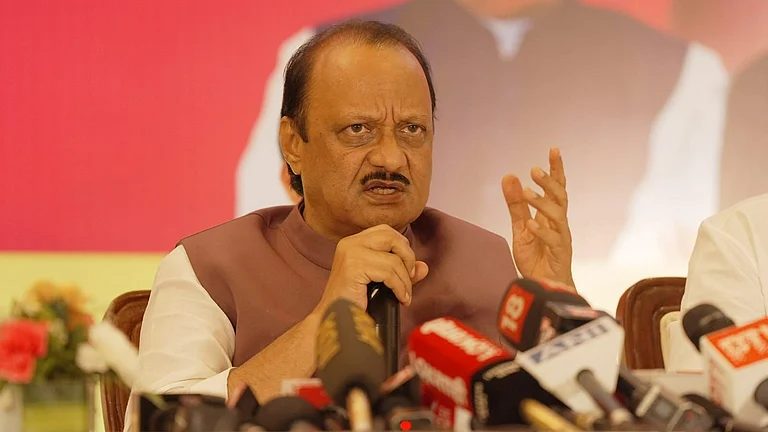
Dada Before Neta
Ajit was not just a neta (leader) for the masses; his influence at the ground level brought both appreciation and speculation of manipulative manoeuvres from political rivals. Under his leadership, he secured substantial funding for major projects in Maharashtra, including ₹1,200 crore for land acquisition and allocations for metro projects. He also focused majorly on farmer support and development in the agricultural sector.
Advertisement
He provided a ₹22,000 crore provision for state farmers and introduced reforms such as regulating Agricultural Produce Market Committee taxes in farmers’ interest. He streamlined budgets and prioritised allocations for education and other infrastructural development.
Maharashtra Chief Minister Devendra Fadnavis described the Deputy CM’s demise as an “unbearable and irreparable loss,” recalling Ajit as a “tireless colleague in government” and an essential voice for Maharashtra’s farmers and cooperative sector.
Governance & Fiscal Legacy
Ajit has presented 11 state budgets during his career, with the first state budget presentation dating back to 2001. One of his most notable speeches came in 2025, when Ajit tabled his 11th state budget for FY26, and the Mahayuti government’s first budget, which laid out foundations to make Maharashtra a $1 trillion economy by 2047. “Maharashtra will not stop now, progress will not be delayed anymore,” Ajit declared during his budget speech.
While many states struggle to maintain fiscal discipline, Ajit made sure Maharashtra not just spent but also complied with the Fiscal Responsibility and Fiscal Management (FRBM) Act. The state’s fiscal deficit is expected to be ₹1,36,234 crore, well below the limit of 3% of gross state domestic product (GSDP). Infrastructure, maritime board and airport development, and digital integration in agriculture were the key visions Ajit laid out for the state’s strategic role as India’s economic engine.
Advertisement
However, one of the most controversial policies under his tenure was the welfare scheme of Mukhya Mantri Majhi Ladki Bahini Yojana, which had a total outlay of ₹36,000 crore. The said scheme raised several questions over fiscal deficit, the politics of ‘freebies’, and the fiscal sustainability of the state.
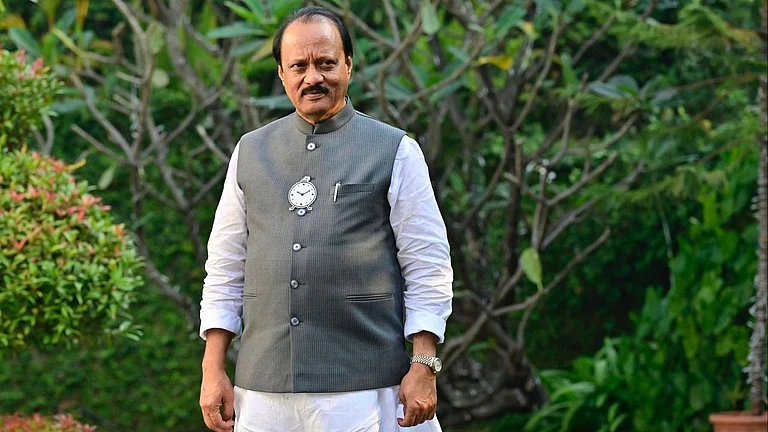
Controversies & Irrigation
Throughout his career, the Maharashtra irrigation scam remained a thorn. In the 2012 Economic Survey, a controversy erupted after the report revealed that the state had spent nearly ₹70,000 crore on various irrigation schemes over a decade, but the irrigation potential only increased by 0.1%. The financial mismatch prompted public backlash. Despite his denial of the allegations against him, the political escalation led to Ajit briefly resigning from his role as the Deputy CM.
Despite the political upheaval, Ajit prioritised major irrigation projects such as the Nar-Par-Girna (NPG) project worth ₹7,500 crore, which found its way into the 2025 budget. Further, the Daman Ganga–Ekdare–Godavari (DEG) project aimed at restoring irrigation facilities, was also one of the top projects Ajit prioritised under the broader objective of Jal Swaraj.
Advertisement

Tumultuous Political Landscape
Ajit was considered next in line after Sharad Pawar, until his daughter Supriya Sule joined politics and became a Member of Parliament in 2006. In 2019, Ajit shook hands to form an alliance with the BJP and took oath as Deputy CM alongside Fadnavis as the Chief Minister — a government that lasted just 80 hours.
The move by Ajit was widely viewed as ‘betrayal’ by the NCP and shook the entire state. Despite the flip-flops, Ajit returned to the NCP shortly, reportedly following family negotiations.
After the small crack in 2019, the ‘rupture’ in Maharashtra politics happened in early 2023. Ajit, along with other senior party members, formally walked out of the NCP and broke away from Sharad Pawar’s grip to align with the BJP–Shiv Sena alliance, to take oath as the Deputy Chief Minister once again.
Ajit publicly stated his ambition to become Maharashtra’s Chief Minister and critiqued legacy politics, while also accusing the NCP of lacking a clear succession plan.
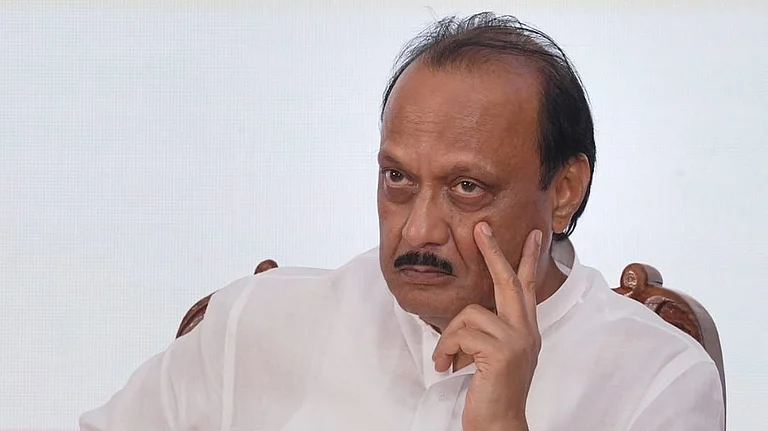
The Road Ahead for NCP
A key question arising currently is the way forward for his faction of the NCP. His sudden demise comes at a particularly challenging time for his party, especially ahead of the February 5 Zilla Parishad elections. Ajit is survived by his wife Sunetra Pawar, a Rajya Sabha member, and two sons. As per reports, Sunetra may take over the party leadership.
However, there have also been speculations of a merger between the two factions into a united front. The speculation of a merger comes as the two factions formed an alliance for municipal elections in Pune and Pimpri-Chinchwad earlier this month.
The possibility of his son Parth taking over as heir is also not ruled out yet. At the same time, Sharad Pawar’s grandson Rohit Pawar is also being groomed for leadership roles.
As per reports, merging the two factions under a single leadership amid friction between Parth and Rohit remains a key challenge for the party. A report by The Week suggests that if the NCP opts out of a merger, either Sunetra or Parth is likely to shape the leadership of the party.
Ajit’s demise also exposes the current structural weakness of the party — a lack of strong leadership. According to a report by Moneycontrol, senior politicians within the party largely remain only regionally influential. Chhagan Bhujbal holds a loyal base in Nashik, while Praful Patel’s influence is limited to the Bhandara–Gondia region. Sunil Tatkare’s hold does not extend beyond Raigad, the report said.
Other politicians, including Anil Deshmukh and Nawab Malik, continue to face legal and political challenges, further limiting the options left for the NCP to hand over the baton.
“It is too soon to judge the party’s future,” a junior political analyst said. “The immediate focus is the Zilla Parishad elections. Whether the NCP opts for a merger or leadership remains within the family is something only time will tell.”