Sensex fell 844 points as crude prices and volatility rose.
IT stocks dragged markets amid global shift towards AI-driven equities.
RBI policy, rupee movement and FPI outflows remain key focus.
Markets Fall Nearly 1%: Rising Crude, IT Selloff And FPI Outflows Weigh On Sentiment
Sensex drops over 800 points and Nifty slips below 23,300 as higher oil prices, rupee concerns and global capital flows towards AI-driven markets continue to pressure Indian equities ahead of the RBI policy decision

Summary
Advertisement
Indian benchmark indices resumed their downward trend on Wednesday after a one-day recovery, as rising crude oil prices, weakness in information technology stocks and concerns over foreign investor outflows weighed on market sentiment.
At around 10 am, the NSE Nifty50 was down 229.80 points, or 0.98%, at 23,250, while the BSE Sensex fell 843.96 points, or 1.13%, to 73,799.46. Earlier in the session, the Nifty had declined as much as 0.8% to 23,290.45, while the Sensex slipped more than 700 points.
The decline comes a day after benchmark indices snapped a four-session losing streak, highlighting the fragile nature of the ongoing recovery amid persistent macroeconomic headwinds.
Crude Oil And West Asia Tensions Back
Investor sentiment weakened as crude oil prices moved higher amid fresh uncertainty surrounding negotiations between the United States and Iran and renewed military activity in the region.
Advertisement
West Texas Intermediate crude futures for July delivery rose more than 1% to $94.81 per barrel, while Brent crude for August delivery gained 0.88% to $96.84 per barrel.
The rise in oil prices is a key concern for India, which imports the bulk of its crude requirements. Higher energy costs can worsen inflationary pressures, widen the current account deficit and increase pressure on the rupee.
VK Vijayakumar, Chief Investment Strategist at Geojit Investments, said the latest escalation in West Asia has dashed hopes of immediate relief from the energy shock facing the Indian economy.
"The mild escalation in the West Asia conflict has again pushed up Brent crude price to close to $97, indicating no respite to India from the energy shock. Rupee has edged down to 95.26 to the dollar. The sustained fall in the rupee has been arrested for now but the rising current account deficit and sustained FPI outflows are areas of concern," he said.
Advertisement
IT Stocks Drag Benchmarks
Technology stocks remained among the key drags on benchmark indices, contributing significantly to the decline in the Sensex and Nifty.
The weakness in Indian technology shares comes even as semiconductor and AI-related companies continue to drive stock market rallies in several global markets. Investors have increasingly shifted capital towards markets that are directly benefiting from the global artificial intelligence boom.
Vijayakumar noted that semiconductor giants in South Korea and Taiwan continue to attract strong investor interest due to expectations of robust earnings growth.
"Companies like Samsung, SK Hynix and TSMC, which enjoy significant pricing power, are expected to post impressive profit growth this year and perhaps next year. In contrast, earnings growth in India during FY27 is expected to remain modest because of slower growth and higher inflation," he said.

RBI Policy In Focus
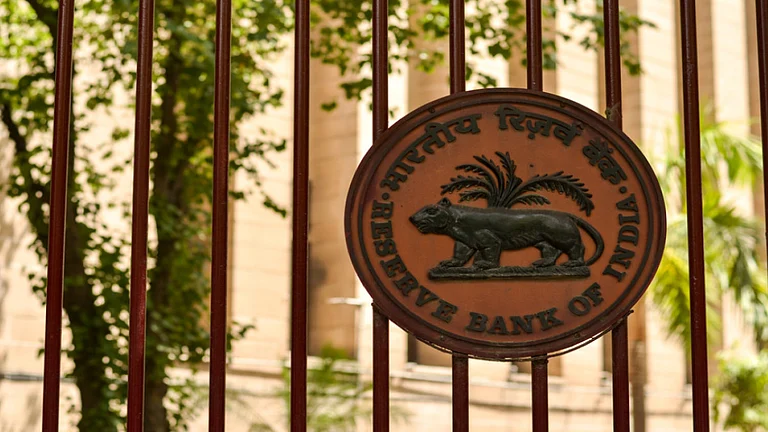
Market participants are also closely watching the Reserve Bank of India's monetary policy decision due on June 5 for signals on inflation, liquidity and currency management.
Advertisement
According to Vijayakumar, the RBI's commentary and policy actions will be closely monitored, particularly at a time when the rupee remains under pressure and foreign investors continue to reduce exposure to Indian equities.
Despite these challenges, domestic institutional and retail investors have continued to provide support to the market through steady inflows, helping cushion the impact of sustained foreign selling.
Volatility Rises
The India VIX, often referred to as the market's fear gauge, jumped 9% to 16.69, indicating a sharp rise in expected near-term volatility.
Broader Asian markets presented a mixed picture. Japan's Nikkei 225 rose 0.91% to hit a fresh record high, while Australia's S&P/ASX 200 gained 0.32%. However, Hang Seng futures pointed to a weaker opening in Hong Kong. South Korean markets remained shut for a public holiday.
While analysts believe fair valuations, improving corporate earnings and strong domestic flows could provide some resilience, markets are likely to remain sensitive to movements in crude oil prices, developments in West Asia, foreign investor activity and the outcome of the RBI's policy meeting later this week.
Advertisement