Copper hit record $14,533 as supply constraints and AI demand boosted prices.
Gold rose as dollar weakness and geopolitical tensions supported safe-haven demand.
Fed policy, inflation data and oil prices remain key commodity market triggers.
Copper, Gold Rally: Supply Tightness, Dollar Weakness And Fed Bets In Focus
Copper touches a record $14,533 per tonne as supply tightness, AI-led demand and a weaker dollar lift commodities, while gold gains ahead of key US inflation data

Copper, Gold Rally: Supply Tightness, Dollar Weakness And Fed Bets In Focus
Summary
Advertisement
Copper prices have surged to a record high on the London Metal Exchange (LME), while gold and silver also moved higher as a softer US dollar, supply concerns, geopolitical tensions and expectations around US monetary policy shaped commodity markets.
Benchmark three-month copper futures on the LME climbed to an all-time high of $14,533 per tonne, supported by tightening supplies outside the US, a weaker dollar and strong fund buying. According to LME official prices, cash copper was quoted at $14,539-$14,540 per tonne on Monday, while the three-month contract stood at $14,443-$14,448 per tonne.
Copper has gained around 16% so far this year and nearly 47% over the past 12 months. The rally has been supported by demand from power grids, renewable energy equipment, artificial intelligence (AI) data centres and electric vehicles, while concerns over whether supply growth can keep pace with consumption have provided an additional boost.
Copper is widely used across industries because of its high electrical conductivity, including in semiconductors, batteries and power grids. Analysts expect demand to remain strong over the medium to long term as investment in power-intensive AI data centres and the grid infrastructure required to support them accelerates.
Advertisement
Why Copper Prices Are Rising
The supply side remains a key factor behind the latest rally. Ruchit Thakur, Market Analyst at VT Markets, said the recent surge has been driven largely by constrained mine output, operational disruptions and growing supply tightness outside the US.
“Global mine production declined by 1.1% in the first half of 2026, propelling LME copper to unprecedented highs,” Thakur said. He added that uncertainty surrounding US tariffs has altered trade flows, restricting availability across other key regional markets.
For investors, Thakur said mine production levels, LME and SHFE inventory trends, Chinese industrial demand and upcoming US tariff policies will be important factors to monitor.
The strength in copper has also been reflected in Indian mining and metal stocks. On Tuesday, Hindustan Copper gained nearly 5% to trade at ₹532.20, while Vedanta rose around 1% to ₹270.60. Hindalco Industries gained about 0.25% to ₹1,008.50.
Advertisement
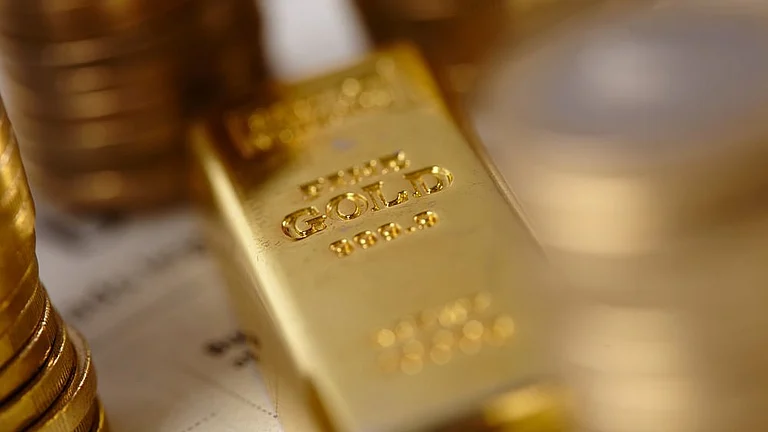
Gold Prices Rise as Dollar Weakens
Gold prices have also moved higher across Indian markets, supported partly by weakness in the US dollar and demand for safe-haven assets amid geopolitical and market uncertainty.
The average price of 24-carat gold stood at ₹1,55,350 per 10 grams, while 22-carat gold was priced at ₹1,42,400 and 18-carat gold at ₹1,16,510 per 10 grams.
In Mumbai, Delhi, Kolkata, Bengaluru, Hyderabad, Kerala and Pune, 24K gold prices increased by around ₹560 per 10 grams. Chennai was an exception, with prices declining by ₹990 per 10 grams.
The Dollar Index declined around 0.3%, while spot gold gained nearly 0.6% to reach $4,432.79 per ounce. Gold was trading near $4,480 per ounce on Comex, while silver was around $67.60 per ounce.
On the Multi Commodity Exchange (MCX), gold futures were trading near ₹1,53,450 per 10 grams, while silver futures were around ₹2,40,700 per kg at the time of writing.
Advertisement
The benchmark October gold contract opened at ₹1,53,362 per 10 grams, up ₹544 from the previous close of ₹1,52,818. It was later trading at ₹1,53,457, up ₹639, after touching an intraday high of ₹1,53,640 and a low of ₹1,53,361.

Fed, Inflation and Oil Are Key Triggers
The next major triggers for precious metals will come from the US economic data calendar, with the Producer Price Index (PPI) and Consumer Price Index (CPI) due this week ahead of the Federal Reserve's policy meeting later this month.
Markets will be watching the inflation data for clues on whether price pressures are cooling enough to offset the hawkish signal from Friday's jobs data. Oil prices have also emerged as an important factor, with crude moving near $97 per barrel amid escalating Middle East tensions, keeping inflation and Fed expectations elevated.
Advertisement
The US dollar appreciated 10 paise against the rupee to ₹94.66 in early trade on Tuesday.
According to Augmont's bullion daily report, gold and silver recovered as the US dollar eased, although gold remains caught between buyers and sellers without enough momentum for a clear breakout.
The report said markets are closely watching upcoming inflation data, which could influence expectations for the Federal Reserve's next move. The CME FedWatch Tool showed traders pricing in a 60% probability of a rate hike at next week's Fed meeting, according to the report.
Higher interest rates generally weigh on gold because they increase the opportunity cost of holding a non-yielding asset.
Outlook for Gold, Silver and Copper
Thakur said the broader long-term outlook for gold remains favourable, supported by central bank buying and persistent geopolitical risks. However, elevated US yields and Federal Reserve rate projections could create near-term headwinds.
Silver, meanwhile, is expected to remain more volatile because of its significant industrial applications.
“Rather than pursuing sharp price rallies, investors are advised to adopt a phased, staggered buying approach,” Thakur said. “Gold serves well as a defensive foundational asset, whereas silver and copper present greater potential upside growth alongside heightened volatility.”
Augmont expects gold to trade between $4,300 and $4,500, equivalent to roughly ₹1,50,000-₹1,57,000, with a strategy of buying on dips and selling into rallies. For silver, it sees potential for a move towards $70 if prices sustain above $67, while a break below $65 could open the way towards $63.
Gold Prices and India's Economy
The impact of higher gold prices could extend beyond investment returns and influence household wealth and borrowing in India.
According to Jefferies, a further 10% increase in gold prices could create around $400 billion in additional household wealth and potentially unlock another $20-25 billion in gold-backed loans. The brokerage estimates this could provide 80-100 basis points of support to GDP and spending.
The mechanism is linked to the large amount of gold held by Indian households. Jefferies estimates households own around 25,000 tonnes of gold worth approximately $3.9 trillion as of March 2026. The value of these holdings has increased by around $1.9 trillion over the past two years as gold prices surged.
Gold accounted for 24.2% of total household assets in March 2026, up from 15.4% in March 2023, while the share of bank deposits declined from 14.1% to 11.2%.
Gold-backed borrowing has also expanded as prices have risen. Organised gold-loan assets under management increased from $86 billion in March 2023 to $197 billion in March 2026, representing a 32% compound annual growth rate.
For investors, the current commodity rally therefore reflects several forces operating simultaneously: copper is being supported by supply constraints and structural demand from electrification and AI infrastructure, while gold is benefiting from dollar weakness, geopolitical uncertainty and its role as a defensive asset. The immediate direction of both markets, however, will depend heavily on supply trends, US inflation data, oil prices and expectations for Federal Reserve policy.