MSMEs need to move up the technology value chain, becoming global suppliers in semiconductors, AI and IT.
Odisha should build a complete semiconductor ecosystem, creating opportunities for MSMEs in materials, chemicals, equipment and supply chains.
AI and talent development are key, with grassroots applications and stronger skilling needed to drive inclusive technology-led growth.
Odisha’s MSMEs Must Move Up the Technology Value Chain, Says OCAC Executive Director
Odisha should focus on practical use cases that address problems faced by people at the grassroots rather than treating AI only as an advanced technology for large companies

Kaustuva Dipta Pany
Advertisement
Odisha’s micro, small and medium enterprises (MSMEs) need to move beyond traditional businesses and position themselves as global suppliers in emerging technology sectors such as semiconductors, artificial intelligence (AI) and information technology, Kaustuva Dipta Pany, IRTS, Executive Director, Odisha Computer Application Centre (OCAC), said.
Speaking at the the Outlook MSME Growth Conclave – Odisha 2026,on opportunities for MSMEs in IT, semiconductor and AI sectors, Pany said Odisha’s transition from a resource-led economy to a knowledge-driven and MSME-oriented economy would be critical to achieving the state’s long-term economic ambitions, including a $500-billion economy by 2036 and a $1.5-trillion economy by 2047.
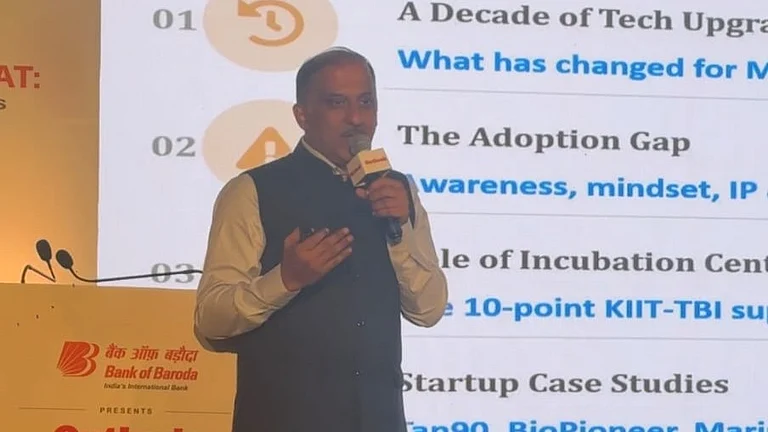
“Services in Odisha now contribute approximately 39% of gross state value added and provide a strong base for IT, IT-enabled services, global capability centres and knowledge-intensive sectors,” Pany said. He added that a technology-led economy could make Odisha more competitive, innovative, inclusive and employment-rich, with MSMEs emerging as global suppliers and the state’s youth becoming creators of future technologies.
Advertisement
Pany said the semiconductor opportunity should not be viewed merely through the lens of chip manufacturing. Instead, Odisha should focus on developing an entire semiconductor ecosystem that allows MSMEs to participate across the value chain.
“Every modern product, be it mobile phones, automobiles or medical devices, depends upon semiconductors,” he said, stressing that the opportunity extends to raw materials, speciality gases, chemicals, equipment manufacturing and supply-chain infrastructure.
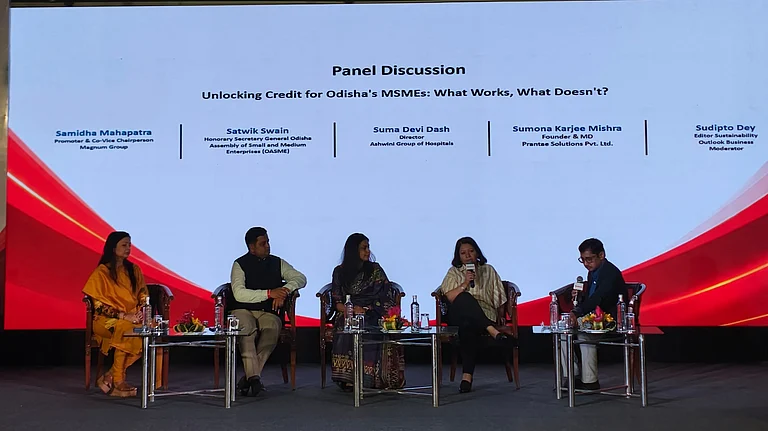
According to Pany, building such an ecosystem could create opportunities for high-value manufacturing and employment while allowing Odisha’s MSMEs to become suppliers to larger industries. He said the state’s approach should focus on creating a comprehensive semiconductor ecosystem rather than attracting isolated investments.
Pany also pointed to the Centre’s semiconductor initiatives and said MSMEs would have an important role to play in building the broader value chain. Odisha, he said, has sought to expand support beyond semiconductor manufacturing to areas including materials, chemicals, equipment and supply-chain infrastructure.
Advertisement
On artificial intelligence, Pany argued that Odisha should focus on practical use cases that address problems faced by people at the grassroots rather than treating AI only as an advanced technology for large companies.
He cited agriculture, healthcare, women-centric services and local industry as areas where AI could have a significant developmental impact.
For instance, a farmer in a rural district such as Sundargarh should be able to interact with an AI system in his or her own local dialect and receive information on weather and agricultural practices through a conversational interface, he said.