RBI Governor Malhotra said the cost of maintaining payment infrastructure has to be borne by someone, either through taxation or a user-pays model such as MDR
Finance Minister Nirmala Sitharaman has stressed that MDR is a merchant charge, not a direct charge on UPI users
The key question now is whether merchants absorb the cost or eventually pass some of it on to consumers through pricing
Why UPI Charges May Be Needed? Understanding MDR Costs and Economics of Digital Payments
There is a strong argument for retaining zero MDR. However, payment companies argue that the absence of a revenue makes it harder for continued investment in the ecosystem

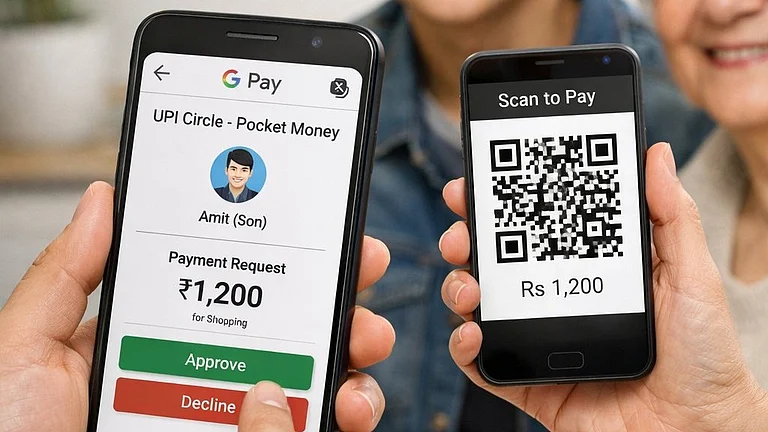
Why MDR On UPI May Be Needed AI generated representative image
Summary
Advertisement
For millions of Indians, UPI has become synonymous with instant and free digital payments. But behind every QR-code scan and bank transfer lies an ecosystem of banks, payment service providers, fintech companies and technology infrastructure that has to be continuously funded.
That is at the heart of the renewed debate over Merchant Discount Rate (MDR) on UPI.
The Lok Sabha on Thursday passed the Taxation and Other Laws (Amendment) Bill, 2026, which amends the Payment and Settlement Systems Act, 2007. The amendment removes the existing legal restriction on charging for specified electronic payment modes and gives the government the power to notify which modes or transactions will remain free.
The legislation does not itself impose MDR on UPI. The government has said that, once the Bill is enacted, the UPI and Services Steering Committee headed by NPCI will decide whether MDR should be introduced and at what level.
Why Is MDR On UPI Being Considered?
The central issue is simple: UPI may be free to use, but operating it is not free.
Advertisement
The payments ecosystem incurs costs on transaction authorisation, reconciliation and settlement, cybersecurity, fraud detection, dispute management, cloud infrastructure, customer support, compliance and network monitoring.

The annual cost of running UPI and RuPay debit card infrastructure could be as high as ₹20,000 crore, as per a report by The Indian Express.
A March report of the Standing Committee on Finance said the government's digital payment incentives between 2021-22 and 2024-25 covered only 11% of the cost incurred by the digital payments industry. The Centre paid ₹8,730 crore under the scheme during those four years.
The government currently subsidises low-value BHIM-UPI and RuPay debit card transactions through an incentive scheme. But with transaction volumes continuing to rise, the sustainability of that model has come under scrutiny.
As RBI Governor Sanjay Malhotra said, the cost ultimately has to be borne somewhere — either by the general public through taxes or through an MDR-based user-pays model.
Advertisement
"Ultimately, it is the consumer, in some way or the other, who is paying (for) it already. It may not be the same consumer, it may be the general economy and you don’t get to see it directly… Somehow, it is already getting passed on; it may not be directly on the user-pays principle," Malhotra said on Wednesday after RBI MPC meeting.
Will Users Start Paying For UPI?
Not necessarily.
The government has repeatedly clarified that the proposed amendment does not mean that consumers will be charged for ordinary UPI transactions.

Finance Minister Nirmala Sitharaman has said that MDR applies to merchants and not end users, arguing that the revenue could allow banks and fintech companies to invest more in infrastructure, innovation and security.
The government has also indicated that person-to-person transactions and most small-merchant transactions are likely to remain free.
Advertisement
This distinction matters because UPI has become a mass-market payment system. In FY26, it processed more than 24,000 crore transactions worth ₹314 lakh crore.
Only around 4% of person-to-merchant transactions were above ₹2,000, although those transactions accounted for nearly two-thirds of the value, as per a report by Express.
That makes higher-value merchant payments the most obvious target for any future MDR regime.
Who Could Actually Be Charged?
There is no final MDR structure yet, but the industry expects a differentiated system rather than a uniform fee.
Mehul Mistry, SVP, customer success, strategy and growth at Zeta, said current discussions point towards a UPI MDR of 0.05-0.07% for larger merchants, with RuPay debit card MDR potentially higher.

He said that the government appears to be creating a sustainable revenue model for the banks, PSPs, and payment infrastructure providers that power this ecosystem.
Advertisement
"Based on current discussions, we expect UPI MDR to be in the range of 5–7 basis points (0.05–0.07%), and RuPay debit card MDR at around 15–20 basis points (0.15-0.20%), applicable only to large merchants above an annual turnover of roughly ₹1–1.5 crore," Mistry said.
Small merchants and P2P UPI transactions should continue to remain free. This threshold-based structure protects the smallest players while ensuring continued investment in the security, reliability, and scale that digital payments infrastructure demands, he added.
Why Not Simply Keep UPI Free?
There is a strong argument for retaining zero MDR. UPI has been instrumental in bringing digital payments to smaller merchants and consumers, and removing charges has helped drive adoption.
However, payment companies argue that the absence of a direct revenue stream makes it harder to justify continued investment in the ecosystem.
"UPI has changed the way India pays and has been one of the most successful digital public infrastructure initiatives globally. This is the result of a decade of quiet investment by banks, fintechs and payment providers together, and is one of the most powerful contributions by Indian fintechs to the ecosystem," said Anirban Mukherjee, CEO of PayU.
Payments infrastructure, merchant servicing, security, compliance and fraud prevention, however, require continuous investments. So does scaling infrastructure, cybersecurity and fraud risk management, and building for what comes next, including agentic commerce, AI-native payments and new ways for merchants to grow.
"The next chapter of UPI cannot only be about processing more transactions. For UPI to now leapfrog into the next phase, it needs to be about creating more value with every transaction, for consumers, merchants and the ecosystem that powers them," he added.
What Would A Fair MDR Model Look Like?
The experts broadly favour a calibrated approach rather than charging everyone.
UPI has effectively become a public digital utility, said Raman Khanduja, Co-founder and CEO of Mintoak, but argued that its economic model now needs to evolve as the ecosystem matures.
"Consumers should continue to have a seamless experience and smaller merchants should be protected, while larger merchants could make a calibrated contribution, similar to the existing card-payment ecosystem," he said.
Khanduja also favoured considering merchant size, business turnover and transaction value while determining MDR rather than imposing a uniform rate.
That approach is also consistent with Zeta's Mistry's view that smaller merchants and P2P payments should remain outside the MDR framework.
Could MDR Change How India Pays?
This is perhaps the biggest uncertainty.
A LocalCircles survey found that only 12% of respondents said they would continue using UPI if a fee were levied on payments above ₹3,000 at large merchants.
The proportion fell to just 2% if merchants passed the transaction fee on to customers, as per the Express report.
That raises the possibility that even if MDR is formally imposed on merchants, consumers could eventually bear some of the cost indirectly if businesses factor it into prices.
For now, however, there is no consumer UPI fee. The immediate policy question is whether large merchants should begin paying for part of the infrastructure they use, and whether that revenue can make UPI financially sustainable without weakening the affordability and reach that made it India's dominant digital payment rail.