PM Surya Ghar reaches 50 lakh homes; rooftop solar installations exceed 16,000 a day.
India nears 300 GW non-fossil capacity, remains on track for 500 GW by 2030.
Government pushes clean energy manufacturing through PLI schemes, battery storage and innovation.
India's Rooftop Solar Push Accelerates with 16,000 Daily Installations, Says MNRE Minister
The minister said India is nearing 300 GW of installed non-fossil fuel power capacity and remains on track to achieve its target of 500 GW by 2030

Pralhad Joshi | Photo: Vikram Sharma
Advertisement
India's flagship residential solar programme has crossed a major milestone, with the PM Surya Ghar Muft Bijli Yojana now benefiting 50 lakh households as rooftop solar installations accelerate to more than 16,000 every day, Union New and Renewable Energy Minister Pralhad Joshi said on Thursday.

The installation pace has more than tripled over the past year, from around 5,000 systems a day in October 2025 to over 16,000 per day in July 2026, making the scheme one of the country's fastest-growing clean energy initiatives.
Speaking at 7th CII International Energy Conference & Exhibition in New Delhi, Joshi said the programme is not only expanding access to clean electricity but is also helping create a nationwide rooftop solar ecosystem while boosting domestic renewable energy manufacturing.
The minister said India is nearing 300 GW of installed non-fossil fuel power capacity and remains on track to achieve its target of 500 GW by 2030.
Advertisement
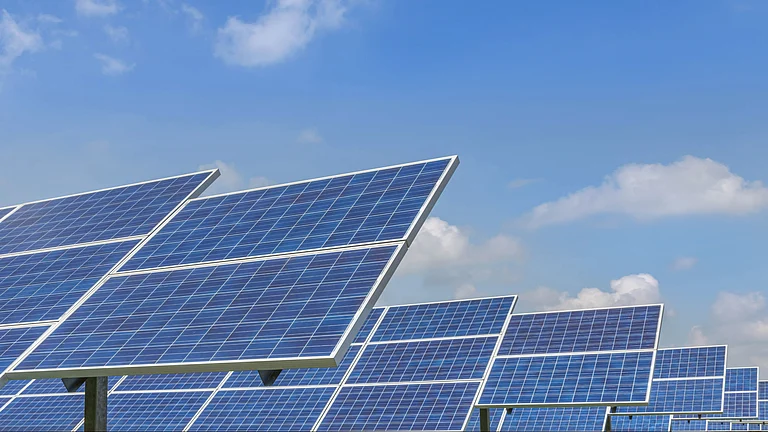
He highlighted a series of government measures aimed at strengthening the renewable energy sector, including the Production Linked Incentive (PLI) scheme for high-efficiency solar photovoltaic modules, the Green Energy Corridor programme, lower GST on renewable energy equipment, customs duty exemptions for capital goods used in lithium-ion battery manufacturing, and the Renewable Energy Equipment Import Monitoring System.
Calling innovation the next frontier of India's energy transition, Joshi urged industry to increase investments in research and development, particularly in advanced solar technologies, battery storage and emerging clean energy solutions.

Heavy Industries and Steel Minister H.D. Kumaraswamy said India's long-term energy security would increasingly depend on its ability to manufacture clean energy technologies domestically rather than merely securing access to energy resources.
He said the government's ₹18,100-crore Production Linked Incentive scheme for Advanced Chemistry Cell batteries and the PM E-DRIVE programme are helping build domestic manufacturing capacity, reduce import dependence and strengthen India's ambition to become a global clean energy manufacturing hub.
Advertisement