Union Electronics and Information Technology Minister Ashwini Vaishnaw on Wednesday explained India's progress in building a domestic semiconductor industry over the past five years, along with the government's plans to expand chip manufacturing, packaging, design and research.
Vaishnaw Traces India's Path From Chip Imports To Fab Manufacturing
Vaishnaw said the approach changed after Prime Minister Narendra Modi took office, with the launch of Make in India and reforms in foreign investment, taxation and customs duties

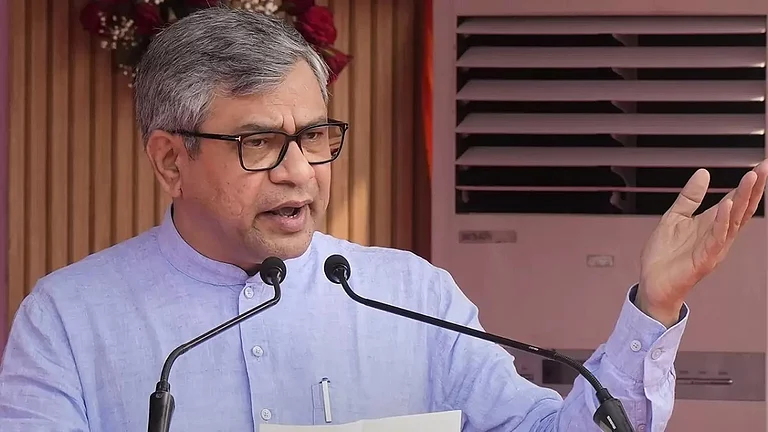
Union Minister Ashwini Vaishnaw
Advertisement
In a detailed blog post, Vaishnaw said India has approved 12 semiconductor units with a cumulative investment of $20 billion. Three of these units have already started commercial production, Micron on February 28, Kaynes on March 31 and CG Power on July 4. He said the government's focus was on building a wider industry ecosystem rather than simply setting up chip plants.
Vaishnaw described semiconductors as a "foundational industry," noting that chips power products ranging from cars and mobile phones to drones, aircraft and MRI machines. He added that the global electronics industry is estimated at $4.3 trillion and is growing rapidly.
According to Vaishnaw, India's efforts to build a semiconductor industry date back to the 1960s, when Fairchild Semiconductor explored setting up operations in the country but abandoned the plan due to socialist economic planning and production quotas. He said similar attempts in later decades also failed, including a renewed push in the early 2010s that fell short due to weak strategy and execution.
Advertisement
Vaishnaw said the approach changed after Prime Minister Narendra Modi took office, with the launch of Make in India and reforms in foreign investment, taxation and customs duties. These measures, along with schemes for mobile phone and electronics manufacturing, helped expand India's electronics ecosystem. The country now has more than 300 electronics manufacturing units, with production exceeding $130 billion and exports crossing $48 billion. Mobile phones have become India's largest exported item, ahead of petroleum products and gems and jewellery, supporting 2.5 million jobs, he said.
The government launched the Semicon India programme in 2021 with a $10 billion package to support fabrication plants and packaging units. Vaishnaw said the industry was initially sceptical, with questions raised about India's readiness to build clean rooms and handle technologies such as ultrapure water and lithography machines. Despite this, 12 units have since been approved.
Advertisement
On skill development, Vaishnaw said the government initially aimed to train 85,000 skilled engineers over 10 years through new courses and the Chips to Startup programme, which has given over 320 universities and startups access to design tools. Under the Design Link Incentive scheme, the government has supported 105 startups, providing $83 million to 24 of them, 15 of which have gone on to raise $118.5 million in venture capital funding.
Vaishnaw said companies outside the Semicon programme are now investing more than $3 billion in India. The government has announced Semicon 2.0, covering seven focus areas including chip design, domestic manufacturing of semiconductor equipment, and production of specialty chemicals and materials used in chipmaking.
He said India currently uses 40-nanometre technology and aims to reach 7-nanometre to 3-nanometre nodes within eight years, while also training 1 lakh chip design engineers. "Just like the IT sector, we want India to become the semiconductor design capital of the world," Vaishnaw said.
Advertisement