In a bid to strengthen the India-South Korea bilateral relationship, Prime Minister Narendra Modi on April 20 met the visiting President of South Korea Lee Jae Myung, where the both leaders discussed geopolitical conflicts, including the ongoing tensions in the Gulf region and the Russia-Ukraine war, apart from discussing shipbuilding, AI, semiconductors, trade and emerging technologies.
PM Modi, South Korea Prez Target $50-Bn Trade by 2030
India, South Korea deepen strategic partnership across key sectors. Leaders discuss global conflicts, energy stability and tech cooperation.

PM Modi and South Korean President Lee Jae-myung PIB
Advertisement
Briefing media personnel after the bilateral talks in New Delhi, Secretary East in the Ministry of External Affairs P Kumaran said that the two leaders reviewed the overall progress in the India-South Korea special strategic partnership.
PM Modi, in his joint statement with the South Korean President, said, "Bilateral trade between India and Korea has today reached $27 billion dollars. We have taken several important decisions today to take this to $50 billion dollars by 2030."
They also announced the Joint Strategic Vision for implementing and adding further content to the India-ROK Special Strategic Partnership in the next five years (2026-2030).
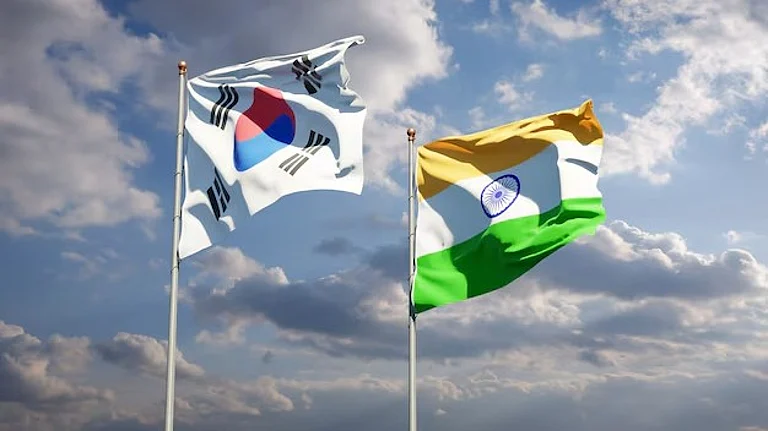
India highlighted that an MoU has been signed with a Korean ship building firm to upgrade shipyards, boost skills, and develop port infrastructure.
The government also said that with regards to the defence cooperation, it is looking forward to collaborating in terms of procurement of more kind of defence hardware and others technologies.
Advertisement
On the ongoing tensions in the geopolitical arena, the senior MEA official said, "There was a general discussion in the sense of the upheaval caused by geopolitical contestations, conflicts both in Russia and Ukraine and in the Gulf region."
"Overall, it was agreed that we should cooperate to try to strengthen peace and security and strengthen multilateral institutions."
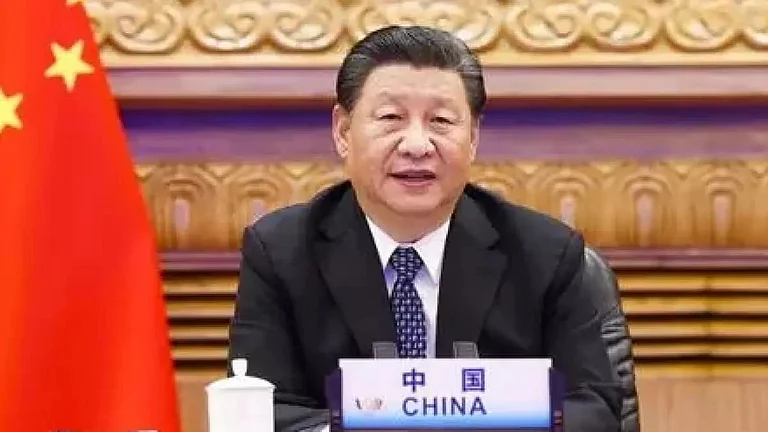
On the issue of non-proliferation which has gained traction due to the ongoing conflicts, the official said that there was a brief discussion between the two on this issue along with cooperation in the area of making sure that "sensitive technologies do not fall into the hands of non-state actors and other kinds of sanctioned entities."
Similarly, on the cooperation in the shipbuilding and maritime sector, Kumaran said, "Several initiatives have been taken as part of this at the level of industries too. One includes a non-binding MOU between the Korean shipbuilder HD Korea Shipbuilding & Offshore Engineering (HD KSOE), the identified cluster developer and facilitator."
Advertisement
"We are also looking at financing and skill training... There will also be cooperation in developing port infrastructure, knowledge sharing, training our workers, and financing will be another area where the maritime development fund and the Korean sites development partnership funds would be used for advancing this programme. We are also looking at jointly designing manufacturing and supporting next-generation conventional and autonomous maritime and port cranes, " he added.
It is worthy to note here that the two sides also agreed to cooperate on stabilising energy supply chains as the world witness a tectonic turbulence in the energy sector due to the tensions in the West Asia.