Driven by shifting global geopolitics, India and the Netherlands elevated their ties to a strategic partnership and inked 17 agreements to boost cooperation in defence, critical minerals and other key sectors during talks between Prime Minister Narendra Modi and his Dutch counterpart Rob Jetten.
India, Netherlands Elevate Ties to Strategic Partnership; Ink 17 Pacts on Defence, Critical Minerals, Other Sectors
India and the Netherlands upgraded bilateral ties to a strategic partnership and signed 17 agreements across defence, critical minerals and key sectors

Shutterstock
Advertisement
In their meeting on Saturday evening, the two prime ministers expressed deep concern over the situation in West Asia, especially its serious implications for the region and beyond in view of disruptions caused to the global energy supplies and trade networks.
Modi and Jetten also called for freedom of navigation and global flow of commerce through the Strait of Hormuz, while opposing any "restrictive" measures, and reaffirmed their support for ongoing initiatives in this regard, according to a joint statement.
Roughly one-fifth of global energy supplies pass through this narrow waterway, where shipping has been severely disrupted since February 28, after the US and Israel launched a joint attack on Iran, triggering retaliatory strikes.

The two leaders also discussed the situation in Ukraine - marked by the ongoing conflict with Russia and regional security developments.
They agreed to continue supporting efforts towards the achievement of comprehensive, just and lasting peace in Ukraine through dialogue and diplomacy, based on the principles of the UN Charter and international law, the joint statement said.
Advertisement
On the subject of Ukraine, the two sides also expressed concern over the ongoing war, which continues to "cause immense human suffering and carries global consequences", it said.
Modi landed in The Hague on Friday on a two-day visit as part of a four-nation trip to Europe - which also includes Sweden, Norway and Italy - aimed at ramping up bilateral ties on a range of key areas.
Following the Modi-Jetten talks, India and the Netherlands unveiled a "strategic partnership roadmap" to boost ties in trade and investment, defence and security, critical and emerging technologies, including semiconductors, space, AI and quantum computing.
The two leaders also launched an ambitious "India-Netherlands roadmap on the development of green hydrogen".
Modi and Jetten agreed to explore possibilities of establishing a defence industrial roadmap to ensure joint manufacturing of defence equipment, systems, components and other key capabilities through transfer of technology and setting up of joint ventures.
Advertisement

The Netherlands is one of India's largest trading destinations in Europe, with bilateral trade touching USD 27.8 billion in 2024-25.
The European nation is India's fourth largest investor with cumulative foreign direct investment of USD 55.6 billion.
The Netherlands, with its world class logistics network, also serves as a strategic gateway to Europe for Indian exporters, mainly through the Port of Rotterdam.
In the talks, the two sides also agreed to enhance cooperation in science and innovation, sustainability, health, agriculture, water management, climate change, energy transition, maritime development and people-to-people ties.
The agreements inked between the two sides will provide for boosting cooperation in areas of semiconductors, critical minerals, health, water, renewable energy, agriculture and culture among others, according to the Ministry of External Affairs (MEA).
A key pact signed following the Modi-Jetten meeting was one on migration and mobility, which is expected to facilitate movement of Indians to the European nation for jobs and education.
Advertisement
While deliberating on geopolitical developments, the two leaders called for a free, open and peaceful lndo-Pacific, based on respect for international law, sovereignty and territorial integrity, freedom of navigation and "absence of coercion and conflicts", according to the joint statement.
The remarks came against the backdrop of growing global concerns over China's increasingly assertive behaviour in the region.
Recognising the strategic importance of critical minerals for continued innovation, the two prime ministers expressed their mutual interest in strengthening cooperation across the critical minerals value chain, including exploration and integration of value chains.
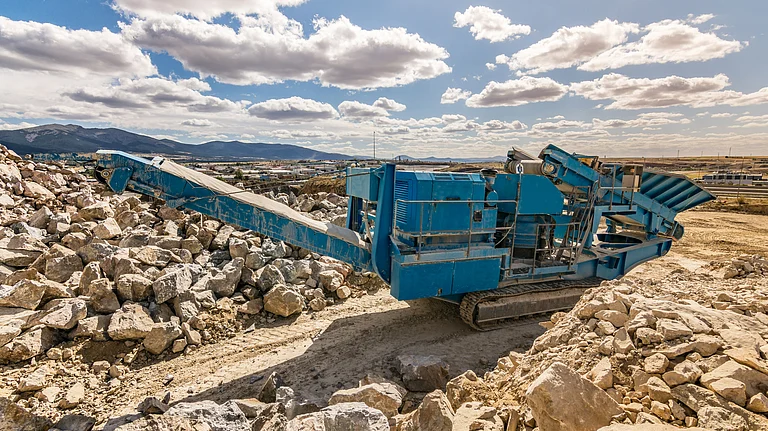
China currently dominates the global critical minerals supply chain, controlling not only the extraction but also the refining, processing and intermediate manufacturing of more than 15 essential minerals.
Both leaders also welcomed an initiative to connect the Dutch Semicon Competence Centre to the Indian Semiconductor Mission, which aims to support and strengthen the semiconductor sector, the joint statement noted.
Advertisement
On enhancing overall two-way trade, Modi and Jetten emphasised the immense potential for further growth particularly in light of opportunities arising from the India-EU Free Trade Agreement, which was signed earlier this year.
"They agreed that the free trade agreement will strengthen political and economic ties between the world's second and fourth largest economies, at a time of rising geopolitical tensions and global economic challenges," the joint statement said.
In the meeting, Modi thanked Jetten for the continued Dutch support to India's permanent membership of a reformed and expanded UN Security Council.
According to the joint statement, Jetten strongly condemned the heinous and abhorrent Pahalgam terrorist attack in April 2025 - in which 26 people were killed - and extended his country's unwavering support to India in its fight against terrorism, including cross-border terrorism.
The two prime ministers unequivocally condemned terrorism in all its forms and manifestations and called for a "zero tolerance" approach to combat terrorism and rejected double standards in countering the menace, it said.
"There has been significant progress in India-Netherlands ties in the last one decade," Modi said in his televised opening remarks during the meeting with Jetten.
The prime minister said India considers the Netherlands among its most important partners as the historical and people to people relations between the two sides are "deep" rooted.
"Democratic values, market economy and responsible behavior are part of our common approach. Our cooperation in areas of water, healthcare and education has been making the lives of our people better," he said.
Modi also highlighted India's economic growth.
The prime minister suggested that there should be convergence of the Netherlands' expertise and India's "speed and skill" in every sector.
"We need to take our cooperation in areas of innovation, investment, sustainability and defence to new heights. Under this common vision, we are taking India-Netherlands relations to the level of strategic partnership," Modi said.