India has restricted imports of low-priced suspension-grade PVC resin for six months
The move is expected to support domestic manufacturers but could increase costs for MSMEs producing pipes, cables and other PVC products
While the policy follows earlier trade remedy probes, the latest notification does not explicitly link the decision to those proceedings
How India's PVC Import Curbs Can Raise Costs For Cables, Pipes And Housing Projects
India imports nearly 64% of S-PVC it consumes. A big impact may be felt by MSMEs manufacturing PVC pipes, fittings, cables, conduits, films and footwear

India's PVC Import Curbs Can Raise Costs For Cables, Pipes And Housing Projects AI generated representative image
Summary
Advertisement
India has tightened import rules for low-priced suspension-grade polyvinyl chloride (S-PVC) resin, a key raw material used in products ranging from water pipes and electrical cables to medical equipment and packaging.
While the government's latest move is aimed at regulating cheaper imports, industry experts believe it could have ripple effects across manufacturing, infrastructure and consumer prices.
The Directorate General of Foreign Trade (DGFT), through a notification on July 24, amended the import policy for suspension-grade PVC resin under Indian Trade Classification (Harmonised System) or ITC (HS) Code 39041020.
Under the revised policy, imports with a Cost, Insurance and Freight (CIF) value of more than US$0.766 per kilogram will continue to remain "Free" for six months.
However, shipments priced at $0.766 per kilogram or below have been moved from the "Free" category to "Restricted", meaning importers will require approval to bring them into India.

Advertisement
The notification also exempts 100% Export Oriented Units (EOUs), Special Economic Zones (SEZs) and imports made under the Advance Authorisation Scheme, provided the imported material is not sold in the Domestic Tariff Area (DTA).
The policy effectively introduced a minimum import price for six months while leaving export-linked manufacturing units outside its ambit.
Why Does The Move Matter?
S-PVC resin is among the most widely used industrial plastics and is a critical input for PVC pipes, fittings, conduits, electrical wires and cables, window profiles, packaging films, footwear and several medical products.
According to a report by the Global Trade Research Initiative (GTRI), India consumes around 4.7 million metric tonnes of PVC resin annually, of which nearly 4.5 million metric tonnes is suspension-grade PVC.
Domestic production capacity stands at roughly 1.7 million metric tonnes, meaning India imports nearly 64% of its requirement, the report said.

Advertisement
Because imports account for such a large share of supply, any increase in import costs has the potential to influence domestic market prices.
Which Industries Could Be Impacted?
Almost all major overseas suppliers currently export S-PVC resin to India below the new threshold. GTRI said that China, Japan, Taiwan, South Korea, Mexico, Indonesia, Thailand, the United States, Singapore and Vietnam have all supplied the product at average prices ranging between $0.65 and $0.75 per kilogram, placing most existing imports within the restricted category.
The domestic PVC prices are largely linked to import parity. As a result, higher import costs could strengthen the pricing power of domestic manufacturers while increasing raw material expenses for downstream industries.
The biggest impact may be felt by thousands of MSMEs manufacturing PVC pipes, fittings, cables, conduits, films and footwear. GTRI noted that the pipes and fittings segment alone accounts for around 72-80% of India's S-PVC consumption, supplying agriculture, the Jal Jeevan Mission, housing and urban infrastructure.
Advertisement
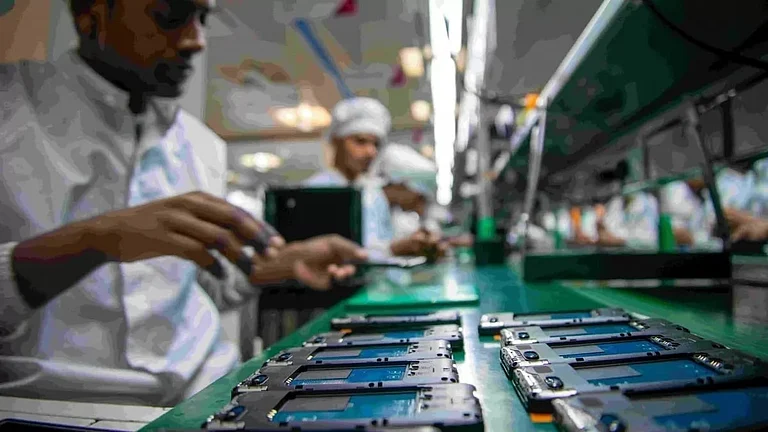
Higher resin prices could therefore feed into project costs and consumer prices across several sectors.
Earlier Trade Remedy Investigations
The latest import restriction comes after a series of trade remedy proceedings involving PVC resin, although the DGFT notification does not state that those cases prompted the policy change.
The Directorate General of Trade Remedies (DGTR) had concluded in August 2025 that dumped imports from seven countries had caused material injury to domestic producers through price undercutting, price depression and rising import penetration, and recommended anti-dumping duties for five years, as per a report by ANI.
In March 2026, the DGTR initiated a countervailing duty investigation following complaints by Chemplast Cuddalore Vinyls, DCM Shriram and DCW Ltd.
"On the basis of the duly substantiated application by the domestic industry, and having satisfied itself, on the basis of the prima facie evidence submitted by the applicants substantiating the existence of subsidisation and consequent injury to the domestic industry, the authority hereby initiates an anti-subsidy investigation," DGTR had said, as per PTI.
Advertisement
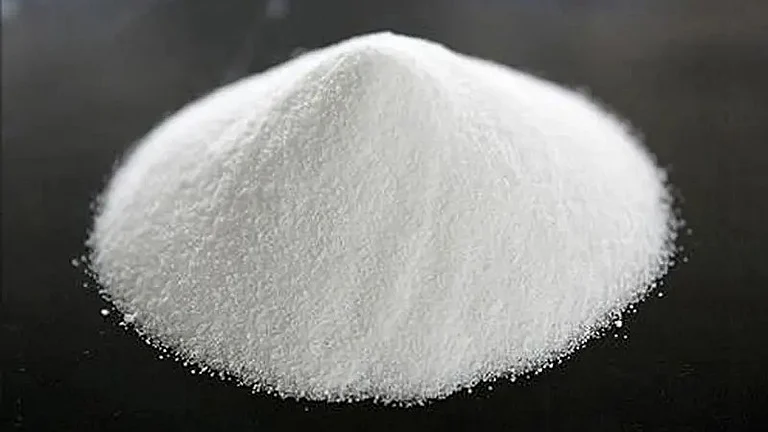
Questions That Remain
GTRI has also highlighted a possible ambiguity in the DGFT notification. It said the operative provision appears to make all S-PVC imports "Restricted" while granting a six-month exemption to imports priced above the threshold.
However, the explanatory section states only that lower-priced imports remain restricted for six months.
The think tank argued that this difference could create uncertainty over the policy after the six-month period unless the government issues a clarification.
For now, the immediate effect is clear: cheaper imports of S-PVC resin will face tighter controls, a move that could benefit domestic resin producers while increasing input costs for a wide range of manufacturing sectors that rely on the material.