India’s trade surplus with the US is eroding as imports grow far faster than exports, despite ongoing talks on a bilateral trade agreement (BTA)
While exports in 2025-26 barely rose, imports jumped led by crude, LNG, electrical machinery and precious metals
The shift could reshape how India negotiates with the US on the trade agreement
Goyal, Greer Hold Trade Talks But Why Is India's Export Surplus Falling With US
If imports continue growing faster than exports, India's trade surplus with the US is likely to shrink further. The outcome of the ongoing BTA negotiations will therefore be closely watched

India US Trade Representative Image AI Generated Image
Summary
Advertisement
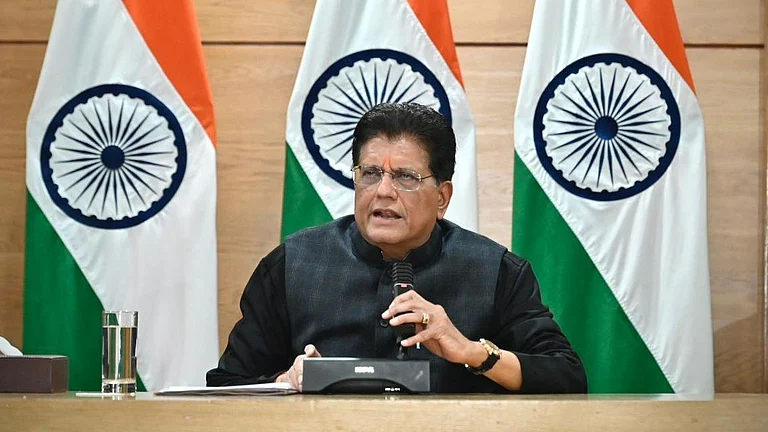
As Commerce and Industry Minister Piyush Goyal and US Trade Representative Jamieson Greer began discussions in New Delhi on Tuesday to push forward the first phase of the proposed India-US Bilateral Trade Agreement (BTA), official trade data highlights a significant shift in the economic relationship between the two countries.
While the United States remains India's largest export destination, imports from America are rising much faster than exports, causing India's trade surplus to narrow sharply.
The trend comes at a crucial juncture as New Delhi and Washington work towards finalising a framework agreement expected to shape tariff policies and market access for businesses on both sides.
According to data from the Ministry of Commerce and Industry's TradeStat portal, India's exports to the US rose marginally to $87.31 billion in 2025-26 from $86.51 billion in 2024-25.
Imports from the US, however, surged to $53.48 billion from $45.62 billion during the same period. As a result, India's merchandise trade surplus with America declined to $33.83 billion from $40.89 billion, a fall of more than 17%.
Advertisement
What Is A Trade Surplus?
A trade surplus occurs when a country's exports to a trading partner exceed its imports from that country. It reflects the difference between the value of goods sold abroad and the value of goods purchased.
In India's case, the US remains a surplus-generating market. During 2025-26, India exported goods worth $87.31 billion to the US while importing goods worth $53.48 billion, leaving a trade surplus of $33.83 billion, according to the Commerce Ministry data.
Although the surplus remains substantial, it has narrowed considerably compared with the previous year, indicating that bilateral trade is becoming more balanced.
Why Has India's Surplus Fallen?
The answer lies in the uneven pace of growth between exports and imports.
Official TradeStat data shows exports to the US grew by just 0.93% in 2025-26, while imports jumped 17.24%. The increase in imports added nearly $7.9 billion to India's purchase bill from the US, whereas exports increased by only around $800 million.
Advertisement
The trend has continued into the current financial year. Country-wise trade figures released by the Department of Commerce on June 15 show India's exports to the US during April-May 2026-27 stood at $17.29 billion, only 0.5% higher than the corresponding period a year earlier.

Hence, India's trade surplus with the US has been falling as imports continue to rise.
What Is India Importing More From The US?
Energy purchases have emerged as one of the biggest drivers of the widening import bill.
Higher imports of crude oil and liquefied natural gas (LNG) from the US significantly contributed to the narrowing surplus.
Official TradeStat commodity data shows that imports of mineral fuels, oils and related products from the US increased from $14.37 billion in 2024-25 to $17.32 billion in 2025-26.
Other major import categories also recorded strong increases. Imports of electrical machinery and equipment rose to $5.56 billion, while imports of precious stones and metals climbed to $6.85 billion. Aircraft and aircraft parts imports increased to $1.91 billion.
Advertisement
Why Is Washington Pushing For A Trade Deal?
The trade negotiations are taking place against the backdrop of long-standing US concerns over its trade deficit with India.
US President Donald Trump said on June 17 that the two countries are "very close" to finalising the agreement. Earlier, Commerce Secretary Rajesh Agrawal had indicated that discussions between Goyal and Greer were expected to focus on giving final shape to the framework deal.

Goyal on June 23, in a post on X (formerly Twitter), also said that he was looking forward to productive discussions on the bilateral trade agreement between India & the US.
India-US BTA Talks Progressing
The talks have gained urgency following changes in the US tariff regime. Both countries are revisiting elements of the framework after the US Supreme Court struck down several reciprocal tariffs imposed by the Trump administration.
Advertisement
Washington subsequently introduced a 10% tariff under Section 122 of the Trade Act, altering the trade landscape for multiple countries, including India.
For the US, a trade pact could help secure greater access for American products in the Indian market. For India, the agreement could provide more predictable tariff treatment and improve competitiveness against rival exporters.
What Happens If The Trend Continues?
If imports continue growing faster than exports, India's trade surplus with the US is likely to shrink further. Any agreement that boosts Indian exports while managing the rapid rise in imports could determine whether the surplus stabilises or continues to narrow in the years ahead. The outcome of the ongoing BTA negotiations will therefore be closely watched.
From Washington's perspective, a narrower deficit with India may ease political pressure over bilateral trade imbalances. For New Delhi, however, a declining surplus could reduce one of its traditional strengths in trade negotiations.

At the same time, rising imports of energy, technology products, aircraft components and industrial equipment from the US could support India's manufacturing ambitions and infrastructure expansion.