Apple alleged that OpenAI recruited engineers working on confidential Apple hardware projects and encouraged them to share proprietary information
OpenAI has denied the claims saying it has no interest in other companies' trade secrets, and it remains focused on building innovative technology
The lawsuit is the latest in a series of high-profile trade secret disputes involving some of the world's biggest technology companies, including Google, Uber, Tesla, Huawei and xAI
Apple vs OpenAI: Inside Silicon Valley's Internecine Wars Over AI, Chip and EV Trade Secrets
The lawsuit is the latest in a series of high-profile trade secret disputes involving some of the world's biggest technology companies, including Google, Uber, Tesla, Huawei and xAI

Apple vs OpenAI AI generated representative image
Sponsored Content
Summary
Advertisement
Apple's lawsuit against OpenAI has thrust trade secrets into the spotlight, highlighting how fiercely technology companies guard confidential information that gives them a competitive edge.
The iPhone maker has accused the artificial intelligence (AI) company of orchestrating a campaign to obtain sensitive Apple information through former employees as it builds its own consumer hardware business.
OpenAI has strongly denied the allegations, saying it has "no interest in other companies' trade secrets" and remains focused on developing its own technology.
The lawsuit is the latest in a series of high-profile trade secret disputes involving some of the world's biggest technology companies, including Google, Uber, Tesla, Huawei and xAI.
Apple vs OpenAI: What Is The Dispute About?
Apple filed its lawsuit in the US District Court for the Northern District of California on July 10, accusing OpenAI, its hardware unit io Products, and former Apple executives Chang Liu and Tang Yew Tan of misappropriating Apple's trade secrets, according to the court filing.
Advertisement
Apple alleged that OpenAI recruited engineers working on confidential Apple hardware projects and encouraged them to share proprietary information relating to unreleased products, engineering processes, manufacturing techniques and supplier relationships.
According to the complaint, Apple's investigation found instances where confidential files were allegedly retained after employees left the company and, in one case, a former employee was accused of accessing Apple's internal systems after joining OpenAI.
The lawsuit also claimed OpenAI employees sought confidential Apple information during recruitment discussions and instructed prospective hires to discuss internal projects and even bring product components to interviews. Apple argued that OpenAI's emerging hardware business has benefited from years of confidential knowledge developed inside Apple.
The company is seeking monetary damages along with court orders requiring OpenAI to stop using any confidential Apple information, return company property and preserve evidence. The allegations have not been tested in court.
Advertisement
OpenAI has denied the claims. "We have no interest in other companies' trade secrets," the company said in response to Apple's complaint, adding that it remains focused on building innovative technology.
The case is particularly notable because Apple and OpenAI announced a partnership in 2024 that integrated ChatGPT into Apple's ecosystem. The litigation now places two commercial partners on opposite sides of a closely watched legal dispute.
What Exactly Is A Trade Secret?
Unlike patents, copyrights or trademarks, trade secrets protect confidential business information that derives commercial value from remaining secret.
According to the US Patent and Trademark Office (USPTO), a trade secret is information that has actual or potential economic value because it is not generally known, cannot be readily obtained by competitors and is subject to reasonable efforts to keep it confidential.
Trade secrets can include manufacturing processes, product designs, source code and algorithms, engineering methods, customer lists, business strategies, technical data, and marketing and pricing information
Advertisement
Famous examples include Coca-Cola's secret formula, KFC's Original Recipe of "11 herbs and spices", and WD-40's proprietary formula, all of which have been protected through secrecy rather than patents, according to the USPTO.
How Are Trade Secrets Protected In The US?
Unlike patents, trade secrets are not registered with the government. Their protection depends almost entirely on maintaining confidentiality.
In the United States, trade secrets are protected through both state and federal laws. Most states have adopted legislation based on the Uniform Trade Secrets Act, while federal protection is provided through laws such as the Defend Trade Secrets Act and the Economic Espionage Act.
Generally, companies bringing trade secret claims must demonstrate that the information qualifies as a trade secret; they took reasonable steps to protect its confidentiality; the information was acquired, disclosed or used through improper means; and the misuse caused, or was likely to cause, commercial harm.
Advertisement
Importantly, simply hiring employees from a competitor is not illegal. However, employees cannot take or disclose confidential information belonging to their former employer.
xAI vs OpenAI: A Similar Lawsuit in AI
The Apple litigation comes just weeks after Elon Musk's AI startup xAI suffered a setback in its own trade secret lawsuit against OpenAI.
US District Judge Rita Lin dismissed xAI's lawsuit with prejudice in June 2026 after finding the company had failed to show that OpenAI induced former xAI engineer Xuechen Li to disclose confidential information relating to Grok, as per a report by Reuters.
The judge said that asking candidates about their previous work during interviews was a routine hiring practice and did not, by itself, support an inference of trade secret theft.
"To hold otherwise would potentially expose employers to liability any time they inquire about a candidate’s past work," Judge Lin wrote, as per Reuters.
OpenAI argued that it neither needed nor wanted xAI's confidential information, saying the lawsuit lacked evidentiary support.
xAI has notified the court of its intention to appeal the dismissal on July 14. OpenAI, in turn, has asked the court to order xAI to reimburse more than $1 million in legal costs, arguing that the lawsuit "should never have been filed", as per a report by Bloomberg (BBG).
The continuing legal fight means the dispute between the two AI companies is likely to continue even as Apple launches its own, potentially far larger, trade secret case against OpenAI.
Google's Waymo vs Uber: A Landmark Silicon Valley
One of the most influential trade secret disputes in the technology sector involved Google's autonomous driving company Waymo and ride-hailing giant Uber.

Waymo alleged in 2017 that former engineer Anthony Levandowski downloaded more than 14,000 confidential files related to LiDAR technology — a key component in self-driving vehicles — before leaving to establish autonomous truck startup Otto, which was later acquired by Uber.
Waymo claimed Uber used the stolen information to accelerate its self-driving programme. The companies settled in 2018, with Uber agreeing to give Waymo equity worth about $245 million and promising not to incorporate Waymo's confidential LiDAR technology into its autonomous vehicle systems.
Levandowski later pleaded guilty to one criminal count of trade secret theft, received an 18-month prison sentence in 2020 and was pardoned by then US President Donald Trump in 2021.
Tesla's Repeated Trade Secret Battles
Tesla has frequently turned to the courts to protect its proprietary technology. One of its most closely watched disputes was against electric vehicle maker Rivian.
Tesla alleged in 2020 that Rivian recruited former Tesla employees and encouraged them to take confidential information relating to battery technology, manufacturing processes and other proprietary systems. Rivian denied the allegations.
According to the latest publicly available case status, the companies reached a confidential settlement in November 2024. Rivian reportedly agreed to pay $126 million while continuing to deny wrongdoing.
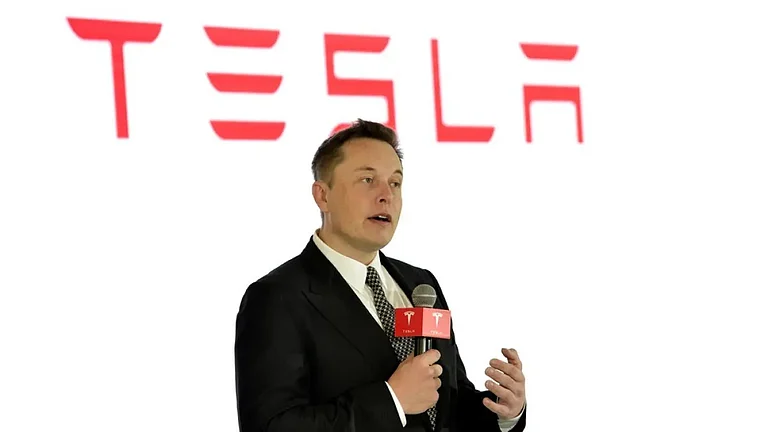
Tesla also sued former supplier Matthews International in 2024, alleging that the company misappropriated trade secrets relating to Tesla's dry-electrode battery manufacturing technology and shared them with competing manufacturers.
Tesla estimated damages could exceed $1 billion. Matthews has denied the allegations, calling the lawsuit an attempt to appropriate its own intellectual property. The litigation remains ongoing.
Apple's Chip Technology Dispute
Apple has itself pursued former employees over alleged misuse of confidential information.
Apple in 2019, sued Gerard Williams III, Apple's former chief chip architect responsible for developing the company's A-series processors used in iPhones and iPads.
Apple alleged breach of contract and misuse of confidential information after he founded chip startup Nuvia while still employed at Apple.
Although the lawsuit included trade secret allegations, the dispute was settled in 2023 before trial. The settlement terms were not disclosed, and the court did not rule on the merits of Apple's trade secret claims. Qualcomm acquired Nuvia in 2021.

IBM vs LzLabs
IBM accused Swiss software company LzLabs of unlawfully using confidential information relating to IBM's mainframe software. The dispute was initially described as having settled, but subsequent proceedings produced a court judgment.
In 2024, the High Court of England and Wales ruled largely in IBM's favour, finding that LzLabs and related defendants had unlawfully used IBM's confidential information and breached software licensing restrictions while developing products that emulated IBM's mainframe systems.
The issue of damages continues to be reportedly determined in separate proceedings.
Qualcomm vs Apple
Trade secret claims also featured in the long-running legal battle between Qualcomm and Apple.
Qualcomm alleged that Apple shared confidential modem technology with Intel while attempting to develop competing smartphone components. The dispute also involved patent licensing and royalty disagreements.

The companies unexpectedly settled all litigation worldwide in April 2019, signing a six-year patent licensing agreement, a multi-year chipset supply agreement and resolving all pending trade secret claims.
The financial terms were not publicly disclosed.
Scale AI vs Mercor
Trade secret litigation has increasingly spread to the AI industry.
In September 2025, Scale AI sued rival startup Mercor, alleging that a former employee downloaded more than 100 confidential customer strategy documents before joining the company.
Scale alleged Mercor recruited the employee to strengthen its relationships with major customers using confidential business information.
Mercor said it had "no interest in any of Scale's trade secrets" and was investigating the matter after learning that documents had been stored in a personal Google Drive. The case remains sub-judice.

SAP Accused By o9 Solutions
Another AI-related dispute emerged in late 2025 when supply chain software developer o9 Solutions sued SAP.
o9 alleged that three former senior executives downloaded tens of thousands of confidential documents before joining SAP, allowing the German software giant to replicate elements of o9's supply-chain management platform.
SAP rejected the allegations, stating that it is committed to the highest standards of business ethics and would respond through the legal process. The litigation remains pending.
Huawei And Allegations Of Trade Secret Theft
Huawei has faced several of the most significant trade secret allegations involving multinational technology companies.
In 2020, the US Department of Justice charged Huawei and several subsidiaries with conspiracy to steal trade secrets and racketeering.
Prosecutors alleged the company used various methods — including recruiting employees from rival firms, breaching confidentiality agreements and using intermediaries — to obtain confidential technologies from US companies.
According to the Justice Department, the alleged misappropriated information included router source code, antenna technology and robotics-related intellectual property.
Prosecutors claimed Huawei rewarded employees who obtained competitors' confidential information and reinvested the proceeds into expanding its business.
Huawei has consistently denied wrongdoing.
A US federal judge in 2025 rejected Huawei's request to dismiss most of the criminal indictment, allowing the case to proceed towards trial after finding prosecutors had sufficiently alleged trade secret theft and related offences.
Separately, Huawei has been accused in civil litigation by companies including CNEX and Business Efficiency Solutions of stealing proprietary chip and software technology. Huawei has denied those allegations as well.
Interestingly, Huawei has also been on the opposite side of such disputes. According to China Daily, a Shanghai court in 2025 upheld convictions against 14 people accused of stealing trade secrets from Huawei subsidiary HiSilicon relating to Wi-Fi chip technology valued at around 317 million yuan.

Former HiSilicon executive Zhang and others were sentenced to prison terms after the court found they had improperly transferred confidential technical information to a rival startup.
The Hongjin Tan Case: Trade Secret Theft Becomes Criminal Offence
Trade secret theft can also lead to criminal prosecution. According to the FBI, scientist Hongjin Tan pleaded guilty after stealing proprietary battery technology from his Oklahoma employer before accepting a position with Chinese company Xiamen Tungsten.
The FBI said Tan accessed sensitive files unrelated to his work, copied confidential information onto a thumb drive and attempted to retain company documents after his resignation. The technology, developed over decades, was estimated to be worth around $1 billion.
Tan was sentenced to 24 months in prison in 2020 and later lost his US permanent residency status before being deported after serving his sentence.
The FBI has cited the case as an example of the growing threat posed by economic espionage and the theft of valuable commercial technology.
Why These Disputes Matter
From autonomous vehicles and semiconductors to artificial intelligence and consumer electronics, trade secret litigation has become a defining feature of modern technology competition.

As companies invest billions in developing proprietary technologies, legal battles over confidential information are likely to remain one of the defining features of the global technology industry.
Unlike patents, which require public disclosure in exchange for limited legal protection, trade secrets can remain protected indefinitely provided companies continue to keep the information confidential.
Apple's lawsuit against OpenAI is still at an early stage, and its allegations remain unproven. Nevertheless, the case underscores how competition for AI talent, hardware innovation and next-generation technologies is increasingly spilling into courtrooms.