RBI keeps Tata Sons in Upper Layer NBFC list, deregistration bid still pending.
Tata Trusts, InGovern back listing; Noel Tata and Tata Trusts leadership resist.
Tata Sons' assets near ₹2,01,000 crore, well above RBI's Upper Layer threshold.
Why Tata Sons Can't Shake Off Its Stock Market Listing Problem
To avoid listing, Tata Sons repaid its borrowings and applied to surrender its Core Investment Company registration, seeking reclassification as an unregistered entity

Tata Sons
Summary
Advertisement
Three years after the Reserve Bank of India first pushed Tata Sons toward a mandatory stock market listing, the country's largest business house is still trying to find a way out, even as its own trustees and shareholders remain split on whether it should list at all.
The debate traces back to 2022, when the RBI classified Tata Sons as an "Upper Layer" Non-Banking Financial Company (NBFC), a category reserved for systemically important large NBFCs. Under the RBI's Scale-Based Regulatory framework, any entity in this category must list on a stock exchange within three years.
Tata Sons qualifies because of its scale. It is the holding company for major listed Tata Group firms, including Tata Consultancy Services, Tata Motors and Tata Steel, and its standalone assets stood at more than ₹1.75 lakh crore as of March 2025, as per media reports.
To avoid listing, Tata Sons repaid its borrowings and applied to surrender its Core Investment Company registration, seeking reclassification as an unregistered entity. The company aggressively repaid over ₹20,000 crore in standalone debt, arguing that this move meant it had renounced access to public funds and could therefore shift from a "registered CIC" to an "unregistered/exempt" entity. Its case rested on two points: that it no longer accessed public funds, and that it held at least 90% of its net assets in group companies.
Advertisement
That argument has since run into trouble. According to a Times of India report, an RBI clarification issued in July 2026 widened the definition of "public funds" to include indirect receipt through group entities that themselves have access to public money. This broader reading means Tata Sons' links to its listed group companies could count as indirect public funding, which would undercut its case for deregistration.
The Push To List
Corporate governance advisory firm InGovern has called on the RBI to direct Tata Sons to list. In a report, the firm said the "regulatory landscape has shifted significantly, and there is no remaining legal basis to provide an exemption from public listing to an entity of the magnitude of Tata Sons," adding that the deregistration application is "Dead on Arrival" under current rules. InGovern has also argued that SEBI's listing obligations are necessary to govern related party transactions and ensure transparent capital allocation at a holding company of this size.
Advertisement
Support for listing extends beyond governance advisors. Tata Trusts, which hold about 66% of Tata Sons, are internally divided on the issue. Trustees Venu Srinivasan and Vijay Singh have publicly backed a listing, pointing to upcoming capital-intensive bets such as semiconductors that they say will need funding beyond what the group can generate internally.
Former bureaucrats have echoed this view. Former cabinet secretary K M Chandrasekhar told Business Standard, "Listing is always good as it leads to greater transparency and shareholder oversight." Former finance secretary Ashok Chawla has called listing the "appropriate architecture" for an entity controlling companies of this scale, citing the need for governance and transparency.
The Shapoorji Pallonji Group, which owns an 18.4% stake in Tata Sons, is also in favour. Reuters has reported that the group wants to monetise or exit its holding, something it cannot easily do while Tata Sons remains a private, unlisted company with restricted share transferability.
Advertisement
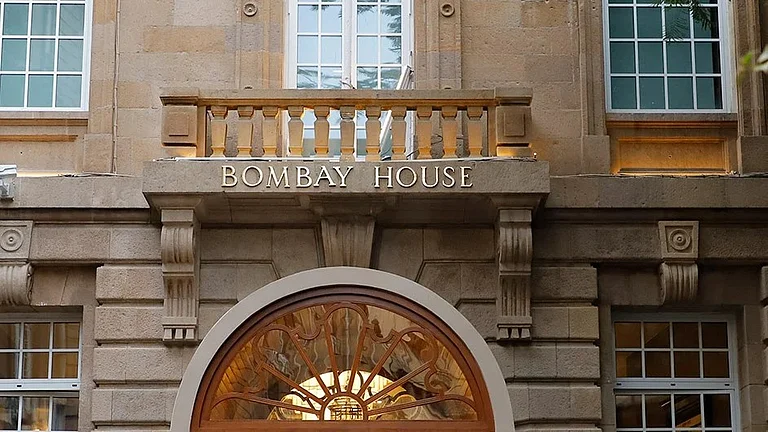
The Resistance
Opposition is led by Tata Trusts' own leadership. Noel Tata, chairman of Tata Trusts and a director on the Tata Sons board, has privately opposed converting the company into a listed entity, according to media reports. In July 2025, Tata Trusts passed a formal resolution against any move to list Tata Sons.
Those against listing argue that Tata Sons' private ownership structure has allowed the group to take long-term decisions and support weaker group companies without the scrutiny that comes with public markets. N A Soonawala, a former vice chairman of Tata Sons, had earlier made a similar case for the benefits of staying private.
RBI Retains Tata Sons In Upper Layer
On August 6, the RBI retained Tata Sons in its Upper Layer NBFC list for the current cycle, confirming that the company's exit from the NBFC-UL framework has not yet been cleared. The central bank clarified that Tata Sons' presence on the list does not prejudge the outcome of its pending deregistration application.
Advertisement
"Inclusion of Tata Sons Private Limited in the list of NBFC-UL is without prejudice to the outcome of its application for de-registration, which is under examination," the RBI said.
With Tata Sons' deregistration application still pending and its Upper Layer status confirmed for now, the question of whether the company will eventually be required to list remains unresolved. Tata Sons' board has continued to handle routine matters, including approving annual accounts and dividends, but has reportedly not taken up the listing question for discussion at its meetings.