ASUS is betting on MSMEs to drive the next phase of growth in its commercial PC business.
GDP growth and PC growth are quite correlated, says ASUS' Dinesh Sharma.
MSME growth and technology adoption will be key to India’s growth, creating a larger opportunity for PC makers like ASUS.
Why ASUS Is Betting on India’s MSMEs to Drive PC Market Growth | VP Dinesh Sharma Explains
ASUS entered the commercial PC market only in 2021, but says it has seen strong growth and increasing acceptance in the segment. According to IDC Research’s latest report, the Taiwan-based company held a 7.7% share of India’s overall PC market

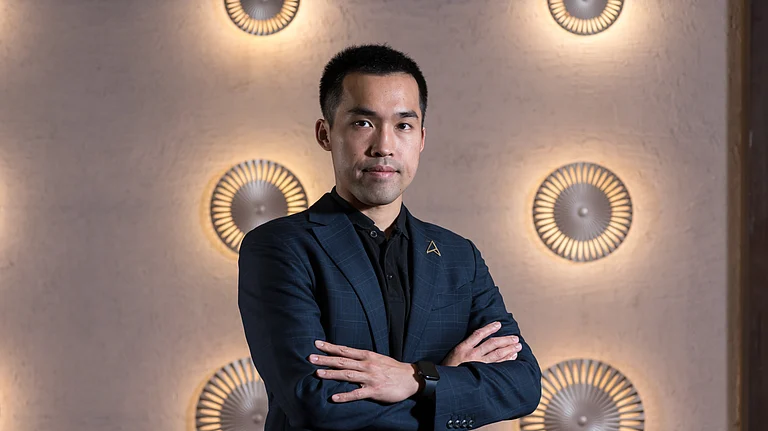
Dinesh Sharma, Vice President, Commercial PC Business, India, Sri Lanka and Nepal Dinesh Sharma, Vice President, Commercial PC Business, India, Sri Lanka and Nepal
Summary
Advertisement
Taiwanese PC maker ASUS is banking on India’s millions of micro, small and medium enterprises (MSMEs) to expand its commercial PC market. Dinesh Sharma, Vice President, Commercial PC Business, India, Sri Lanka and Nepal, ASUS, points to India’s overall total addressable market (TAM) for personal computers of roughly 15–16 million units. In comparison, China, with a GDP of nearly $20 trillion, has a PC TAM almost five times that of India. “Our GDP growth and PC growth are quite correlated,” Sharma told Outlook Business in an interview, highlighting the headroom for technology adoption as the economy expands.
“Who will drive India’s growth? The organised sector and large enterprises will play their part, but a large part of it is going to be played by the MSMEs,” says Sharma. “If we need to drive India’s growth, we need to ensure that these MSMEs are enabled with the right technology and they grow. If they grow, we grow.”
Advertisement
ASUS entered the commercial PC market only in 2021, but says it has seen strong growth and increasing acceptance in the segment. According to IDC Research’s latest report, the Taiwan-based company held a 7.7% share of India’s overall PC market, behind HP, Lenovo, Acer and Dell. While ASUS has gained strong traction in the commercial segment, growing 120.1% year-on-year, it has also started winning enterprise orders, according to the report released on September 1.
Earlier this month, ASUS India partnered with Rajiv Talreja, founder of Quantum Leap and Voice of MSMEs, as a mentor for the MSME segment. He will promote the company’s “Built for Worry-Free Business” proposition and its Expert series of PCs for small businesses. Sharma believes PCs will remain central to MSME digitalisation, given their importance in everyday business operations. The company is looking to deepen its presence across small and mid-sized enterprises, while also focusing on private educational institutions and other customer segments with a large MSME base.
Advertisement
Are MSMEs Going to Provide ASUS with Its Next Phase of Growth in India?
Yes, absolutely. MSMEs are one of the key segments in India, and we want to work very sincerely to ensure that they get a truly worry-free business experience.
If MSMEs grow by even 10%, it can have a massive impact on India's GDP. If we can move from, say, 7.5% growth to 10%, we want to help enable that increase.
IT, and especially PCs, can play a very important role here. Within the MSME segment, PCs will constitute the majority of both use cases and spending. MSMEs are unlikely to have the same level of back-end cloud investment as large enterprises, so PCs will remain a key driver of the systems and solutions they use internally to run their businesses. We therefore want to be a critical part of that growth.

Advertisement
Do you have a specific target for MSMEs this year?
We definitely have a goal to sell to MSMEs. For us, the sales channels are essentially two-fold. One is through Flipkart, where we cater to Solo and smaller professionals. The other is our large channel, which caters to enterprises ranging from small to mid-sized businesses.
If you look at our priorities in India, MSMEs, private large enterprises and private educational institutions are all major focus areas. From an operating-model perspective, many educational institutions are like MSMEs. They are in the business of education, but they are not necessarily large enterprises. At the same time, there are institutions that operate at a much larger scale across the country.
Every customer segment or vertical that we look at will have an MSME base to cater to. Therefore, this becomes a very critical segment. I would say it is also one of the segments that has received relatively less focus from many players in the market, and we need to focus much more on it.
Advertisement
Can the MSME segment help you bridge the gap between your market share in consumer and gaming PCs and your share in commercial PCs?
We started our commercial PC, or business PC, operation only in 2021. So it has been just five years, whereas our consumer PC business has been around for much longer.
What is more important to us is the growth we have achieved in less than five years—the numbers we have gained, the acceptance we are seeing and the brand share and brand search we are building. We will eventually get to leadership for sure.
Rajiv, Exports are an important part of the MSME ecosystem. Months of West Asia conflict, how has it impacted MSME businesses?
When logistics and supply chains broke down, there was definitely a challenge for businesses. But MSMEs are owner-driven and relatively small, which makes them nimble enough to adapt and find alternatives. A lot of my clients have used this as an opportunity to set up operations and production in countries where they previously only exported. For them, it has become a channel for expansion.
We are also seeing alternate supply-chain channels emerge, including international distributor networks. If you had spoken to me six to eight months ago, I would have said things looked quite dull. But the challenge has lasted long enough for businesses to find alternative mechanisms. I think things are now getting back on track.
How has the recent price increase affected the commercial PC business, particularly for ASUS?
Price is not something you control entirely as a business. Price is determined by competition, multiple market factors and the relative value that you offer.
You may be able to command a relative premium, but the variation cannot be very high. Our pricing is therefore in line with the market because we have to remain competitive. The price trend across the industry has also been fairly uniform. The significant brands with substantial market share have increased prices by around 25-30% this year.
So far, volumes have sustained despite this increase. You can also see that in IDC data. At a time when the overall market may not be growing as much as originally expected, the positive for us is that we are growing very fast and gaining market share.
Irrespective of the price increase, I don't think an MSME business owner will stop buying a PC. If it is a critical machine on which the business operates, demand will not simply disappear.
My concern is that business owners should not respond to higher prices by buying a cheaper product simply because it fits their budget.
That is where education becomes important. There is a huge difference between a personal PC and a business PC, and MSME owners need to understand the value they are getting from a business-oriented product. That awareness can prevent a business owner from making a short-term decision based purely on price.
What is the difference between a commercial PC and a PC made for individuals?
When you design a business PC, you are looking at 80 or 90 hours of usage a week, potentially over four years. Second, when you use a PC for four or five hours, screen reflectivity may not matter much. But when you are continuously looking at a screen for seven or eight hours a day, glare can cause fatigue and affect productivity.
When you were in school or college, losing your data might mean losing some photographs or personal files. Today, if you lose your laptop and your business data, the consequences can be significant. Imagine a ransomware attack where your business data is locked. Your data is effectively invaluable. That is why security systems become extremely important.
These features are built into business PCs. For example, our ASUS Expert series models come with features such as self-healing BIOS, TPM 2.0 hardware and an intrusion-alert sensor. Our products have passed 24 of 28 military-standard tests, along with extensive internal durability testing.
Service standards are different as well. Our business call centre operates from 9am to 9pm, six days a week, specifically for business customers. There is a separate helpline for the ASUS Expert series.
We also provide 100% on-site service, so customers don't have to take their laptops to a service centre. Our products come with global warranty coverage in 90 countries as a standard, without an additional charge.
A business owner may travel abroad and still need to work, access banking services or respond to emails. If something goes wrong with the laptop, global warranty becomes important. So there is a significant difference between consumer and commercial PCs. The challenge is that customers need to be educated about those differences.
What has changed in India's MSME ecosystem that has led ASUS to focus more specifically on this segment?
The point I want to make is that India's GDP is around $4 trillion, while the overall PC TAM is approximately 15-16 million units.
If you look at China's GDP, it is close to $20 trillion, while its PC TAM is almost five times ours. Our GDP growth and PC growth are quite correlated. You can see a similar relationship in the US as well.
So what will drive India's growth? Who will drive it? The organised sector and large enterprises will play their part, but a large part of India's growth will come from MSMEs.
If we want to drive India's growth, we need to ensure that MSMEs are enabled with the right technology and can grow. If they grow, we grow. It is a mutually dependent and interdependent ecosystem.
We therefore need to ensure that the entire MSME ecosystem becomes more robust, stronger and capable of growing. That is how the country will grow.