Tata Trusts owns 65.9% of Tata Sons, but that does not translate into 65.9% of board votes.
Its two nominees, Noel Tata and Venu Srinivasan, split over N Chandrasekaran’s reappointment.
A casting vote led to a reported 4-1 board outcome, which Tata Trusts has challenged.
Tata Sons vs Noel Tata: Voting Math Behind Boardroom Battle Explained
Tata Trusts owns nearly two-thirds of Tata Sons, but that does not translate into two-thirds of the votes on its board. Here is how a split between its two nominee directors led to a 4-1 board vote backing N Chandrasekaran

AI Generated Image
Summary
Advertisement
The Tata Sons board on Thursday approved N Chandrasekaran’s reappointment as chairman for another five-year term, setting off a fresh dispute with Tata Trusts. The resolution was passed 4-1, with Tata Trusts nominee director Noel Tata voting against the proposal, while fellow nominee Venu Srinivasan voted in favour.
The vote came despite Tata Trusts owning about 65.9% of Tata Sons’ shares. The Trusts has challenged the validity of the resolution, arguing that the company’s Articles of Association require a majority of its nominee directors to support the appointment or reappointment of the chairman.
So, how did a board vote end up being against Tata Trusts despite it owning a majority of the holding company of Tata Group? The answer lies in the difference between shareholding and board voting, as well as the special provisions governing the appointment of Tata Sons’ chairman.
Two Trust Nominees
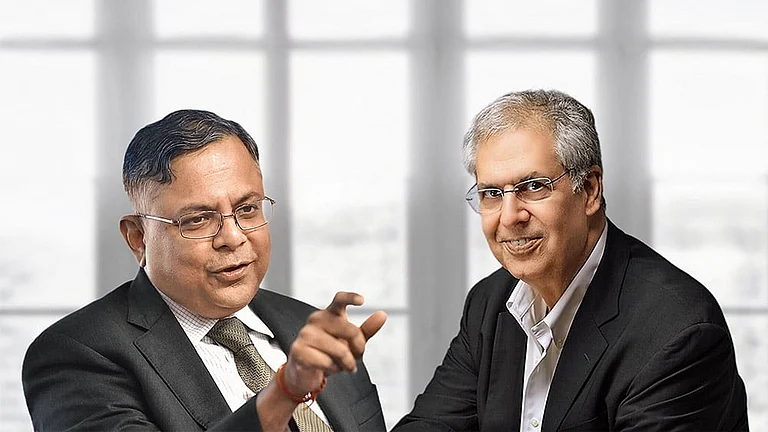
Tata Trusts has the rights to appoint two thirds of the board members of the Tata Sons. However, as of now, the Trusts has only two nominee directors on the board, Noel Tata and Venu Srinivasan. Yesterday, two directors took opposite positions on Chandrasekaran’s reappointment. Noel voted against the proposal, while Srinivasan voted in favour.
Advertisement
This resulted in a 1-1 split among the two Tata Trusts nominees. That is the first point that makes the voting maths less intuitive. Reports claim that, ahead of the meeting, Sir Dorabji Tata Trust (SDTT) had sought to restrain Srinivasan from participating in or voting on matters relating to the proposed listing of Tata Sons. Srinivasan rejected the move, arguing that he was a joint nominee of SDTT and Sir Ratan Tata Trust (SRTT) and that one Trust could not unilaterally prevent him from exercising his rights as a director.
Point to note: The other principal Tata Trust, SRTT, has been barred from convening trustee meetings amid proceedings before the Maharashtra Charity Commissioner. The restriction has complicated the Trust’s ability to take certain decisions, including those relating to its representation on the Tata Sons board. It has also delayed the group’s annual general meeting (AGM).
Mint reported that under the relevant provisions of Tata Sons’ Articles, a majority of the Trusts’ nominee directors’ votes is required for the appointment or reappointment of the chairman. With two nominees voting differently, that requirement became a central issue in the dispute.
Advertisement
The Tata Sons board currently has six directors, including Chandrasekaran, Noel Tata, Venu Srinivasan, group CFO Saurabh Agrawal and independent directors Harish Manwani and Anita Marangoly George. Chandrasekaran stepped aside from the decision on his own reappointment because of his personal interest.
After the two Trust nominees were split, Srinivasan and Noel took opposite positions, while CFO Agrawal and Independent Director George voted in favour of Chandrasekaran.
This left the issue of the Tata Trusts nominees’ special voting requirement at the centre of the deadlock. It was then broken through a casting vote by Harish Manwani, the board’s most tenured independent director and chairman of Tata Sons’ Nomination and Remuneration Committee (NRC). Manwani voted in favour of Chandrasekaran’s reappointment. The resolution ultimately passed with four directors voting in favour and Noel Tata voting against. The reported final outcome was therefore 4-1 in favour of Chandrasekaran.
Why Tata Trusts Is Challenging The Outcome
The 4-1 result, however, does not mean the dispute is settled.
Advertisement
Tata Trusts has challenged the validity of the resolution. In a statement issued after the meeting, it said the Articles of Association require a majority of the Trusts’ nominee directors to vote in favour of a chairman’s appointment or reappointment. The Trusts said this requirement applies both to a first appointment and to the reappointment of an existing chairman.
Since Noel Tata voted against the proposal, the Trusts argued that the required support from its nominee directors was not obtained. It described the resolution as a “legal nullity”.
This is where the casting vote becomes legally significant.
Tata Trusts said Noel also submitted to the board a legal opinion from former Chief Justice of India D.Y. Chandrachud. Chandrachud’s view was that a casting vote can resolve a deadlock but cannot substitute for the required affirmative vote of a majority of the nominee directors.

Advertisement
Why Noel Tata Opposed The Reappointment
Noel Tata’s written statement to the September 17 board meeting shows that his opposition was not limited to the voting mechanism.
He said Chandrasekaran had written to the board on August 12, 2026, stating that he would not offer himself for another term when his existing tenure ended on February 20, 2027. Noel described that as the chairman’s own decision, saying it was “freely taken and clearly expressed”.
According to Noel, Tata Trusts subsequently accepted that decision and asked Tata Sons to constitute a selection committee under the company’s Articles to appoint a successor.
Noel argued that a resolution to reappoint Chandrasekaran would therefore seek to reverse three things: the chairman’s own decision, the majority shareholder’s acceptance of that decision and the succession process that the Trusts had asked Tata Sons to begin.
He also raised a separate issue over Chandrasekaran’s position as a director. Noel argued that the chairmanship question was premature because a general meeting concerning Chandrasekaran’s directorship had not proceeded for lack of quorum.
These are Noel Tata’s stated objections, not established findings on the validity of Chandrasekaran’s directorship or the reappointment process.
How Board Math Turned Against Noel
The developments leading up to the September 17 board meeting also help explain how the voting positions took shape. After Chandrasekaran said on August 12 that he would not seek another term, Tata Sons’ Nomination and Remuneration Committee (NRC) met on September 3 to consider his decision. The NRC unanimously resolved to ask him to reconsider and recommended his reappointment for another five years.
On September 17, Chandrasekaran agreed to reconsider his decision, and the proposal was placed before the full board.
Venu Srinivasan’s position was also significant. He had earlier supported Chandrasekaran’s continuation and had publicly backed the listing of Tata Sons. Reports before the September 17 meeting had therefore identified Srinivasan as likely to support both Chandrasekaran’s reappointment and the listing proposal.
That contrasted with Noel Tata’s position. In February, when the board had deferred the decision on Chandrasekaran’s reappointment amid a lack of unanimity, reports said Noel had raised concerns and sought conditions including keeping Tata Sons unlisted. That dilemma has become the key issue for the conglomerate spanning sectors from salt and software to aviation and semiconductors.