Nearly 50% of CIRP cases saw creditors recover less than 20% of their admitted claims, an analysis of IBBI data shows.
Of 1,164 CIRP cases, 564 cases ended with haircuts of more than 80%.
30.5% of cases saw haircuts exceeding 90%, meaning creditors recovered less than 10% of their admitted claims.
Nearly Half of IBC Cases End in Over 80% Haircuts: Govt Data Shows
An analysis of 1,164 CIRP cases shows that 564 cases, or 48.5%, ended with haircuts of more than 80%. The data shows that 355 cases, or 30.5%, saw haircuts of more than 90%, meaning creditors recovered less than a tenth of their admitted claims

Summary
Advertisement
Nearly half of the corporate insolvency cases that resulted in approved resolution plans saw creditors recover less than 20% of their admitted claims, an analysis by Outlook Business of data from the Insolvency and Bankruptcy Board of India (IBBI) shows.
The finding comes amid scrutiny of massive haircuts in corporate insolvency resolution processes (CIRPs), following the National Company Law Tribunal's reconsideration of its order in the Subhash Chandra case.
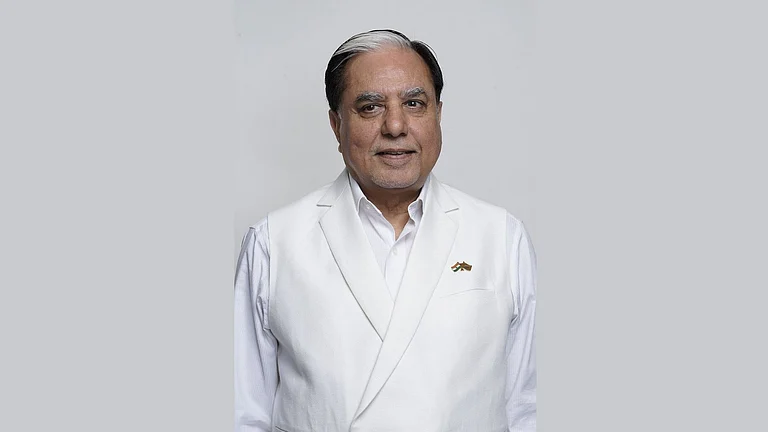
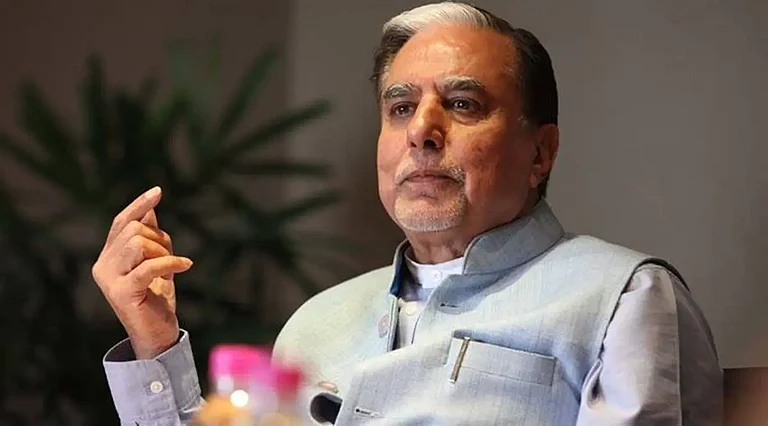
The case, which spiralled into controversy last week, is centred around the personal guarantees given by Essel Group Chairman Subhash Chandra on the bad loans of group firms. On August 25, an NCLT Delhi order approved a repayment plan under which Chandra was allowed to settle the guarantees for just ₹6.5 crore — a 99.9% haircut on the ₹22,006 crore claimed by creditors.
The tribunal has since clarified that the order was not final and sent the case to a larger bench of five, which has issued notices to all parties.
Advertisement
But the Chandra case has also thrown a spotlight on a much larger question facing India's insolvency regime: how much value is actually left by the time a company enters the IBC.
An analysis of 1,164 CIRP cases shows that 564 cases, or 48.5%, ended with haircuts of more than 80%. The data shows that 355 cases, or 30.5%, saw haircuts of more than 90%, meaning creditors recovered less than a tenth of their admitted claims.
Individual company data published by IBBI covers cases where resolution plans had been approved by the National Company Law Tribunal (NCLT) up to March 31, 2025. The IBBI dataset records the total admitted claims and the realisable amount for financial creditors.
While the numbers look alarming at first glance, industry experts say that the numbers need to be read carefully. They note that a large haircut against admitted claims does not necessarily mean that the IBC process itself destroyed value. In many cases, the deterioration has happened years before a company reaches the NCLT.
Advertisement
“The uncomfortable truth behind very high IBC haircuts is that insolvency often records value destruction; it does not necessarily cause it,” said Tushar Agarwal, founder and managing partner at C.L.A.P. JURIS, Advocates & Solicitors.
He added that by the time a company enters CIRP, it may have already lost customers, employees, working capital, licences, suppliers and market confidence. Its productive assets may also have deteriorated. At the same time, creditors' admitted claims can include years of accumulated interest.
“The gap can produce an apparently extraordinary haircut,” Agarwal said. Rahul Hingmire, managing partner at Vis Legis Law Practice, agreed. “By the time the company enters insolvency, business value, receivables, customers and productive assets may already have deteriorated substantially. IBC can redistribute and preserve the value that remains, but it cannot recreate value already destroyed. Therefore, early identification and timely admission are critical to better recoveries,” he said.
As of June 2026, creditors recovered 30.56% of their admitted claims through IBC resolutions. But that was more than 171% of the value they would have recovered if the companies had been liquidated. So, while the haircut against the debt may look huge, the resolution can still be a much better outcome than liquidation.
Advertisement
A recent report by ratings agency ICRA noted that liquidation of bankrupt companies recovers just 4% of the total admitted claims, compared to around 31% if a company gets a successful repayment plan. This means a resolution plan may appear to involve a very large haircut against the debt while still preserving considerably more value than a liquidation of the business would have generated.
“Recovery as a percentage of admitted claims can look extremely poor where the claims include substantial accumulated interest and the underlying assets are worth only a fraction of the debt,” Agarwal said.
That does not make a 90% or 95% haircut painless for creditors. But it changes the question that policymakers and lenders need to ask: whether the insolvency process maximised the value that remained, rather than simply whether creditors recovered the face value of their claims.
Where the haircuts are highest The IBBI data provides several examples of massive haircuts agreed upon by creditors. Anil Ambani's Reliance Naval and Engineering entered the insolvency process in 2020 with claims of ₹12,883.81 crore. A consortium of Hazel Mercantile and Swan Energy bought the company for ₹2,040 crore in 2022, an 84.2% haircut. L. Rajagopal's Lanco Thermal Power had admitted claims of ₹33,331 crore but a realisable amount of only ₹136 crore, implying a 99.6% haircut. Era Infra Engineering had claims of ₹21,946 crore and realisable proceeds of ₹2,062 crore, resulting in a 90.6% haircut.
Advertisement
The dataset also shows that outcomes can be considerably better where more value survives until resolution. About 20%, or 229 cases, yielded around 50% or more of the claimed amount by financial creditors. Dewan Housing Finance Ltd (DHFL), for instance, had admitted claims of ₹87,248 crore and a realisable amount of ₹37,161 crore, implying a haircut of 57.4%. Bhushan Steel's haircut was 38.1%, while Essar Steel's was 24.8%. Jaypee Infratech had a haircut of 11.8%.
The central issue is that the eventual recovery depends heavily on how much of the underlying business remains viable by the time the insolvency process begins.
As of June 2026, a total of 9,166 CIRPs have been admitted, with 7,301 reaching closure. Of these closed cases, 4,227 corporate debtors (around 58%) were successfully rescued through resolution plans, appeal, review, settlement or withdrawal, while another 3,074 cases culminated in liquidation. Of the 7,301 closed cases, however, only 1,484 CIRPs have yielded resolution plans.
The resolution process has facilitated realisation of over ₹4.35 lakh crore for creditors. The amount, however, represents just 30.56% of total admitted claims by creditors, as per IBBI's latest quarterly report. Company-wise data for all these CIRPs is yet to be published separately.
Delayed entry remains a problem
India's insolvency framework has undergone several rounds of reforms since the IBC came into force in 2016. The most recent one, the Insolvency and Bankruptcy Code (Amendment) Act, 2026, took effect on May 26, 2026. It mandated admission of insolvency applications within 14 days and put timelines around proceedings before the appellate tribunal NCLAT.
Deep Roy, managing partner, Equilex, said successive reforms had improved process discipline, disclosures, valuation standards and bidder participation. “However, recovery against admitted claims remains modest because many companies enter CIRP after substantial value destruction,” he said. “The real test is not merely recovery against claims, but recovery against liquidation and fair value.”
“The next phase of IBC reform should therefore focus as much on when distress is addressed as on how a CIRP is conducted,” Tushar Agarwal added. That points to a problem that procedural reform alone may not solve. If a distressed company reaches the NCLT only after customers, employees, suppliers, working capital and productive assets have already been lost, there may simply be too little economic value left for any resolution plan to recover.
He added that the system needs faster and more predictable adjudication. The commercial value of a distressed business declines with time. Every unnecessary adjournment, appeal or procedural dispute can reduce the pool available to creditors.
According to Agarwal, strengthening the capacity of the NCLT and creating greater certainty around timelines would therefore have a direct economic impact on recoveries.
The long time taken in the resolution process has also been a concern in the Chandra case. The cases began in 2022. One of the key points of contention has been the presumed valuation of Chandra's personal assets and how it has deteriorated.
The NCLT put his disclosed net worth at ₹31.79 crore, despite earlier certificates to lenders valuing it at ₹40,562 crore and ₹45,888 crore. Against thousands of crores in admitted dues, he offered just ₹6.50 crore, including process costs. “The real reason is one of timing, because a guarantee is only as valuable as the assets that stand behind it, and recovery from a personal guarantor usually begins only after the borrowing company has already collapsed,” said Himesh Thakur, associate partner, PSL Advocates & Solicitors, adding that the promoter of a large defaulting group tends to have little of real value left in his own name by that point, since the wealth has often been pledged to other lenders, moved earlier, or genuinely lost as the business declined.
The Chandra case shows the larger challenge for the IBC. By the time creditors seek to enforce a guarantee or resolve a failed business, the question may no longer be how much was owed, but how much value is still left behind the debt. That makes the timing of insolvency just as important as what happens after a company enters the process.