Fatal crash, cancellations and ATC issues defined one of India’s toughest aviation years.
DGCA action, probes and safety scrutiny intensified amid IndiGo disruptions and market concentration.
New airports and policy reforms offer cautious optimism for recovery in 2026.
Indian Aviation Eyes Recovery After a Turbulent 2025
After a crisis-hit 2025, Indian aviation looks to safety reforms, regulatory action and recovery in 2026

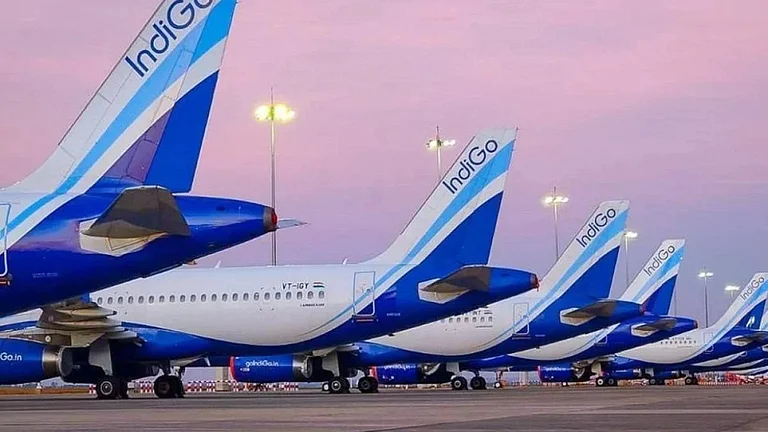
Indian aviation looks to recovery in 2026 Photo by Sam Willis
Summary
Advertisement
After a year of tragedies and disruptions that not only claimed the lives of 260 people but also severely disrupted thousands of people's travel plans towards the end with IndiGo flight cancellations and air traffic control issues, Indian aviation will look to 2026 for less turbulence and long-term solutions.
As the New Year dawns, aviation stakeholders as well as the common people will be looking for the much-awaited probe report into the AI171 plane crash on June 12, 2025 apart from more safe helicopter operations, especially in the Kedarnath valley and less steep fluctuation in air ticket prices.

While airfare caps became a recurring theme in 2026, airlines continued to bleed with airspace closures and network disruptions even as the duopolistic-domestic market witnessed expansion of air connectivity.
On the positive side, Navi Mumbai International Airport commenced operations on December 25, and the Noida International Airport will be open for flights from January 2026. And new airlines are likely to take wings.
Advertisement
IndiGo's massive operational disruptions, mainly caused by inadequate planning in implementing the new set of Flight Duty Time Limitations (FDTL) norms, resulted in thousands of flight cancellations and caused hardships to passengers.
The fiasco triggered a high-level probe, watchdog DGCA reducing the airline's winter scheduled by 10% apart from issuing show cause notices to CEO Pieter Elbers and COO Isidre Porqueras. Besides, the crisis highlighted the apparent duopoly where IndiGo (65%) and Air India Group (26%) account for over 90% of the domestic airlines segment, a scenario that has also prompted competition watchdog DGCA to look into alleged unfair business ways of IndiGo.
The DGCA-constituted panel has submitted its probe report and now the wait is for the actions that will follow.
Safety, Oversight Ahead
Acknowleding the importance of improving global standards for aviation safety, the International Air Transport Association (IATA) stated that current standards need to be adhered to and future standards must be developed to continuously improve safety performance.
Advertisement
“The environment in which airlines operate has grown even more complex as conflicts and regulatory fragmentation have proliferated. As a result, we have seen airspace closures, drone incursions and rising global navigation satellite system (GNNS) interference disrupt connectivity, undermine confidence, and threaten safety. Ensuring aviation remains the safest mode of transport requires strong leadership, robust adherence to global standards, and smarter use of data. By focusing on these—industry and government together—we will build a safer, more resilient and increasingly efficient global aviation system that can manage today’s risks and is prepared for those of tomorrow,” Mark Searle, Global Director Safety, IATA, stated in a news release published in October.
In 2025, parliamentary panels and industry bodies raised alarms over aviation safety and regulatory oversight in India, highlighting systemic gaps amid rapid growth and major disruptions. Reform discussions at ICAO and IATA emphasise stronger safety culture, data-driven oversight and compliance with global standards to prevent future crises and restore passenger confidence.
Advertisement
(With inputs from PTI.)