Singapore Airlines (SIA) is deepening its operational involvement in Air India as Tata Group's flag carrier grapples with record losses, safety lapses and a leadership vacuum, according to a Bloomberg report.
From Partner to Lifeline: How Singapore Airlines Is Taking Over Air India's Operations
Singapore Airlines had first stepped up its involvement in engineering last year before expanding its presence across other functions

Air India
Advertisement
The Singaporean carrier has placed its executives in key roles across Air India's flight operations, engineering and maintenance, areas where SIA has long been considered a global benchmark. Singapore Airlines had first stepped up its involvement in engineering last year before expanding its presence across other functions. Meanwhile, Tata Group, which owns 74.9% of Air India, is focusing on commercial, human resources, finance and IT functions.
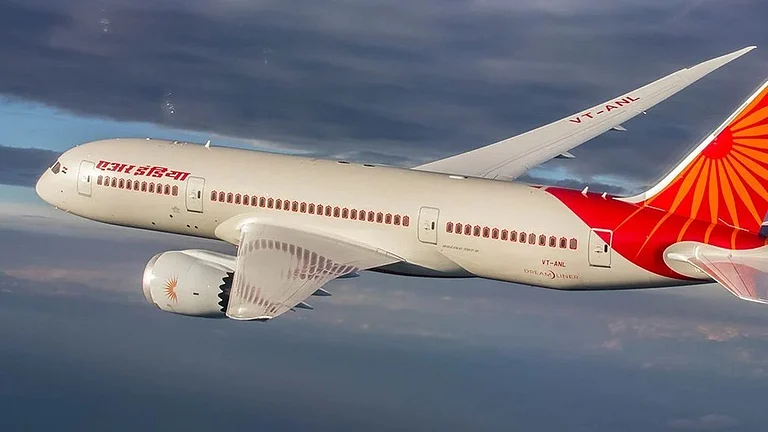
The shift marks a significant escalation in SIA's engagement, moving it from a strategic minority partner to an active, hands-on presence, a change made more urgent following the deadly Boeing 787 Dreamliner crash last year.
Losses Far Worse Than Expected
Air India lost more than ₹22,000 crore — roughly $2.4 billion — in the fiscal year ending March 2026, far worse than the $1.6 billion the airline had privately estimated just months earlier, Bloomberg reported. The scale of the damage forced Air India to approach both Tata Group and Singapore Airlines for fresh capital.
Advertisement
For SIA, the financial pain is direct. The carrier entered Air India as a minority shareholder after merging its Indian affiliate Vistara with the airline in 2024, and has since seen its own earnings dragged down. SIA disclosed losses from associated companies — largely attributable to Air India — of $139 million in the December quarter. Despite this, it said it remains "firmly committed" to supporting Air India's transformation.
A Year When Everything Went Wrong
Air India had started FY26 on a positive note, turning operating profits in early April 2025. What followed was a cascade of shocks. Pakistan shut its airspace during a brief military standoff in May, forcing expensive rerouting of long-haul flights to the US and Europe.
June was the worst month. A Dreamliner crash killed more than 240 people, leading to significant flight reductions. The West Asia conflict added further strain, disrupting a region that accounts for 16% of Air India's total capacity. Elevated jet fuel prices compounded the damage. US President Donald Trump's tariffs on India and tighter visa restrictions then squeezed demand on transatlantic routes. Together, these blows caused Air India to miss its own target of breaking even operationally by year-end.
Advertisement
Safety Failures and CEO Exit
Air India was ranked last on safety in the DGCA's most recent annual audit, a damaging finding for a carrier with aggressive expansion plans. CEO Campbell Wilson has also announced he will step down later this year, leaving the airline without permanent leadership at a critical moment.
The stakes extend beyond the airline. Bloomberg had earlier reported that controlling Air India's losses is one of the conditions tied to approving a third term for Tata Group Chairman Natarajan Chandrasekaran. When Tata acquired Air India from the government in 2021, it was seen as one of aviation's most ambitious turnarounds. Nearly four years on, that turnaround is proving far more complex and costly than anyone anticipated.